
Overview: CO₂ as an Industrial Refrigerant and the Role of the Transcritical Compressor
Carbon dioxide has been used as a refrigerant since the 1860s — long before synthetic refrigerants such as chlorofluorocarbons (CFCs) and hydrochlorofluorocarbons (HCFCs) displaced it in the mid-twentieth century. The environmental damage caused by those synthetic refrigerants — ozone depletion and high global warming potential — led to a global regulatory phaseout under the Montreal Protocol and its Kigali Amendment. CO₂, designated as refrigerant R-744, has experienced a powerful resurgence as a natural, non-toxic, non-flammable refrigerant with a global warming potential of exactly 1 — the baseline against which all other refrigerants are measured.
The critical challenge in applying CO₂ as a refrigerant is its relatively low critical temperature of 31.1°C. In warm climates or high-ambient-temperature applications, the condensing temperature required to liquify CO₂ may exceed the critical temperature, making conventional subcritical refrigeration cycle operation impossible. Instead, the system must operate in a transcritical cycle — where the high-side gas is cooled above the critical pressure without condensing, and refrigerating effect is achieved by throttling this high-pressure supercritical CO₂ to low pressure. The reciprocating piston compressor that drives this cycle must handle operating pressures significantly higher than those found in conventional HFC refrigeration systems, and must do so reliably across a wide range of ambient temperatures and cooling loads. This guide explains how transcritical CO₂ refrigeration works, where it is applied at industrial scale, and what engineering requirements define the compressor at its heart.
Subcritical vs Transcritical CO₂ Refrigeration: The Fundamental Difference
To understand why transcritical CO₂ compressors have different engineering requirements from conventional refrigeration compressors, it is necessary to understand the cycle thermodynamics.
Subcritical Operation (Cold Climates)
In subcritical operation, both the evaporation and condensation of CO₂ occur below the critical point. The CO₂ evaporates at low temperature and pressure on the cold side of the system (absorbing heat from the refrigerated space), is compressed to a pressure at which it can condense (typically 5 to 7 MPa at temperatures below 25°C), and returns to the evaporator via an expansion device. This is the same thermodynamic cycle used in conventional HFC refrigeration. Subcritical CO₂ operation is possible in cold climates — Northern Europe, Canada, Scandinavia — where ambient temperatures are routinely low enough for CO₂ to condense on the high side.
Transcritical Operation (Warm Climates and High-Ambient Applications)
When the ambient temperature exceeds approximately 25°C — making CO₂ condensation impossible on a conventional high side — the system must operate transcritically. In the transcritical cycle, the CO₂ is compressed above the critical pressure (7.38 MPa) to a high-side pressure typically ranging from 8 to 14 MPa. At this supercritical condition, the CO₂ is cooled in a gas cooler (not a condenser, since no phase change occurs) before being throttled to the evaporating pressure. The refrigerating effect is generated by the large enthalpy difference between the high-pressure supercritical state and the low-pressure evaporating state.
The transcritical cycle operates at significantly higher pressures than any conventional refrigerant cycle — high-side pressures of 8 to 14 MPa are typical, compared to 1.5 to 3 MPa for HFC systems. This pressure difference is the defining engineering characteristic of a transcritical CO₂ compressor: the machine must be designed, tested, and maintained to a higher mechanical standard than a conventional refrigeration compressor.
CO₂ (R-744) has a critical pressure of 7.38 MPa — approximately four times higher than the critical pressure of R-134a (4.06 MPa) and six times higher than R-404A (3.73 MPa). This means the entire transcritical CO₂ refrigeration system — compressor, piping, heat exchangers, and safety devices — must be rated and tested to pressures that require engineering approaches more typical of process gas equipment than conventional refrigeration. The payoff is a refrigerant with zero ozone depletion potential, a GWP of 1, and excellent thermodynamic properties at low evaporating temperatures.
Industrial Applications of Transcritical CO₂ Refrigeration
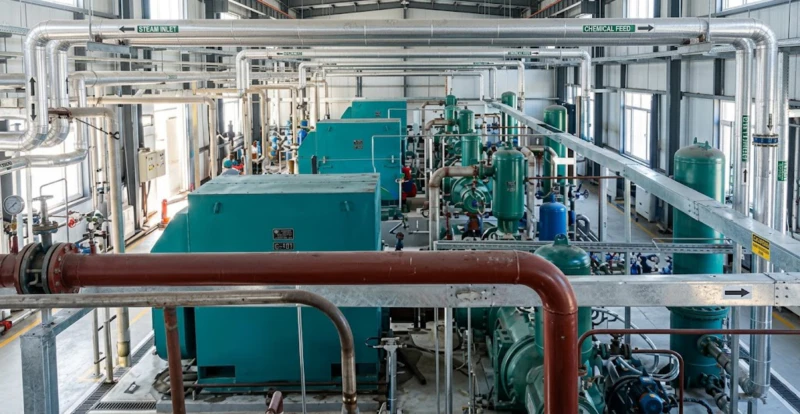
The transcritical CO₂ refrigeration cycle has established itself across a wide range of industrial and commercial cooling applications. The following sectors represent the principal markets for large-scale CO₂ reciprocating compressors in refrigeration service.
Industrial Cold Storage and Food Processing
Large cold storage warehouses, food processing plants, and distribution centres handling meat, fish, dairy, and frozen produce represent the most established industrial market for transcritical CO₂ refrigeration. Systems in this sector range from 500 kW to 10 MW of refrigerating capacity. The food industry’s regulatory pressure to eliminate high-GWP refrigerants has been a primary driver of the shift to CO₂ in this sector, alongside the total cost of ownership advantages of CO₂ systems in climates where transcritical operation is manageable. Evaporating temperatures typically range from −40°C for blast freezing to −18°C for frozen storage and 0°C to +5°C for chilled storage.
Industrial Process Cooling
Chemical plants, pharmaceutical manufacturing facilities, and petrochemical operations requiring precise low-temperature process cooling at temperatures between −40°C and +5°C represent a growing market for CO₂ refrigeration. CO₂’s non-flammability is a particular advantage in environments where flammable process gases or solvents are present, eliminating the risk of fire from refrigerant leaks. The high volumetric refrigerating capacity of CO₂ compared to HFC refrigerants — approximately four to eight times higher at typical evaporating conditions — means that smaller compressors and piping can be used to achieve the same refrigerating duty, reducing the system footprint.
Ice Rinks and Winter Sports Facilities
Large indoor ice rinks and winter sports facilities have been early adopters of CO₂ refrigeration, partly driven by the direct comparison with alternative refrigerants in enclosed public spaces. CO₂ is non-toxic and non-flammable, making a refrigerant leak in a public facility far less hazardous than a leak of ammonia (which is toxic) or HFC refrigerants (which displace oxygen in enclosed spaces). Ice rink CO₂ systems typically operate at evaporating temperatures of −8°C to −15°C, and the heat rejected from the refrigeration system is often recovered for arena heating, dramatically improving overall system efficiency.
District Cooling and Heat Pump Applications
CO₂ heat pumps operating in the transcritical cycle can achieve exceptionally high Coefficient of Performance (COP) values when used for water heating, because the CO₂ gas cooler can deliver heat across a wide temperature glide — cooling the CO₂ from 80°C to 30°C while progressively heating water from 10°C to 60°C — matching the temperature profile of the heat source and sink far better than a condensing refrigerant. Industrial CO₂ heat pump systems for district heating, hot water production, and waste heat recovery from industrial processes represent a rapidly growing market, with system capacities ranging from 500 kW to 20 MW of heating output.
Engineering Requirements for Transcritical CO₂ Reciprocating Compressors
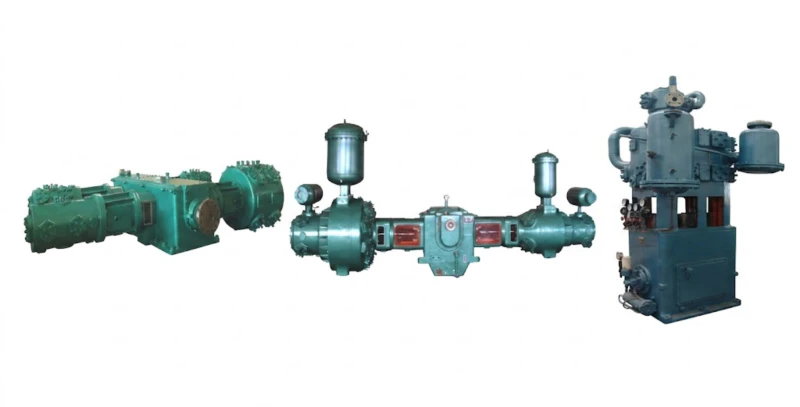
The engineering requirements for a transcritical CO₂ reciprocating compressor differ significantly from those for both conventional refrigeration compressors and standard process gas compressors. The following requirements must be addressed in any specification for this service.
High-Pressure Design and Pressure Rating
The maximum allowable working pressure (MAWP) of the compressor cylinder, discharge manifold, and all connected high-pressure components must exceed the maximum anticipated high-side pressure by the required safety margin specified in the applicable pressure vessel code. For transcritical CO₂ service with a maximum operating pressure of 14 MPa, the MAWP of the high-pressure components is typically set at 16 to 20 MPa. All pressure-retaining parts must be hydrostatically tested to 1.5 times MAWP. The high-pressure construction required is more demanding than standard refrigeration practice and more closely resembles process gas compression engineering, with forged steel cylinders, heavy-duty valve bodies, and precision-machined connecting hardware throughout.
Variable High-Side Pressure Optimisation
In the transcritical CO₂ cycle, the COP of the system depends critically on the high-side pressure — the pressure to which the CO₂ is compressed. Unlike a subcritical condensing cycle where the high-side pressure is determined by the condensing temperature, the transcritical high-side pressure can be varied independently of the gas cooler outlet temperature. There is an optimal high-side pressure at each ambient temperature and cooling load that maximises system COP. Industrial transcritical CO₂ systems use a high-side pressure controller — typically a back-pressure valve in conjunction with the compressor capacity control system — to maintain the high-side pressure at or near the optimum value as conditions change. The compressor must be capable of operating efficiently across the resulting range of discharge pressures, typically 8 to 14 MPa, without mechanical issues or efficiency penalties.
Low Evaporating Temperature Performance
CO₂ refrigeration systems for blast freezing and low-temperature cold storage must evaporate at temperatures as low as −45°C, corresponding to evaporating pressures of approximately 0.57 MPa. At these low evaporating pressures combined with high-side pressures of 10 to 14 MPa, the overall compression ratio is very high — up to 25:1 — making two-stage compression mandatory. In a two-stage CO₂ refrigeration system, the low-stage compressor handles suction from the low-temperature evaporators and discharges to an intermediate pressure (typically 3 to 5 MPa), where an intercooler removes the heat of compression before the high-stage compressor raises the pressure to the final transcritical discharge pressure. This arrangement reduces the compression work per stage, improves volumetric efficiency, and reduces discharge temperatures to acceptable levels.
Lubrication in CO₂ Service
CO₂ is highly miscible with many conventional lubricating oils, which causes oil dilution, reduction in viscosity, and foaming — all of which compromise bearing lubrication and crankcase reliability. CO₂ reciprocating compressors for refrigeration service require specially formulated polyalkylene glycol (PAG) or polyol ester (POE) lubricants that maintain adequate viscosity and lubricity when dissolved CO₂ is present. The crankcase oil system must include a CO₂ purge arrangement to prevent excessive CO₂ accumulation in the oil sump, and the oil temperature must be maintained within the range specified by the lubricant manufacturer to control oil viscosity and CO₂ solubility.
Technical Specifications by Refrigeration Application
The following table summarises typical compressor specifications for the principal transcritical CO₂ refrigeration applications. These ranges represent common engineering practice and should be verified through detailed thermodynamic cycle simulation for each specific project.
| Application | Evap. Temp. | Suction Pressure | Discharge Pressure | Stages | Frame Type |
|---|---|---|---|---|---|
| Blast freezing | −40 to −45°C | 0.53–0.57 MPa | 10–14 MPa | 2-stage | Z or D type |
| Frozen storage | −20 to −30°C | 1.0–1.7 MPa | 8–13 MPa | 1 or 2-stage | Z or D type |
| Chilled storage / process cooling | −5 to +5°C | 3.0–4.5 MPa | 8–12 MPa | 1-stage | Z or D type |
| Ice rink refrigeration | −8 to −15°C | 2.2–2.8 MPa | 8–12 MPa | 1-stage | Z or D type |
| Industrial CO₂ heat pump | +5 to +25°C (source) | 4.5–7.0 MPa | 9–14 MPa | 1-stage | D type preferred |
CO₂ vs Ammonia vs HFC: Why CO₂ Is Gaining Ground in Industrial Refrigeration
Industrial refrigeration has historically been dominated by two refrigerants: ammonia (R-717) for large industrial applications, and HFC refrigerants (R-134a, R-404A, R-407F) for smaller and medium systems. CO₂ (R-744) is increasingly competing with both, for different reasons in each case.
| Property | CO₂ (R-744) | Ammonia (R-717) | HFC (R-404A) |
|---|---|---|---|
| GWP (100-year) | 1 | 0 | 3,922 |
| Toxicity | Non-toxic (asphyxiant at high concentration) | Toxic (PEL 25 ppm) | Low toxicity |
| Flammability | Non-flammable | Flammable above 15% in air | Non-flammable |
| Operating Pressure (high side) | 8–14 MPa | 1–2 MPa | 1.5–2.5 MPa |
| Volumetric Refrigerating Capacity | Very high | High | Medium |
| Regulatory Outlook | Long-term compliant | Long-term compliant | Phasedown underway |
The case for CO₂ over HFC refrigerants rests primarily on the regulatory phasedown of high-GWP refrigerants under the Kigali Amendment, which makes investment in HFC-based systems increasingly uneconomical as F-gas quotas tighten and refrigerant costs rise. The case for CO₂ over ammonia in certain applications rests on safety — CO₂ can be used in enclosed public spaces, food retail environments, and locations where ammonia’s toxicity and flammability create unacceptable risk. In large industrial applications where ammonia’s superior thermodynamic efficiency justifies its safety precautions, CO₂ is often used as the secondary refrigerant in a cascade system, with ammonia on the high-temperature side and CO₂ on the low-temperature side serving the process loads directly.
Summary: Specification Checklist for Industrial Transcritical CO₂ Compressors
Frequently Asked Questions — Transcritical CO₂ Refrigeration Compressors
Discuss Your CO₂ Refrigeration Compression Requirements
Our engineering team has extensive experience designing reciprocating CO₂ compressors for transcritical refrigeration and industrial heat pump applications. Provide your system design conditions and we will recommend the right compressor configuration.