Technical Comparison · Nitrogen Pipeline Supply · Reciprocating vs Screw · Russia
Engineers specifying a nitrogen pipeline supply system frequently face the choice between a reciprocating compressor and a screw compressor. The two machine types differ fundamentally in compression mechanism, pressure range, efficiency profile, and maintenance pattern. This guide compares both technologies across the parameters that matter most for nitrogen supply decisions: discharge pressure, flow rate, energy consumption, oil carry-over, and long-term service cost.
✓ Screw Compressor · 7.5–400 kW
✓ N₂ Pipeline Supply
✓ GOST-R Certified · Russia
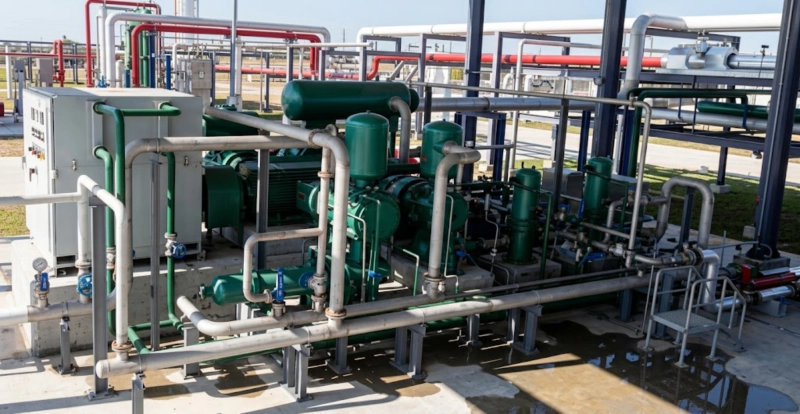
Reciprocating compressors in nitrogen pipeline supply service at a large industrial plant — opposed-balance frame, multi-stage compression to 20–30 MPa, continuous duty. For high-pressure nitrogen supply above 4.0 MPa and for oxygen service, the reciprocating compressor has no viable screw compressor alternative.
The Core Mechanical Difference
A reciprocating compressor compresses gas by the back-and-forth motion of a piston inside a cylinder. Gas enters through the suction valve on the backstroke, is trapped and compressed by the advancing piston, and is discharged through the discharge valve at the end of the compression stroke. This intermittent, valve-controlled compression cycle allows the reciprocating machine to achieve extremely high pressure ratios per stage — typically 3:1 to 5:1 — and to build up to very high final discharge pressures through multi-stage arrangements. The ZW, DW, and LW series reciprocating compressors in our range reach 30 MPa in 4-stage configuration, compressing from atmospheric suction to cylinder-filling pressure in a single machine.
The screw design achieves compression by the continuous meshing of two helical rotors that progressively reduce the trapped gas volume between the rotor lobes and the housing wall as the rotors turn. There are no suction or discharge valves: gas enters continuously at the suction end and exits continuously at the discharge end. This continuous rotary compression is mechanically simpler than valve-controlled piston compression, produces a smooth pulsation-free output, and achieves high volumetric efficiency at modest pressure ratios. The practical limit for a single-stage oil-injected screw machine is approximately 1.3 MPa (13 bar) — above this pressure, the leakage path between rotor tips and housing becomes too large relative to the compression volume for acceptable efficiency.
This fundamental difference in pressure capability is the single most important factor in the nitrogen pipeline supply compressor selection. If the required nitrogen delivery pressure is above approximately 1.5 MPa, a screw compressor cannot meet the specification regardless of its other merits. The reciprocating compressor is the only viable technology for nitrogen supply above this pressure threshold.
Full Technical Comparison: Reciprocating vs Screw for Nitrogen
| Parameter | Reciprocating (ZW/DW/LW) | Screw Compressor |
|---|---|---|
| Max discharge pressure | 30.0 MPa (4-stage) | 1.3 MPa (standard) |
| Nitrogen gas service | Direct N₂ compression | Air only (standard) |
| Flow range | 0.5–300 m³/h | 0.8–65 m³/min (large range) |
| Part-load efficiency | Moderate (unloading valve) | Excellent (VFD models) |
| Oil carry-over to gas | Zero (oil-free cylinder option) | ≤3 ppm (with separator) |
| Oxygen service | Yes (PTFE rings, GOST 12.2.052) | Not suitable |
| Vibration level | Moderate (opposed-balance: low) | Very low — rotary |
| Noise level | 80–90 dB(A) | 65–78 dB(A) |
| Major service interval | 2,000–4,000 h (valves, rings) | 4,000–8,000 h (oil, filter) |
| Pulsation in discharge | Yes — receiver required | Near-zero — continuous flow |
| Capital cost (equiv. flow) | Higher at low pressure | Lower at 0.7–1.3 MPa |
| GOST-R certified, Russia | ✓ Standard | ✓ Standard |
Comparison applies to industrial nitrogen pipeline supply applications in Russia and CIS. Screw compressor data refers to standard oil-injected twin-screw machines; oil-free screw variants exist but are significantly more expensive and still limited to approximately 1.5 MPa maximum discharge pressure. Contact our engineering team for project-specific analysis.
Pressure: The Decisive Dividing Line
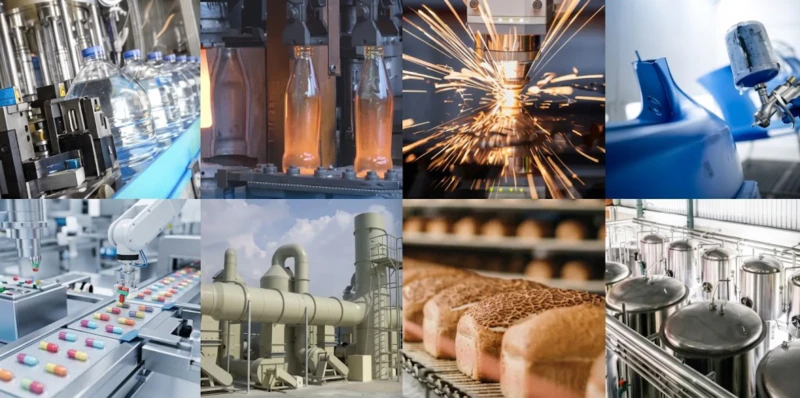
The nitrogen pipeline supply pressure required by the consuming process determines the compressor type before any other factor is considered. The nitrogen delivery pressure requirements in common industrial applications span a wide range, and the choice between reciprocating and screw maps cleanly onto the pressure requirements:
Gas Purity: Why Screw Compressors Are Not Used for Direct Nitrogen Compression
Standard oil-injected screw compressors are designed for air compression. The oil-injection cooling system that is central to screw compressor operation — injecting compressor oil directly into the compression chamber to absorb heat and seal the rotor-to-housing clearance — means that the gas stream leaving the screw compressor contains oil aerosol at concentrations of 2–5 ppm after the integrated separator. For atmospheric air supply to pneumatic tools and general industrial equipment, this oil carry-over level is acceptable. For nitrogen pipeline supply in electronics manufacturing, pharmaceutical production, food processing, or medical gas applications, it is not.
The reciprocating nitrogen compressor with oil-free PTFE cylinder option delivers zero oil carry-over into the nitrogen gas stream. The compression space contains no lubricant — only the self-lubricating PTFE piston rings — and the double-compartment labyrinth distance piece prevents crankcase oil from migrating toward the cylinder. For applications requiring nitrogen purity above 99.99% with oil below detectable limits — electronics inert atmosphere, pharmaceutical purging, food-grade nitrogen blanketing — the oil-free reciprocating compressor configuration is the standard specification. Even for less demanding nitrogen supply applications where trace oil is tolerable, specifying a screw compressor for direct nitrogen service raises material compatibility questions: compressor oil formulated for air service may not be compatible with pure nitrogen at elevated pressures over long periods, and the rotor housing seals may not meet the gas-tightness requirements of nitrogen pipeline codes.
Key Point: The Screw vs Reciprocating Decision for Nitrogen
Standard screw compressors are air compressors that are sometimes used for nitrogen supply at low pressures with downstream filtration. Reciprocating compressors of the ZW, DW, and LW series are purpose-built nitrogen compressors that compress nitrogen gas directly from atmospheric or elevated suction pressure to the required pipeline delivery pressure, with zero oil carry-over in the oil-free configuration. These are not alternative products in the same market — they serve overlapping but distinct pressure and purity requirements.
Energy Efficiency: Where Each Technology Excels
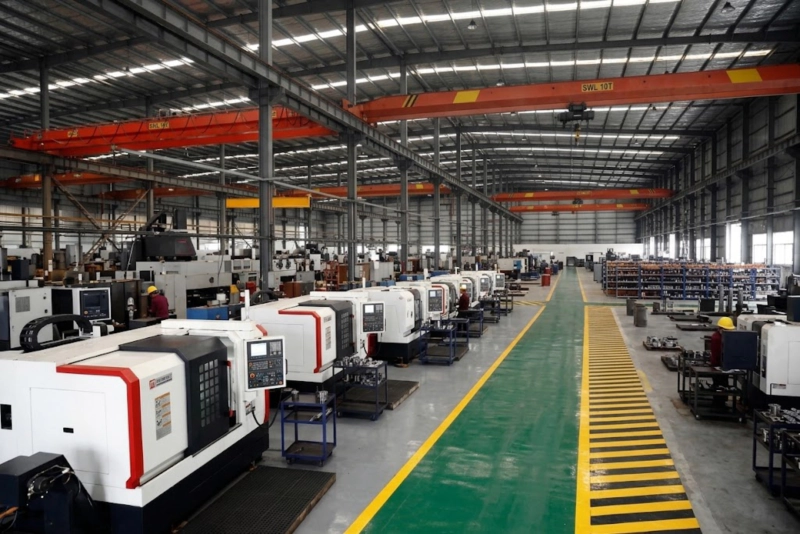
At full load and within its optimal pressure range (0.7–1.3 MPa), a modern twin-screw compressor with VFD drive achieves specific energy consumption (kWh per m³ of free air delivered) that is competitive with — and in some cases superior to — a reciprocating compressor at equivalent pressure and flow. The continuous rotary compression of the screw avoids the mechanical losses associated with reversing piston motion and the pressure losses across suction and discharge valves. The VFD screw compressor’s ability to modulate speed precisely in response to demand gives it an excellent part-load efficiency profile — a 25% reduction in demand produces approximately a 25% reduction in power consumption.
The reciprocating compressor’s efficiency advantage emerges at higher pressure ratios. At 10 MPa and above, the thermodynamic efficiency of multi-stage reciprocating compression with inter-stage cooling — which approaches the isothermal compression ideal through the use of multiple stages with intermediate heat removal — is significantly better than any practical single-stage compression technology. A 4-stage reciprocating compressor delivering 15 MPa achieves a specific energy figure that no alternative technology can match at equivalent pressure and flow, because the physical limit of single-stage screw compression (approximately 1.3 MPa) makes multi-stage screw trains impractical at these pressures.
Part-load efficiency is the one area where the reciprocating nitrogen compressor is genuinely at a disadvantage relative to a VFD screw for low-pressure applications. A fixed-speed reciprocating nitrogen compressor that loads and unloads to match variable demand consumes approximately 70–75% of full-load power during the unloaded period — the motor continues to run against light load between compression strokes. A VFD screw compressor at 60% demand consumes approximately 60% of rated power. For a nitrogen pipeline supply application with highly variable demand and a delivery pressure within the screw compressor’s range, this part-load efficiency difference is a real factor in the annual energy cost calculation.
Maintenance Pattern and Long-Term Service Cost
The screw compressor has a significantly simpler maintenance schedule than a reciprocating nitrogen compressor of equivalent capacity: oil and filter change every 4,000–8,000 hours, separator element replacement every 4,000–8,000 hours, and rotor inspection at very long intervals (20,000–40,000 hours). There are no gas valves to fail, no piston rings to wear, and no crosshead guides to inspect. For facilities without a dedicated mechanical maintenance team — smaller manufacturing plants, food processing facilities, packaging operations — this simpler maintenance pattern is a genuine operational advantage.
The reciprocating nitrogen compressor requires more frequent maintenance at the gas valve and piston ring level: gas valve inspection and replacement every 2,000–4,000 hours, piston ring replacement every 4,000–8,000 hours, piston rod packing inspection every 4,000 hours, and crankcase oil and filter change every 2,000 hours. These intervals assume a clean, dry nitrogen supply and operation within rated conditions. For facilities with an experienced maintenance team — air separation plants, chemical plants, industrial gas distributors — these maintenance requirements are well within normal operational capability and the parts cost is modest relative to the total plant maintenance budget.
- Delivery pressure above 1.5 MPa (always)
- Direct N₂ or O₂ compression required
- Zero oil carry-over is required (oil-free option)
- Nitrogen cylinder filling to 15–30 MPa
- Air separation plant product compression
- Oxygen service alongside nitrogen
- Plant has trained mechanical maintenance team
- Delivery pressure is below 1.3 MPa (air supply)
- Large air flow at moderate pressure (general industrial)
- Variable demand with VFD energy saving priority
- Minimal maintenance team capacity
- Low noise level in or near production area
- Nitrogen from generator with downstream booster
- Short service life requirement (below 10 years)
Blow Air vs Nitrogen Supply in ISBM Production Lines
Injection stretch blow moulding (ISBM) facilities operate two distinct compressed gas systems simultaneously: high-pressure blow air at 2.5–4.0 MPa for the stretch-blow cycle, and low-pressure nitrogen at 0.3–0.8 MPa for resin blanketing and mould purging. The blow air system — at pressures above the screw compressor’s standard range — is typically supplied by a reciprocating compressor (or a screw unit with a reciprocating booster stage). The nitrogen supply at 0.3–0.8 MPa falls within the range where a small screw unit or a ZW series reciprocating nitrogen compressor is equally viable; the choice depends on whether the facility requires zero oil carry-over in the nitrogen (food packaging applications) or can accept low oil content with downstream filtration. For food-contact bottle production, the oil-free reciprocating compressor is the specification that eliminates the filtration and monitoring burden from the nitrogen supply circuit entirely.
FAQ — Reciprocating vs Screw for Nitrogen Supply
Discuss Your Nitrogen Pipeline Supply Specification
Send our engineering team your required nitrogen delivery pressure, flow rate, purity requirement, and demand profile. We will recommend the most appropriate machine type and provide a specification and quotation within 48 hours. Reciprocating and screw compressors both available with GOST-R certification from our Russian network.