
Why Ammonia Remains the Preferred Refrigerant in Russian Industrial Refrigeration

Technical Knowledge · NH₃ Refrigerant · Russian Industrial Practice · HFC vs Ammonia · CIS

NH₃ (R-717) has been the dominant refrigerant in Russian industrial refrigeration for over a century and remains so today, despite the wide availability of HFC and HFO synthetic refrigerants that have largely displaced ammonia in Western European commercial refrigeration. The reasons are thermodynamic, economic, and regulatory — and they are unlikely to change in the Russian context within the foreseeable future. This article explains why Russian cold chain operators, fish processing plants, blast freeze facilities, and industrial process cooling installations continue to specify ammonia refrigeration systems, and what this means for compressor selection.

✓ COP Advantage
✓ HFC vs Ammonia
✓ Regulatory Landscape
✓ DW / 4MW NH₃ Series
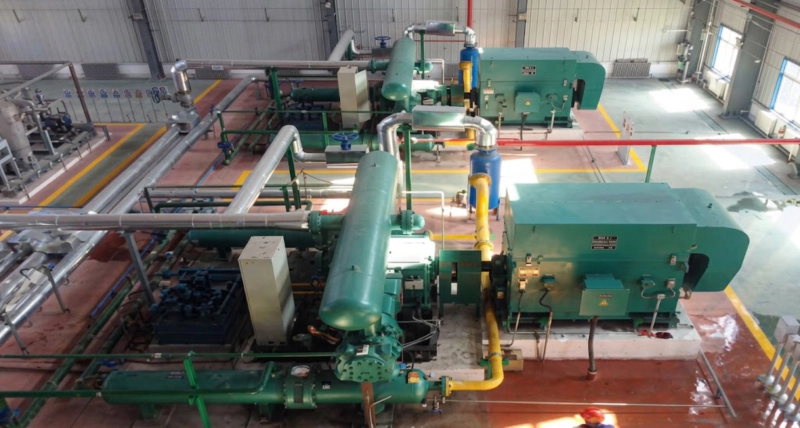
ammonia refrigerant Russia industrial 4MW DW series NH3 compressor cold storage blast freeze CIS

4MW series ammonia refrigeration compressor in service at a large Russian cold chain facility — the 4MW frame is the standard specification for industrial NH₃ systems above 350 kW in Russia, where ammonia’s superior thermodynamic efficiency and zero global warming potential make it the economically and environmentally rational choice for large-scale industrial refrigeration.

GWP = 0
Zero Climate Impact
3–10% Higher COP
vs R-404A at Same Duty
R-717
ASHRAE / ISO Designation
1 kg/GJ
Refrigerant Cost vs HFC
GOST 26790
Russian NH₃ Standard

The Thermodynamic Case for Ammonia

Ammonia has the highest refrigerating effect per unit mass of any common refrigerant — approximately 1,370 kJ/kg at −15°C evaporating temperature, compared with 163 kJ/kg for R-404A and 218 kJ/kg for R-134a at the same condition. This means that an ammonia refrigeration system circulates roughly 6–8 times less refrigerant by mass than an equivalent HFC system to achieve the same refrigerating capacity, which reduces the size of the heat exchangers, pipework, and compressor relative to the heat exchangers, pipework, and compressor required for HFC service. Smaller refrigerant pipework diameters reduce capital cost and refrigerant inventory.

The COP of an ammonia refrigeration system is consistently 3–10% higher than an equivalent HFC system at the same operating conditions. This COP advantage is most pronounced at low evaporating temperatures — exactly the conditions prevalent in Russian industrial refrigeration applications such as blast freezing (−35°C to −40°C evaporating) and deep-freeze cold storage (−25°C to −30°C evaporating). For a 500 kW refrigeration installation operating 8,000 hours per year with a COP advantage of 5%, the annual energy saving from specifying NH₃ instead of R-404A amounts to approximately 25,000 kWh per year — a significant operating cost reduction over the 25–30 year life of an industrial refrigeration plant.

Ammonia vs HFCs in Russian Industrial Practice
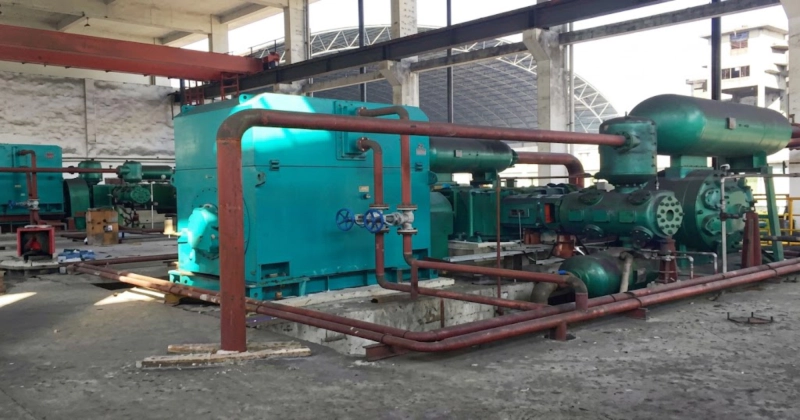
ammonia HFC comparison Russia industrial refrigeration 4MW DW compressor COP GWP regulatory landscape CIS

Factor NH₃ (R-717) R-404A (HFC) R-134a (HFC)
Global Warming Potential 0 3,922 1,430
Refrigerating effect (−15°C) 1,370 kJ/kg 163 kJ/kg 218 kJ/kg
Relative system COP Best 3–10% lower 3–7% lower
Refrigerant purchase cost Very low High (10–20x NH₃) Moderate
Flammability B2L (mildly flammable) A1 (non-flammable) A1 (non-flammable)
Toxicity B (toxic above 300 ppm) A (low toxicity) A (low toxicity)
Leak detectability Excellent (sharp odour) Poor (odourless) Poor (odourless)

GWP values based on AR4 100-year values. COP comparison at −25°C evaporating / +35°C condensing.

The Russian Regulatory Context

Russia is a signatory to the Montreal Protocol but has not adopted the European F-Gas Regulation that drives HFC phase-down in the EU. The Russian regulatory framework for refrigerants is governed primarily by GOST standards and Rostechnadzor rules for hazardous industrial equipment — and ammonia has been the subject of these regulations for decades, with a well-established compliance framework that Russian industrial operators know and understand. The Kigali Amendment to the Montreal Protocol commits Russia to an HFC phase-down schedule, but the Russian implementation timeline extends further than the EU phase-down, and the regulatory pressure to switch from ammonia — which has a GWP of zero — to HFO alternatives simply does not exist in the Russian context.

The practical result is that Russian industrial refrigeration system designers, installers, and operators have continued to develop their expertise in ammonia systems throughout the period when Western European practice shifted toward HFCs. The engineering knowledge base for ammonia refrigeration design, installation, safety management, and maintenance is deep in Russia. Technicians trained on ammonia systems are available throughout the country. Spare parts for ammonia compressors, condensers, evaporators, and controls are stocked by Russian suppliers. This infrastructure advantage further reinforces ammonia’s dominance: switching to an HFC refrigerant in a Russian industrial setting means sourcing refrigerant from a limited number of suppliers, working with a smaller pool of HFC-experienced engineers, and losing the practical cost advantages of ammonia’s thermodynamic properties.

Applications Where Ammonia Dominates in Russia
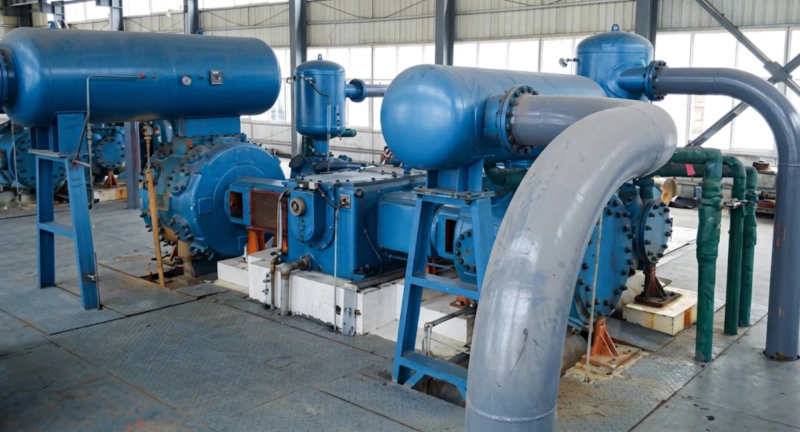
ammonia refrigerant Russia industrial cold storage blast freezing fish processing brewery 4MW DW compressor

Large Cold Storage
Warehouses above 1,000 tonnes capacity at −18°C to −25°C are almost universally ammonia in Russia. The refrigerant cost saving and COP advantage over HFC at these scales and temperatures represent millions of roubles in annual operating cost difference. The 4MW series compressor is the standard specification for large cold storage ammonia systems above 500 kW refrigerating capacity.
Blast Freezing
Blast freeze tunnels operating at −35°C to −43°C evaporating represent the most demanding temperature range in the cold chain. At these temperatures, ammonia’s COP advantage over HFCs is greatest, and the two-stage NH₃ system (described in blog-20) becomes the only practical specification. Fish processing plants in Murmansk, Vladivostok, and Sakhalin operate the majority of Russian blast freezing capacity on ammonia.
Brewery and Beverage
Large Russian breweries and beverage producers with refrigeration loads above 500 kW use ammonia almost exclusively. The higher upfront cost of ammonia-safe materials and engineering is offset within 3–5 years by the operating cost advantage. A brewery operating 8,000 hours per year at 1 MW refrigerating capacity saves 50,000–80,000 kWh annually with ammonia vs HFC at equivalent COP differences.
Industrial Process Cooling
Chemical plants, petrochemical facilities, and industrial process cooling installations use ammonia where the refrigerating temperatures align with ammonia’s efficient operating range (−40°C to +10°C). The zero GWP of ammonia is increasingly relevant in Russia for facilities with ESG reporting obligations and international export markets that scrutinise environmental metrics.

Ammonia Safety: Why Toxicity Is Manageable at Industrial Scale

The main objection to ammonia is its toxicity — ammonia is classified as B2L (toxic and mildly flammable) and requires safety measures not needed for HFC refrigerants. However, at industrial scale, this toxicity disadvantage relative to HFCs is significantly smaller than it appears in commercial refrigeration contexts for three reasons:

1
Odour detection below the hazard threshold: Ammonia has a sharp, unmistakable odour detectable by the human nose at 5–20 ppm — well below the 25 ppm workplace exposure limit and far below the immediately dangerous 300 ppm threshold. A small leak is detected by smell well before it reaches a hazardous concentration, giving operators time to evacuate and ventilate. HFC refrigerants are odourless; a large HFC leak is undetectable without instrumentation and can cause asphyxiation by oxygen displacement without warning.
2
Small refrigerant inventory at equivalent capacity: Because ammonia has a refrigerating effect 6–8 times higher per kilogram than HFCs, an ammonia system contains 6–8 times less refrigerant by mass than an HFC system of the same capacity. A 1 MW ammonia cold storage system contains perhaps 800–1,500 kg of refrigerant. The same capacity in R-404A would contain 6,000–12,000 kg. In a leak scenario, the smaller NH₃ inventory limits the total quantity released even if the entire charge is lost.
3
Established Russian safety infrastructure: Industrial ammonia safety in Russia is governed by a mature framework of GOST standards, Rostechnadzor regulations, and decades of operating experience in large-scale ammonia refrigeration. Emergency response protocols, specialist ventilation requirements, personal protective equipment standards, and operator training programmes for ammonia refrigeration are well established throughout Russia. The safety management infrastructure is already in place; it is not being developed from scratch as it would be for a new refrigerant.
Related Application · Plastics Manufacturing

Why PET Bottle Plants Use Chiller Cooling, Not NH₃ Refrigeration

Injection stretch blow moulding (ISBM) plants producing PET bottles cool the blow moulds and the preform conditioning zone using chilled water circuits at +8°C to +12°C — not ammonia refrigeration at −25°C. The cooling duty in an ISBM plant is modest compared with a cold storage or blast freezing installation — typically 50–200 kW of mould cooling — and the temperature level required (+8°C to +12°C chilled water) is achievable with air-cooled HFC or HFO chillers of 20–200 kW capacity without the safety infrastructure that ammonia refrigeration at industrial scale requires. This is the practical boundary between where ammonia dominates (large-scale refrigeration at low temperatures) and where HFC or HFO chillers are more appropriate (small to medium process cooling at moderately low temperatures). ISBM plants sit firmly in the second category. The ammonia refrigeration compressors described in this series are specified for the cold chain and industrial process cooling installations that supply the food and beverage products that the ISBM industry packages.

Related equipment: One-step three-station ISBM machines for PET bottle production — using HFC chiller cooling at the mould and conditioning zone, not the ammonia refrigeration described here.

ISBM Machine ›injectionstretchblowmolding.com

FAQ — Ammonia Refrigerant in Russian Industrial Practice

Q1: Is it possible to convert an existing ammonia refrigeration system to HFC refrigerant?
Converting an existing ammonia refrigeration system to HFC refrigerant is technically possible but rarely economically justified for large industrial systems in Russia. The reasons are: (1) the compressors, heat exchangers, and pipework designed for ammonia service are not directly compatible with HFC refrigerants — ammonia compressors use steel pipework and aluminium heat exchanger surfaces, while HFC systems require compatible materials and lubricants; (2) the replacement HFC refrigerant would need to be selected to match the pressure and temperature range of the existing system, which may not align well with available HFC refrigerant options; (3) the capital cost of replacement equipment, re-commissioning, and new refrigerant charge would typically be equivalent to installing a new system; and (4) the converted HFC system would have higher annual operating costs than the original NH₃ system. The practical result is that Russian industrial ammonia refrigeration systems are generally refurbished and upgraded with new ammonia compressors and components at end-of-life rather than being converted to HFC. Conversion to HFC is considered primarily in applications where the ammonia safety requirements are disproportionate to the refrigeration load — typically small systems below 50 kW that are now better served by modern HFO or CO₂ alternatives.
Q2: What compressor series are available for ammonia refrigeration in Russia?
The DW and 4MW series reciprocating compressors cover the full range of industrial ammonia refrigeration applications in Russia. The DW series (55–350 kW per unit) is specified for medium-scale ammonia systems — brewery refrigeration, food processing cold rooms, and process cooling applications where the refrigerating capacity per compressor unit falls in the 100–350 kW range. The 4MW series (350–1,600 kW per unit) is the standard for large cold storage, blast freezing, and industrial refrigeration installations where large refrigerating capacities and low evaporating temperatures demand the symmetrically balanced frame design and the higher displacement of the 4MW configuration. Both series are available in single-stage and two-stage compound configurations for the two-stage NH₃ compression described in blog-20, and both are GOST-R certified for ammonia service under Russian Rostechnadzor requirements.
Q3: How does the Kigali Amendment affect ammonia refrigeration in Russia?
The Kigali Amendment to the Montreal Protocol commits Russia to a phased reduction in the consumption of HFCs with high global warming potential. Ammonia (R-717) has a GWP of zero and is not subject to the Kigali phase-down schedule — it is not an HFC and is not affected by the amendment in any way. The Kigali Amendment therefore actively favours ammonia in the Russian regulatory context: as HFC refrigerants become more restricted and expensive under the phase-down schedule, the economic advantage of ammonia — which is entirely outside the regulatory scope of the amendment — increases. Russian industrial refrigeration operators who continue to specify ammonia are positioning their facilities favourably for the regulatory environment that the Kigali phase-down will produce over the next 10–20 years.
NH₃ Compressor Selection

DW and 4MW Series Ammonia Refrigeration Compressors

DW series (55–350 kW) and 4MW series (350–1,600 kW) ammonia reciprocating compressors for single-stage and two-stage compound refrigeration — cold storage, blast freezing, fish processing, brewery, and industrial process cooling. GOST-R certified. Full Russian documentation. Response within 48 hours.