Technical Knowledge · Oil-Free Design · Distance Piece · Crankcase Isolation · Gas Purity
The labyrinth distance piece is the structural and functional component that makes oil-free gas compression physically possible in a reciprocating compressor with a lubricated crankcase. Without it, crankcase oil — present to lubricate the crankshaft bearings, connecting rod bearings, and crosshead guides — would migrate along the piston rod into the compression cylinder with every stroke, contaminating the gas and violating the oil-free design requirement. Understanding how the labyrinth distance piece works, why it is critical for oxygen, nitrogen, and high-purity gas service, and how to maintain it correctly is essential knowledge for operators of ZW, DW, and LW series oil-free compressors.
✓ Oil Migration Prevention
✓ Labyrinth Seal Principle
✓ O₂ / N₂ / High-Purity Gas
✓ ZW / DW / LW Series
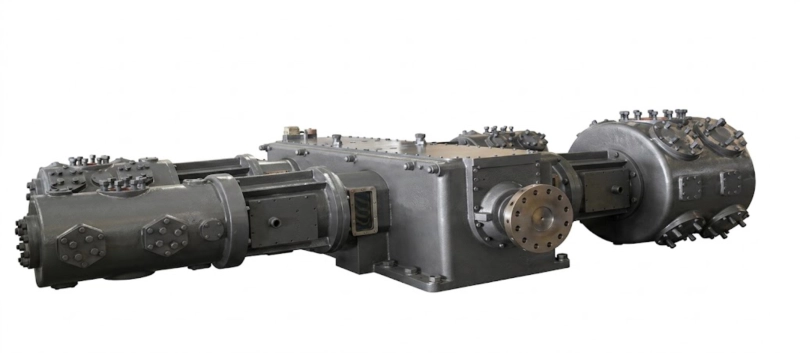
DW series oil-free compressor — the labyrinth distance piece occupies the structural section between the crankcase and the compression cylinder. The piston rod passes through the distance piece, which houses the wiper rings, labyrinth seal grooves, and the vented intermediate compartment that prevents any oil-laden gas escaping the crankcase from reaching the cylinder side of the rod seal. This arrangement is the mechanical basis of all oil-free reciprocating compressor designs used in oxygen, nitrogen, argon, and high-purity gas service in Russia and internationally.
The Oil Migration Problem in Reciprocating Compressors
In a conventional lubricated-cylinder reciprocating compressor, the piston rod connects the piston in the compression cylinder to the crosshead in the crankcase. As the rod reciprocates, its surface carries a thin film of crankcase oil from the lubricated crosshead guides upward toward the cylinder — and with each upward stroke, a small quantity of this oil enters the cylinder, where it lubricates the cylinder bore and is subsequently carried out with the discharge gas. This oil carry-over is normal and intentional in a lubricated compressor; it is the mechanism by which the cylinder receives its lubrication.
For oil-free gas service — oxygen compression per GOST 12.2.052, high-purity nitrogen for electronics, medical oxygen for cylinder filling, or food-grade CO₂ — this oil carry-over is unacceptable. In oxygen service it is a safety hazard (as covered in blog-22); in high-purity nitrogen and argon service it violates the purity specification; in food-grade gas service it contaminates the product. The fundamental engineering challenge of oil-free compression is therefore: how to maintain crankcase lubrication for the mechanical components that require it (crankshaft bearings, connecting rod bearings, crosshead guides) while preventing any oil from reaching the compression cylinder via the piston rod.
How the Labyrinth Distance Piece Solves the Problem
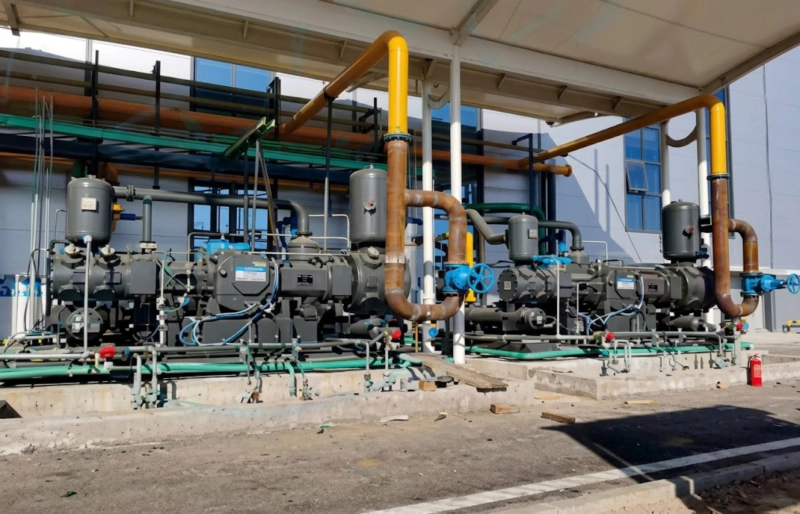
The labyrinth distance piece is an elongated structural housing — typically 300–600 mm in length — bolted between the crankcase and the cylinder body, through which the piston rod passes without contacting the housing walls. Its internal architecture creates a physical separation between the crankcase environment (oil-laden, pressurised by crankcase breathing) and the cylinder environment (oil-free, at process gas pressure) through three functional zones along the rod travel path:
Zone 1 — Crankcase Side
Wiper Rings and Oil Return
At the crankcase end of the distance piece, one or more PTFE wiper rings encircle the piston rod and scrape downward-moving oil from the rod surface, returning it to the crankcase via drain grooves. The wiper rings are passive scrapers, not pressure seals — they do not need to withstand a pressure differential; they only need to remove the oil film from the rod surface before the rod continues into the labyrinth zone. Any oil vapour or mist that passes beyond the wiper rings enters the intermediate cavity.
Zone 2 — Middle Cavity
Vented Intermediate Compartment
The middle cavity of the distance piece is vented to atmosphere through a ported connection in the housing wall. This vent maintains the intermediate space at atmospheric pressure — slightly below crankcase pressure and slightly below the cylinder-side packing pressure. Any oil mist or vapour that passes the wiper rings and enters the middle cavity is diluted and carried out through the atmospheric vent rather than continuing toward the cylinder. Any process gas that leaks past the rod packing on the cylinder side is similarly vented to atmosphere at the middle cavity rather than reaching the crankcase. The middle cavity vent is the critical functional feature that makes the labyrinth distance piece effective: it is the pressure-neutral buffer zone that prevents gas and oil from crossing from one side to the other.
Zone 3 — Cylinder Side
Rod Packing Seal
At the cylinder end of the distance piece, a set of PTFE rod packing rings provides the gas-tight seal that prevents process gas from leaking out of the cylinder along the piston rod. The rod packing faces a pressure differential equal to the stage operating pressure and must maintain an effective seal throughout the service interval. Unlike the wiper rings, the rod packing rings are pressure seals operating against the process gas pressure; they are the component most subject to wear-related gas leakage and are replaced at the scheduled packing service interval.
Why the Middle Cavity Vent Is Critical
The middle cavity vent is the element that most distinguishes the labyrinth distance piece design from a simpler rod seal arrangement. Without it, any imperfection in either the wiper rings (crankcase side) or the rod packing (cylinder side) creates a direct oil migration path to the gas stream. With it, the two sealing functions become independent: the wiper rings only need to reduce oil carry-over to a level the vent can handle, and the rod packing only needs to limit gas leakage to a level the vent can handle. Neither seal needs to be perfect; together, separated by the atmospheric buffer zone, they achieve effective oil-gas isolation.
The vent line from the middle cavity must be routed to a safe discharge location. For nitrogen, argon, and inert gas service, the vent is typically routed to a safe outdoor location or a ventilated exhaust header. For oxygen service, the vent must be routed in accordance with GOST 12.2.052 oxygen safety requirements — oxygen-laden vent gas cannot be discharged into the compressor room. For toxic gas service (NH₃ or other hazardous gases), the vent is routed to a scrubber or safe recovery system. The vent line must remain unobstructed at all times — a blocked middle cavity vent defeats the entire oil-separation function of the distance piece.
Maintenance: Wiper Rings, Rod Packing, and Vent Inspection
Wiper Ring Replacement
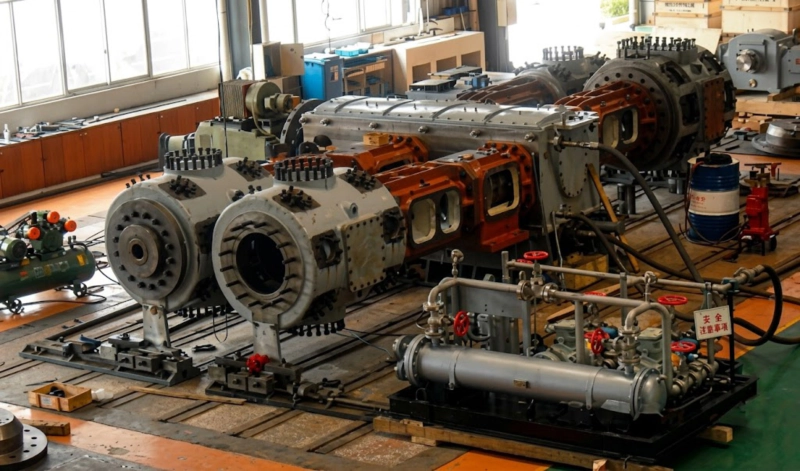
Wiper rings are typically replaced at 8,000–12,000 operating hours. Wear is detected by increasing oil accumulation in the middle cavity — oil droplets appearing at the vent outlet indicate that the wiper rings are no longer effectively scraping the rod surface. At ring replacement, the wiper ring groove dimensions are measured for wear and the piston rod surface is inspected for scoring or polishing that would reduce wiper ring effectiveness.
Rod Packing Replacement
Rod packing rings are replaced at 4,000–8,000 operating hours, more frequently than wiper rings because they face process gas pressure. Wear is detected by increasing gas leakage at the middle cavity vent — process gas appearing at the vent outlet on the cylinder side indicates packing ring bypass. At packing replacement, packing ring groove faces are lapped if worn, and the piston rod surface finish in the packing contact zone is verified against specification.
Vent Line Inspection
The middle cavity vent line is inspected at every maintenance shutdown for blockage, corrosion, and correct routing. A blocked vent defeats the oil separation function entirely; a partially blocked vent creates a backpressure that forces oil-laden gas toward the cylinder side. A simple bubble-flow check — verifying that gas flows freely from the vent outlet during operation — is the standard verification. For oxygen service, the vent outlet is also checked for oil contamination as part of GOST 12.2.052 compliance monitoring.
Piston Rod Surface Condition
The piston rod surface finish in the wiper ring and packing contact zones must be maintained at Ra 0.2–0.4 μm throughout the compressor life. A roughened or scored rod surface accelerates both wiper ring and packing ring wear. Rod surface condition is checked at every ring replacement; rods with scoring deeper than 0.02 mm or surface roughness outside specification are repaired by polishing or replaced. Hard chrome plating of the rod in the contact zones is standard on DW and LW series compressors to maximise surface durability.
Distance Piece Design Comparison: Single vs Double Compartment
| Feature |
Single Compartment |
Double Compartment (Labyrinth) |
| Oil isolation method |
Wiper ring only |
Wiper ring + vented buffer zone |
| Gas-oil isolation reliability |
Moderate |
High |
| Oxygen service (GOST 12.2.052) |
Not accepted |
Standard requirement |
| Toxic gas service |
Not accepted |
Required (with scrubbed vent) |
| Failure mode visibility |
Oil in gas stream (late detection) |
Oil/gas at vent (early detection) |
Related Application · Plastics Manufacturing
Oil-Free Blow Air in ISBM: Why the Same Isolation Principle Applies
The requirement for oil-free compressed air in injection stretch blow moulding (ISBM) production of PET bottles is driven by the same contamination concern that drives oil-free gas compression in oxygen and high-purity nitrogen service: no hydrocarbon oil can contact the product or the product-contact surface. In ISBM, the high-pressure blow air at 35–40 bar contacts the interior of the PET bottle preform during the stretching and blowing process — any oil in the blow air is deposited on the interior surface of the bottle, which is a food-contact surface. The oil-free design of the ISBM blow air compressor eliminates this contamination risk at source. The labyrinth distance piece principle — separating the lubricated crankcase from the oil-free compression cylinder by a vented intermediate zone along the piston rod path — is the same design approach used in the ISBM blow air compressor as in the industrial gas compressors described in this article. The engineering problem and its solution are identical; only the gas and the end application differ.
Related equipment: One-step three-station ISBM machines for PET bottle production — with oil-free blow air compressors using the same distance piece isolation principle as ZW, DW, and LW series industrial gas compressors.
ISBM Machine ›injectionstretchblowmolding.com
FAQ — Labyrinth Distance Piece
Q1: How do I know if the labyrinth distance piece is functioning correctly in service?
The primary in-service indicator is the condition of the middle cavity vent outlet. During normal operation: the vent should discharge a small, steady flow of gas (a mixture of crankcase breathing and minor packing bypass) with no visible oil droplets or mist; there should be no strong odour of process gas at the vent if the service gas is odour-free (nitrogen, argon) — a strong odour indicates significant packing bypass; and the vent flow rate should be steady. A sudden increase in vent flow rate indicates increased gas leakage past the rod packing. Oil droplets at the vent outlet indicate wiper ring bypass. Either condition should trigger an inspection at the next planned opportunity, or sooner if the rate of change is rapid. For oxygen service, the vent outlet is checked for oil with a white cloth wipe test at each weekly inspection as part of GOST 12.2.052 compliance monitoring.
Q2: What is the difference between the distance piece and the piston rod packing gland?
The piston rod packing gland is the assembly of ring seals at the cylinder end of the distance piece that provides the pressure seal against process gas leakage along the piston rod. The distance piece is the structural housing — typically a cast iron or fabricated steel cylinder 300–600 mm long — that contains both the crankcase-side wiper rings and the cylinder-side packing gland, separated by the vented middle cavity. The packing gland is a component inside the distance piece, not a separate item external to it. When operators refer to replacing the rod packing, they are replacing the sealing rings inside the packing gland at the cylinder end of the distance piece housing. When they refer to replacing the wiper rings, they are replacing the oil scraper rings at the crankcase end of the same housing. Both sets of rings are accessed by disassembling the distance piece from the compressor frame.
Q3: Can a single-compartment distance piece be retrofitted to a double-compartment design?
Retrofitting a single-compartment distance piece to a double-compartment vented design is feasible in principle but requires engineering review of the specific compressor frame geometry. The double-compartment housing is longer than the single-compartment version — it must accommodate both the wiper ring zone and the rod packing zone with a vent cavity between them — and the increased length must be accommodated within the available distance between the crankcase face and the cylinder mounting flange. On some compressor frames this distance is sufficient for the retrofit; on others the frame geometry does not allow it without structural modification. For ZW, DW, and LW series compressors originally designed for inert gas or nitrogen service that are being converted to oxygen service, our engineering team can review the frame geometry and advise on the retrofit feasibility. In most cases, DW and LW series compressors are supplied with the double-compartment vented distance piece as standard for all gas services, so the retrofit question primarily arises for older ZW series units originally configured for non-oxygen service.
Spare Parts
Distance Piece Wiper Rings and Rod Packing Sets
OEM wiper ring sets, rod packing ring sets, and complete distance piece maintenance kits for ZW, DW, and LW series oil-free compressors — virgin PTFE for oxygen service, PTFE compound grades for nitrogen and inert gas. Material certificates included. Stocked in Russia for rapid dispatch. Specify compressor model, cylinder stage, and gas service when ordering.