
Selection Guide · Reciprocating Refrigerant Compressor · Cold Storage · Russia · −18°C to −25°C
The reciprocating refrigerant compressor is the dominant technology in Russian cold storage facilities above 500 kW refrigerating capacity — not because it is the only option, but because it outperforms screw and centrifugal alternatives on the specific combination of high-pressure ammonia service, variable-load cold storage duty cycles, part-load energy efficiency, and 25-year design life that characterises Russian large-scale cold chain investment. This guide covers the complete selection and sizing process for a reciprocating refrigerant compressor at −18°C to −25°C cold storage evaporating conditions, the performance comparison with screw compressor alternatives at the same duty, and the energy cost implications at current Russian industrial electricity tariffs.
✓ Sizing at −18°C to −25°C
✓ Part-Load COP
✓ 20-Year Energy Cost
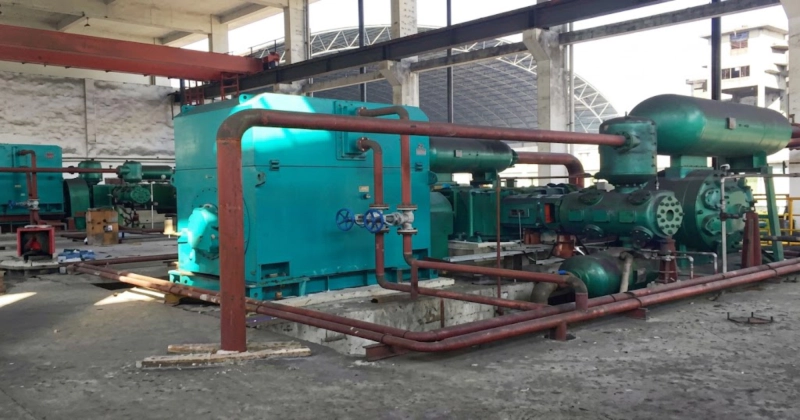
4MW series reciprocating ammonia refrigerant compressor in service at a Russian large-scale cold storage facility — the reciprocating compressor’s ability to maintain high COP across a wide range of part-load conditions, combined with its compatibility with ammonia refrigerant and its 25-year design life with scheduled maintenance, makes it the preferred specification for Russian cold storage facilities above 500 kW refrigerating capacity. Screw compressors achieve higher COP at full load but degrade more sharply at the 50–70% part-load conditions that represent the average annual operating point of a temperature-controlled cold store.
−25°C
NH₃
Advantage
Design Life
The Cold Storage Load Profile: Why Part-Load COP Is the Decisive Factor
The compressor technology decision for a cold storage facility is often framed around the full-load COP comparison — which compressor achieves the highest coefficient of performance at the design point of peak summer load, maximum condensing temperature, and rated evaporating temperature. This framing systematically favours the screw compressor, which achieves a 5–10% COP advantage over the equivalent reciprocating machine at full load. But full-load conditions occur for only a fraction of the annual operating hours in a Russian cold storage facility.
A typical Russian frozen food cold store at −22°C operates at or near its design refrigerating load only during the summer months when outdoor temperatures are highest and product throughput is at seasonal peak — perhaps 600–900 hours per year at 90–100% load. For the remaining 7,100–7,400 operating hours per year the store operates at 40–75% of design load: winter months when the outdoor temperature reduces condenser duty, spring and autumn months of moderate load, and the daily cycle within any season where the nighttime load is lower than the daytime peak. A compressor technology decision based exclusively on full-load COP is correct for only 8–12% of the annual operating hours and ignores the COP comparison at the part-load conditions that determine 88–92% of the annual energy consumption.
The reciprocating compressor’s part-load COP advantage over the screw compressor is the primary argument for its selection at Russian cold storage duty. A reciprocating refrigerant compressor achieving COP 2.8 at full load maintains COP 2.6–2.75 at 50% part-load through suction valve unloading — a reduction of approximately 5–8%. A screw compressor achieving COP 2.9 at full load degrades to COP 2.0–2.2 at 50% part-load as the internal volume ratio becomes fixed while the actual pressure ratio changes — a COP reduction of 24–31%. The annual weighted average COP across the full load profile is therefore higher for the reciprocating machine despite its lower full-load COP.
Reciprocating vs Screw: The Performance Comparison at Cold Storage Duty
| Performance Criterion | Reciprocating (DW/4MW NH₃) | Screw (NH₃) |
|---|---|---|
| COP at 100% load, −22°C/+35°C | 2.7–3.0 | 2.8–3.2 (+5–10%) |
| COP at 70% load | 2.55–2.85 (−5%) | 2.2–2.6 (−18%) |
| COP at 50% load | 2.5–2.75 (−8%) | 2.0–2.2 (−28%) |
| Annual weighted COP (typical profile) | 2.6–2.8 | 2.2–2.5 |
| Design life (scheduled maintenance) | 25–30 years | 15–20 years |
| Capital cost (equal refrigerating capacity) | Higher (10–20%) | Lower |
| Capacity control method | Suction valve unloading (25% steps) | Slide valve (continuous but with COP penalty) |
| Ammonia compatibility | Full compatibility, no oil separation issue | Requires effective oil separation; NH₃ entrains oil in screw |
| Maintenance skill requirement | Standard mechanical workshop; GOST training | Specialist rotor resurfacing; fewer local suppliers |
COP values are indicative for single-stage NH₃ at the stated conditions. Actual values depend on specific model, condensing temperature, degree of suction superheat, and inter-stage cooling effectiveness. The relative performance comparison between reciprocating and screw is consistent across manufacturers at equivalent NH₃ duty.
Sizing the Reciprocating Refrigerant Compressor for Cold Storage
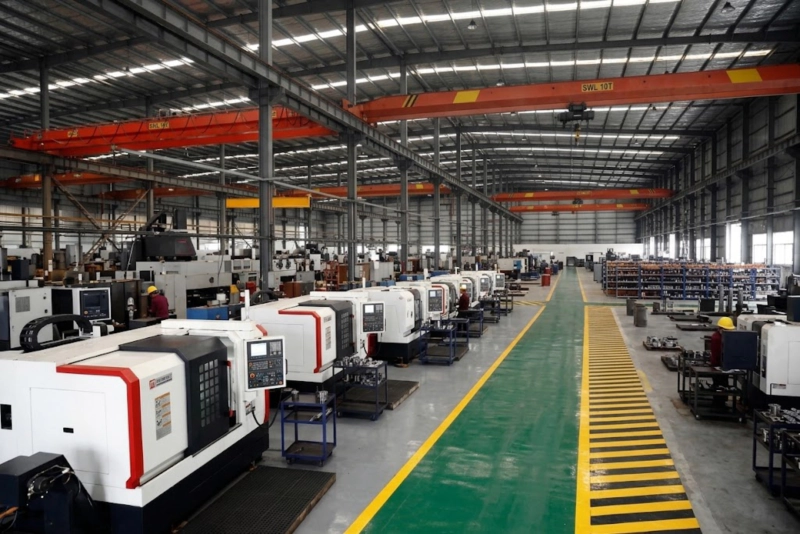
Sizing the reciprocating refrigerant compressor for a Russian cold store requires four inputs that together determine the required machine displacement and the corresponding DW or 4MW series model:
Indicative calculation only. Full thermodynamic analysis required for specific compressor selection. Discharge temperature at this condition is approximately 140–148°C — at the borderline of acceptable; engineering review of the specific compressor model’s rated discharge temperature limit is required before final selection.
20-Year Energy Cost: The Case for the Annual Weighted COP
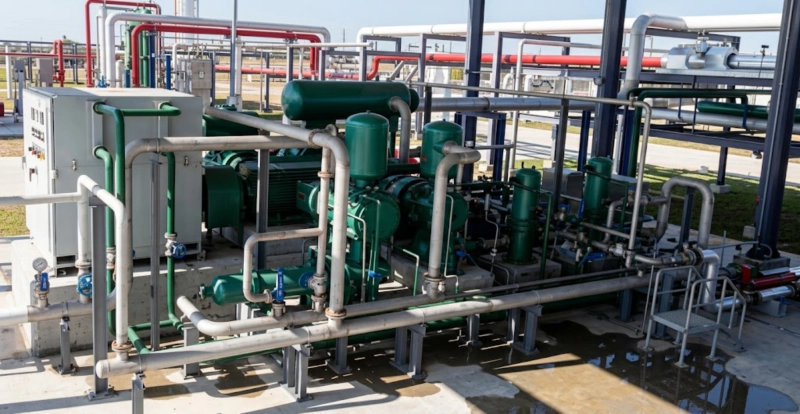
The 20-year energy cost comparison between a reciprocating refrigerant compressor and a screw compressor at the same cold storage duty illustrates why the annual weighted COP — not the full-load COP — is the correct basis for the technology decision. Using the 400 kW cold store from the sizing example above, with the load profile and electricity tariff assumptions stated:
Average compressor power: 400 ÷ 2.7 = 148 kW
Annual electricity: 148 kW × 8,000 h = 1,184,000 kWh
Annual electricity cost: 7.1 million roubles
20-year electricity cost: 142 million roubles
Average compressor power: 400 ÷ 2.35 = 170 kW
Annual electricity: 170 kW × 8,000 h = 1,360,000 kWh
Annual electricity cost: 8.2 million roubles
20-year electricity cost: 163 million roubles
The reciprocating compressor capital cost premium of 10–20% over the screw alternative at 400 kW adds approximately 2–5 million roubles to the initial investment. The 20-year energy cost advantage of 21 million roubles recovers this premium approximately 15–20 times over. The energy cost comparison dominates the lifecycle analysis decisively in favour of the reciprocating machine for cold storage duty with the typical Russian part-load profile.
ISBM Mould Cooling and Cold Store Refrigeration: Two Temperature Control Problems with the Same Engineering Logic
The temperature control engineering in an injection stretch blow moulding (ISBM) machine shares a fundamental principle with the cold store refrigerant compressor selection analysis in this article: both systems are evaluated on their part-load performance rather than their peak-load performance, because both spend the majority of their operating hours at partial demand. In ISBM mould cooling, the mould temperature controller cycles the cooling water flow rate between full-flow and reduced-flow as the mould temperature tracks the target setpoint through the production cycle — a chiller selected on peak mould cooling load alone will be significantly oversized for the average cooling duty and will short-cycle inefficiently. The ISBM equipment engineer who specifies the mould cooling chiller on annual weighted cooling demand rather than peak instantaneous demand is applying exactly the same logic that supports the reciprocating compressor selection for the cold store on annual weighted COP rather than full-load COP. The engineering discipline of weighted-average performance evaluation over the actual operating profile — rather than rating-point performance — is the correct basis for both decisions. Cold chain logistics companies that supply frozen fish and meat to retail in packaging produced by ISBM machines are stakeholders in both calculations simultaneously: the cold store energy bill and the ISBM plant energy bill both feed into the delivered product cost.
FAQ — Reciprocating Refrigerant Compressor for Russian Cold Storage
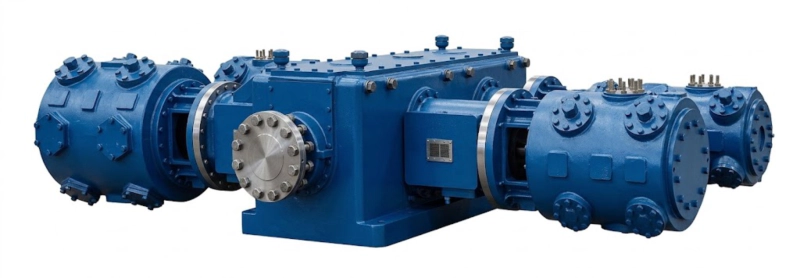
DW and 4MW Series NH₃ for Single-Stage Cold Storage
DW series (55–350 kW shaft) and 4MW series (350–1,600 kW shaft) single-stage ammonia reciprocating refrigerant compressors for cold storage at −18°C to −25°C evaporating — GOST-R and EAC certified, suction valve unloading capacity control standard, 20-year weighted COP analysis provided on request. Specify your refrigerating capacity, evaporating temperature, condensing temperature, and site location for a model recommendation and energy cost comparison within 48 hours.