Application Guide · Nitrogen Compressor · Electronics Fabrication · Oil-Free · Purity · Russia
Nitrogen in electronics fabrication is not the same product as nitrogen in pipeline blanketing or cylinder filling. The purity, cleanliness, and moisture specifications for nitrogen used in reflow soldering, wave soldering, semiconductor bonding, and cleanroom purging are orders of magnitude more stringent than for industrial nitrogen — and the compressor system that handles this nitrogen must be designed to avoid introducing any contamination that would degrade the product specification. A standard lubricated DW series nitrogen compressor produces nitrogen that is perfectly adequate for pipeline blanketing or fire suppression but unsuitable for electronics fabrication without a complete system redesign. This guide covers the nitrogen purity specifications for Russian semiconductor and PCB manufacturing, the compressor specification that preserves those specifications through the compression process, and the system design choices that determine whether the nitrogen delivered to the process tool meets the electronics-grade standard at all operating conditions.
✓ Electronics-Grade N₂ Purity
✓ Oil-Free Compressor Spec
✓ PTFE Ring Maintenance
✓ Downstream Purification
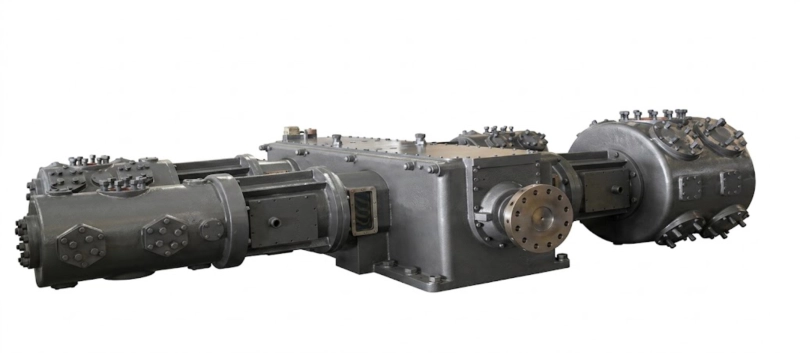
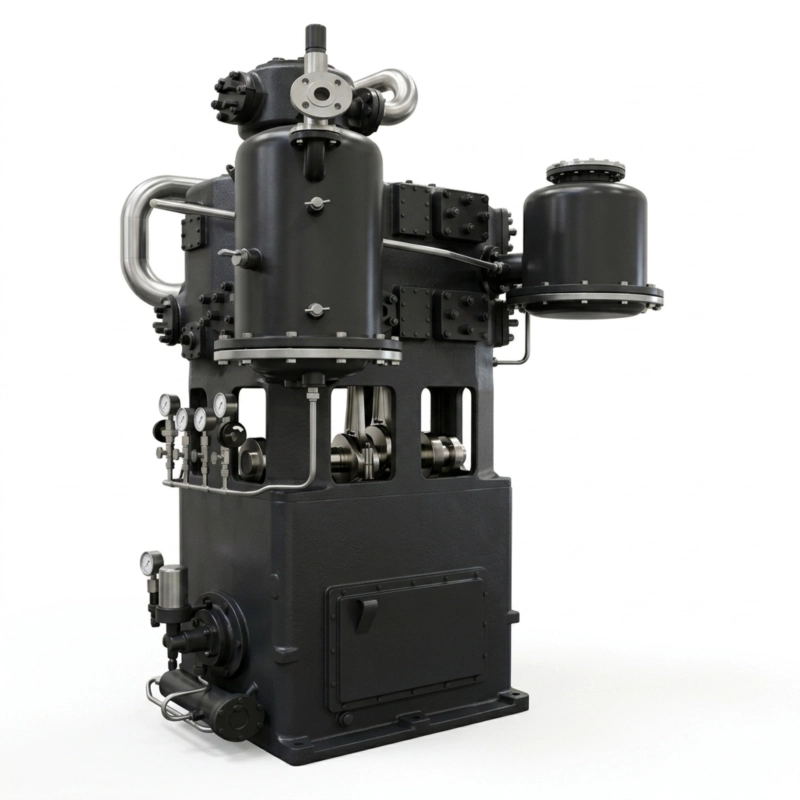
DW series oil-free nitrogen compressors for electronics fabrication supply — the compressor is one of the most critical quality control points in the nitrogen distribution system for a Russian semiconductor or PCB manufacturing plant. An oil-free cylinder with virgin PTFE piston rings and packing ensures zero hydrocarbon carry-over from the compression stage, but PTFE particle contamination from ring wear must also be managed through a downstream coalescing filter. The combination of oil-free compression, moisture management, and particulate filtration determines whether the nitrogen at the process tool meets the electronics-grade specification at all operating conditions.
Why Electronics Fabrication Nitrogen Demands a Different Compressor
The nitrogen used in industrial applications — pipeline blanketing, purging, fire suppression, cylinder filling for general industrial use — is typically specified at 99.5% to 99.9% purity with no particulate or hydrocarbon limit beyond what is supplied by the nitrogen source. A lubricated DW series compressor delivering this gas is entirely appropriate: the trace hydrocarbon contamination from cylinder lubrication is negligible against the 0.1–0.5% impurity budget that industrial nitrogen tolerates, and the small quantities of PTFE particles that would be present in an oil-free design are unnecessary when downstream purification is not part of the system.
Electronics fabrication imposes a completely different specification. The nitrogen blanket over a reflow solder joint must maintain an oxygen level below 50–100 ppm to prevent solder oxidation that causes poor joint quality and rework. The nitrogen purge in a wire bonding machine must be below 10 ppm oxygen to prevent gold or aluminium wire oxidation during the bonding process. The nitrogen carrier in semiconductor diffusion furnaces must be 99.9999% (six nines) purity with moisture below 1 ppm and total hydrocarbons below 0.1 ppm, because any contaminant that enters the diffusion tube at processing temperature deposits on the wafer surface and creates defects that destroy the semiconductor device.
At these purity levels, the compressor is no longer a transparent component in the nitrogen distribution system. Every surface the nitrogen contacts in the compressor — cylinder bore, piston rings, rod packing, valve seats, inter-stage cooler tubes — is a potential source of contamination that the downstream purification system must remove before the nitrogen reaches the process tool. The compressor specification for electronics fabrication nitrogen must minimise the contamination introduced at each contact surface and ensure that the downstream purification system is correctly sized for the residual contamination load from the oil-free compressor.
What a lubricated compressor introduces
Hydrocarbon oil vapour at 1–50 ppm by mass at the compressor discharge. At 50 ppm hydrocarbons, the nitrogen does not meet any electronics-grade specification. Oil vapour carries over through downstream purifiers inefficiently because it requires a heated catalytic oxidiser or activated carbon adsorber to remove — adding capital cost and a maintenance burden that a correctly specified oil-free compressor eliminates entirely. A lubricated compressor is the wrong starting point for electronics fabrication nitrogen regardless of the downstream purification investment.
What an oil-free compressor introduces
Zero hydrocarbon contamination from compression. The oil-free compressor does introduce PTFE submicron particles from ring and packing wear — typically 10–1,000 particles per m³ at 0.1 μm in the compressor discharge — and trace moisture from ambient ingestion into the suction. Both of these contamination sources are handled routinely and cost-effectively by a downstream coalescing filter for particulate and a molecular sieve drier for moisture. Starting with an oil-free nitrogen compressor reduces the downstream purification system to two well-understood components rather than the three or four required to manage oil carry-over from a lubricated machine.
Electronics-Grade Nitrogen Purity Specifications at Russian Fabrication Plants
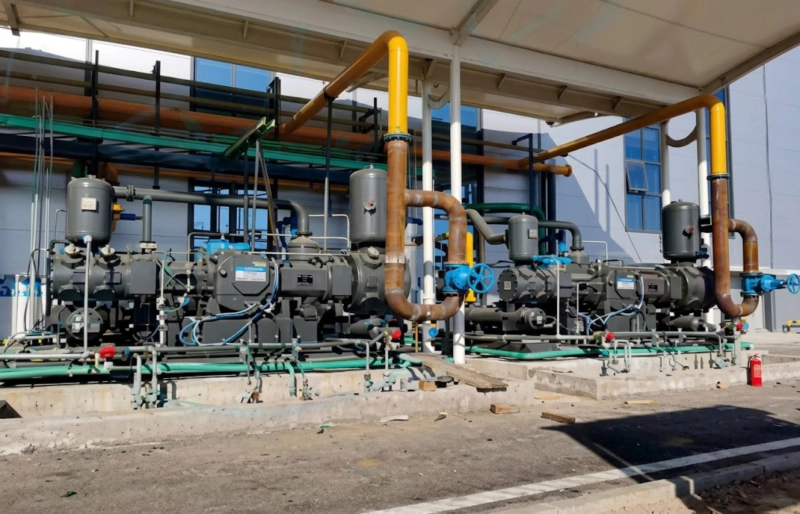
Russian electronics manufacturing plants apply nitrogen purity specifications that follow international electronics industry standards, typically IEC 61076 for PCB assembly or the SEMI standards for semiconductor process gases, translated into Russian technical specifications in procurement contracts. The following table maps the nitrogen quality tiers to the specific electronics fabrication processes and the corresponding compressor and system specification requirements:
| Process Application |
N₂ Purity |
O₂ max |
Dew Point |
THC max |
Compressor Spec |
| Reflow solder (PCB) |
99.999% |
50 ppm |
−60°C |
0.5 ppm |
Oil-free DW/ZW + coalescing filter + mol sieve |
| Wave solder (PCB) |
99.999% |
100 ppm |
−60°C |
0.5 ppm |
Oil-free DW/ZW + coalescing filter + mol sieve |
| Wire bonding |
99.999% |
10 ppm |
−70°C |
0.1 ppm |
Oil-free DW + coalescing + mol sieve + ambient temp purifier |
| Diffusion furnace (wafer) |
99.9999% |
1 ppm |
−80°C |
0.1 ppm |
Oil-free DW + full purification train (catalytic + mol sieve + getter) |
| Cleanroom purge/inerting |
99.99% |
100 ppm |
−40°C |
1 ppm |
Oil-free ZW/DW + mol sieve only |
THC = total hydrocarbons. Specifications are indicative for typical Russian electronics manufacturing procurement requirements. Individual plant specifications may be more or less stringent depending on the process tool supplier requirements and the quality management system tier. Always verify against the specific process tool supplier gas specification before finalising the compressor and purification system design.
The Oil-Free Nitrogen Compressor Specification for Electronics Service
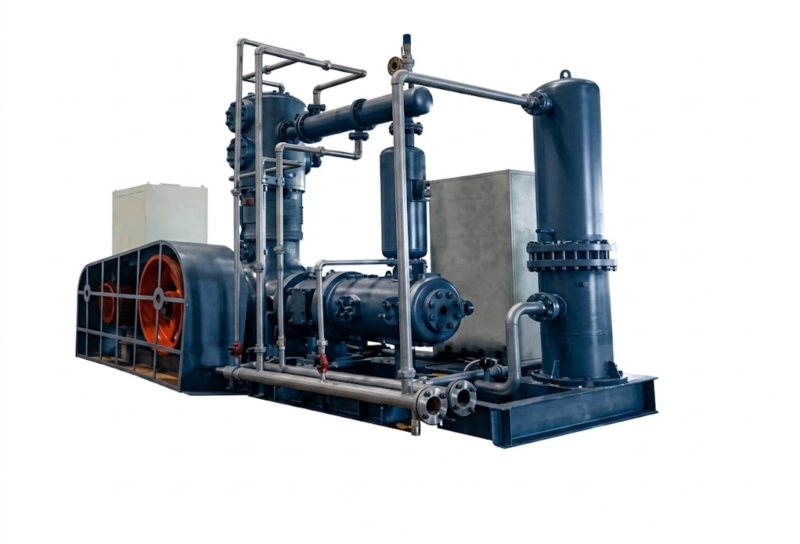
The oil-free nitrogen compressor specification for electronics fabrication service is defined by seven requirements that together ensure the compressor introduces no hydrocarbon contamination and minimises the particulate and moisture load on the downstream purification system. Each requirement is a functional necessity, not an option — omitting any one produces a compressor that cannot reliably deliver electronics-grade nitrogen regardless of the downstream system design:
1
Virgin PTFE piston rings — no filled grades. The piston rings must be machined from virgin (unfilled) PTFE only. Filled PTFE grades — glass-filled, carbon-filled, bronze-filled — produce abrasive wear particles that are harder and more reactive than pure PTFE particles. In electronics fabrication nitrogen, glass fibre particles from glass-filled PTFE rings can contaminate process tool surfaces and cause device defects. Only virgin PTFE, which produces soft, chemically inert wear particles that are captured by a standard PTFE-particle-rated coalescing filter, is acceptable for electronics nitrogen service.
2
No cylinder lubrication feed of any kind. The standard DW series machine in nitrogen service uses a wick-fed or metered-drop cylinder lubrication system that delivers small quantities of lubricating oil to the cylinder bore through a cylinder lubrication port. For electronics service, this port must be blanked off and the lubrication system completely removed or disabled. A compressor that has operated with cylinder lubrication and has then had the lubrication disabled but not the cylinder and packing degreased will continue to release traces of embedded oil from the bore surface for thousands of operating hours — a new oil-free machine or a fully degreased and re-equipped conversion is required.
3
Stainless steel or cleaned carbon steel piping on all gas-contact surfaces downstream of the compressor. The inter-stage coolers, discharge pipework, high-pressure reservoir, and connection piping must be constructed from stainless steel (AISI 316L for the wetted surfaces) or thoroughly cleaned and passivated carbon steel. Galvanised or coated piping introduces zinc, chromate, or organic coating particles into the nitrogen stream. Compressed-air-grade pneumatic fittings with brass bodies are not suitable for electronics-grade nitrogen service — brass contains zinc and lead that are reactive contaminants at electronics-grade purity levels.
4
Coalescing filter immediately downstream of the final compression stage. A PTFE-particle-rated coalescing filter (0.01 μm absolute rating) installed immediately after the final-stage discharge captures the PTFE wear particles from the oil-free cylinder before they enter the downstream piping system. The filter element must be replaced at the interval determined by the particle count measured at the filter outlet — not on a fixed calendar schedule, because the particle generation rate from PTFE rings varies with the ring wear state. A particle counter installed downstream of the filter provides real-time monitoring of filter breakthrough and ring condition simultaneously.
5
Molecular sieve drier to −70°C dew point. A molecular sieve drying system with twin alternating beds sized for the compressor maximum flow rate must achieve −70°C pressure dew point at the drier outlet under all operating conditions including summer peak flow and winter cold-start conditions. The drier bed size must account for both the moisture in the nitrogen source and the moisture that enters the compressor suction from the ambient air ingested at low suction pressure conditions. Automatic bed regeneration with nitrogen purge maintains the drying capacity continuously. The dew point must be monitored online with a calibrated dew point transmitter — a manual periodic check is insufficient for a process that depends on continuous moisture specification compliance.
6
Nitrogen source purity at or above the delivery specification. The oil-free nitrogen compressor cannot increase the nitrogen purity — it can only transport it without adding contamination. If the nitrogen source is a PSA generator producing 99.99% purity with residual oxygen at 100 ppm, the delivered nitrogen after oil-free compression can be no better than 99.99% with 100 ppm oxygen — below the 99.999% and 50 ppm oxygen level required for reflow soldering. For electronics fabrication at 99.999% and above, the nitrogen source must be ASU liquid nitrogen or a membrane plus PSA combination producing at least 99.999% purity. The compressor and the source must together meet the specification — the compressor alone cannot compensate for an inadequate source.
7
Dedicated electronics-service nitrogen circuit — no shared pipework with industrial nitrogen. The electronics-grade nitrogen distribution system must be physically separated from any industrial nitrogen circuit at the same plant. A cross-connection or back-flow event between an industrial nitrogen system (which may have traces of oil, moisture, or higher oxygen content) and the electronics circuit can contaminate the entire electronics distribution system in seconds. Separate compressors, separate manifolds, separate distribution pipework, and separate pressure regulation are required. In-line check valves alone are not sufficient isolation for electronics-grade nitrogen circuits.
Related Application · Plastics Manufacturing
Oil-Free Blow Air and Electronics-Grade Nitrogen: The Same Zero-Contamination Logic
The zero-hydrocarbon contamination requirement that defines the oil-free nitrogen compressor for electronics fabrication is the same requirement that governs the blow air compressor in an injection stretch blow moulding (ISBM) machine. In ISBM, the blow air contacts the interior wall of a PET preform during the blowing stroke — the interior of the formed bottle becomes a food contact surface. Any oil vapour carried over from a lubricated blow air compressor coats this interior surface and creates a hydrocarbon contamination pathway to the food or beverage product. The ISBM blow air specification therefore requires oil-free compression with virgin PTFE rings in the same way that the electronics fabrication nitrogen specification requires oil-free compression — the engineering discipline is identical even though the application is different. A The Russian semiconductor plant engineer who understands why the nitrogen compressor for the diffusion furnace must be oil-free with virgin PTFE rings and a downstream coalescing filter understands, with no additional explanation needed, why the ISBM blow air compressor at the packaging plant producing PET bottles for food and pharmaceutical use is specified to exactly the same standard. The contamination prevention logic is the same: the compressed gas contacts a surface that determines the quality and safety of the final product, and any contamination introduced by the compressor propagates directly to that quality outcome.
Related equipment: One-step three-station ISBM machines for PET bottle production — with oil-free blow air compression applying the same virgin PTFE ring and zero-contamination standard as electronics-grade nitrogen compression.
ISBM Machine ›injectionstretchblowmolding.com
FAQ — Nitrogen Compressor for Electronics Fabrication
Q1: Our reflow solder line currently uses liquid nitrogen delivered in dewars. We want to switch to an on-site nitrogen compressor to reduce cost. What purity can a DW series oil-free compressor deliver from a PSA source and is it sufficient for our reflow solder spec?
A DW series oil-free nitrogen compressor fed from a high-purity PSA nitrogen generator (99.999% purity, residual oxygen below 10 ppm) can deliver nitrogen at the reflow solder specification after downstream molecular sieve drying to −60°C dew point and coalescing filtration for PTFE particle removal. The critical constraint is the PSA generator output purity — not all PSA generators reach 99.999% at their rated flow rate. A PSA nitrogen generator specified at 99.999% at nominal flow may fall to 99.99% or lower when the flow demand exceeds the nominal rate, for example during solder oven startup or when multiple process tools are running simultaneously. The nitrogen system design must include a buffer storage vessel sized to absorb peak demand events without forcing the PSA generator to reduce purity. The buffer vessel, sized at 5–10 minutes of maximum process demand at the rated PSA flow, maintains constant delivery pressure and purity to the process tools independent of short-duration demand peaks. The compressor runs continuously to recharge the buffer vessel rather than cycling to match demand, which is beneficial for PTFE ring life and valve durability. The total system cost — PSA generator, oil-free compressor, buffer vessel, molecular sieve drier, coalescing filter, and distribution pipework — typically achieves payback against delivered liquid nitrogen cost within 18–36 months for a reflow solder line consuming above 50 Nm³/h of nitrogen.
Q2: The particle counter downstream of our oil-free nitrogen compressor is showing a step increase in particle count at 0.1 micron. The compressor has run 5,200 hours since the last ring replacement. Is this a ring failure or a filter breakthrough?
A step increase in 0.1 μm particle count after 5,200 hours of operation most likely indicates advancing ring wear rather than filter breakthrough, because filter breakthrough typically produces a gradual increase rather than a step change. The step increase pattern suggests that the ring gap has widened to the point where the gas bypass per cycle has increased enough to entrain a noticeably higher particle load from the ring face. The correct diagnostic sequence is: first, check the filter differential pressure — if it has not increased significantly, the filter element is not yet at its loading limit and the particle breakthrough is not filter-related; second, measure the compressor discharge temperature against the baseline — if the temperature has risen by more than 5–8°C above the post-installation baseline, this independently verifies advancing ring wear; third, open the cylinder at the stage showing the highest temperature rise and measure the ring gap with feeler gauges. If the gap is at or above the replacement limit (typically 1.5–2.0% of bore diameter), replace the rings immediately. If the gap is within limits, replace the filter element and continue monitoring weekly rather than monthly. At 5,200 hours on an electronics fabrication nitrogen compressor operating at moderate discharge temperature, ring replacement at or near this point is within the expected interval range — schedule it within the next 300–500 hours regardless of the gap measurement outcome.
Q3: We need electronics-grade nitrogen at 20 MPa for a specialty gas application. Can an oil-free DW series compressor reach this pressure while maintaining the purity specification?
Yes — oil-free DW series nitrogen compressors are offered in 4-stage configurations reaching 20 MPa (200 bar) discharge pressure with the same oil-free cylinder specification used at lower pressures. At 20 MPa the machine designation is DW-X/200-O or equivalent, where the discharge pressure of 200 bar is explicitly stated in the model number. The purity considerations at 20 MPa are the same as at lower pressures: zero hydrocarbon contamination from oil-free cylinders, PTFE particle generation from ring wear captured by a downstream coalescing filter, and moisture management through a molecular sieve drier on the final stage discharge. The additional consideration at 20 MPa is that the final-stage compression ratio is relatively low — the fourth stage takes suction at approximately 5 MPa and discharges at 20 MPa, a ratio of 4:1 — which produces moderate discharge temperatures and does not challenge the PTFE ring thermal limit. The coalescing filter for a 20 MPa oil-free nitrogen circuit must be rated for 20 MPa working pressure — a standard low-pressure filter cannot be substituted regardless of its particle retention rating. Our supply package for 20 MPa electronics-grade nitrogen includes the oil-free compressor, the 20 MPa rated coalescing filter, the molecular sieve drier rated for the final stage discharge pressure and flow, and all inter-stage instrumentation. Specify the nitrogen source purity, the maximum delivery flow rate, and the downstream application when enquiring.
Electronics-Grade Nitrogen Compressors
Oil-Free ZW and DW Series for Semiconductor and PCB Nitrogen Supply
Oil-free ZW series (2–75 kW, up to 30 MPa) and DW series (55–350 kW, up to 30 MPa) nitrogen compressors for electronics fabrication — virgin PTFE rings, no cylinder lubrication, stainless steel wetted parts, molecular sieve drier and coalescing filter package available. Specify your nitrogen source purity, required delivery flow rate and pressure, and process application for a complete system specification within 48 hours.