Application Guide · Fish Processing · NH₃ Compressor · Blast Freezing · Russia / Far East
Fish processing plants and seafood freezing facilities in Russia’s Far East, Murmansk, and Sakhalin regions operate some of the most demanding NH₃ refrigeration systems in the Russian cold chain industry. Deep blast freezing at −35°C to −40°C evaporating temperature, high product throughput in seasonal processing campaigns, and remote location maintenance challenges all shape the refrigeration system design. This guide covers NH₃ compressor selection, two-stage system architecture, and safety requirements specific to fish processing and blast freezing in Russia.
✓ −35°C to −48°C Evaporating
✓ DW / 4MW Series
✓ GOST-R Certified · Russia
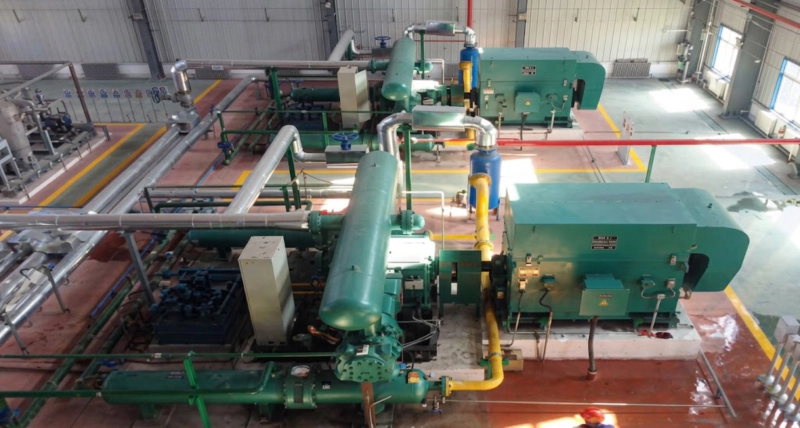
NH₃ refrigerant compressor in service at a large fish processing and blast freezing facility — two-stage ammonia system, low-stage evaporating temperature −43°C to −48°C for blast freezing tunnels, high-stage suction from chilled seawater and product chill rooms. DW series for medium-capacity plants; 4MW series for large-scale fish processing complexes with blast freezing throughput above 100 tonnes per day.
Fish Processing Refrigeration: What Makes It Different
Refrigeration at fish processing plants differs from general cold storage refrigeration in three fundamental ways that shape the NH₃ compressor specification. First, the product is highly perishable: whole fish and gutted fish deteriorate within hours at temperatures above +2°C, so the chilling and freezing process must begin within minutes of catch or delivery. Second, blast freezing throughput is measured in tonnes per hour and must be maintained continuously through the processing campaign — a six-week salmon season in the Russian Far East, for example, requires continuous NH₃ refrigeration system operation with no planned shutdown for the duration of the campaign. Third, the seasonal nature of fish processing means the refrigeration system alternates between high-load campaign periods and low-load or idle periods between seasons, placing specific demands on the NH₃ compressor capacity control and shutdown procedure.
The NH₃ compressor at a fish processing plant must therefore be sized for the peak campaign load — not the annual average — and must be capable of running continuously at or near full load for weeks at a time. The DW series covers fish processing plants with blast freezing capacities up to approximately 50–80 tonnes of fish per day. Above this throughput, the 4MW series is the standard specification, providing the symmetrically balanced frame vibration performance and longer valve inspection interval that are particularly valuable in a continuously running, remotely located facility where compressor downtime directly and immediately interrupts the processing campaign.
Evaporating Temperature and Two-Stage NH₃ System Design
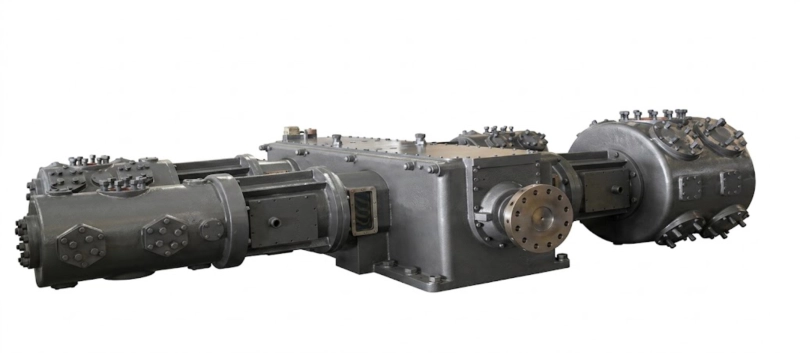
The blast freezing tunnels at a fish processing plant require NH₃ evaporating temperatures of −43°C to −48°C to achieve the air temperature of −35°C to −40°C needed to freeze a 1–2 kg whole fish from +5°C to −18°C centre temperature in 2–4 hours. At these low evaporating temperatures, the suction pressure at the NH₃ compressor inlet falls to approximately 0.7–1.2 bar absolute, and single-stage compression from this suction pressure to the condensing pressure of 10–14 bar absolute (at +30°C to +35°C condensing temperature) would require a compression ratio of 10:1 to 15:1 in a single stage. This is thermodynamically inefficient and produces discharge temperatures that exceed safe cylinder operating limits in a single-stage machine.
Two-stage NH₃ compression is therefore the standard system architecture for fish processing blast freezing. A low-stage NH₃ compressor handles suction from the blast freezing tunnel evaporators at −43°C to −48°C evaporating temperature, compressing to an intermediate pressure of approximately 2.5–4.0 bar absolute (corresponding to −10°C to −0°C saturation temperature). The high-stage NH₃ compressor takes this intermediate pressure as its suction, adds the load from the chilled seawater system and product chill rooms operating at −5°C to +2°C evaporating temperature, and compresses the combined flow to the condensing pressure. An inter-stage flash vessel (economiser) between the two stages improves the system COP by flashing a portion of the high-pressure liquid to cool the remaining liquid before it enters the blast freeze evaporators.
| Circuit Point | Temperature | NH₃ Pressure | Function |
|---|---|---|---|
| Blast freeze evaporator | −43°C to −48°C | 0.7–1.2 bar | NH₃ boils at low pressure, absorbs heat from blast tunnel air |
| Low-stage compressor suction | −43°C to −48°C sat. | 0.7–1.2 bar | NH₃ vapour enters low-stage NH₃ compressor |
| Inter-stage (economiser) | −10°C to −0°C sat. | 2.5–4.0 bar | Low-stage discharge; flash vessel de-superheats before high stage |
| High-stage compressor suction | −5°C to +2°C sat. | 3.5–5.0 bar | Combined inter-stage + chill room evaporator load |
| Condenser (water or evaporative) | +30°C to +35°C sat. | 11–14 bar | NH₃ condenses; liquid subcooled before expansion |
Compressor Selection: DW vs 4MW for Fish Processing
The selection between DW and 4MW series NH₃ compressors for fish processing follows the same capacity and frame-type logic as general cold storage, with the additional consideration of remote location and seasonal campaign operation:
- Processing capacity up to 50–80 tonnes/day
- Low-stage and high-stage models in 55–350 kW
- Two-stage NH₃ system with inter-stage flash vessel
- Suitable for regional fish processing plants
- Lower capital cost vs 4MW at equivalent capacity
- 380V supply available for smaller models
- Processing capacity above 80–100 tonnes/day
- 350–1,600 kW; single machine covers blast freeze load
- Longer valve interval (3,000–5,000 h) suits remote sites
- Symmetrically balanced frame — forces and couples cancelled
- Standard for large Far East and Murmansk fish complexes
- 6 kV / 10 kV motor; MV site infrastructure required
| Plant Type | Throughput (t/day) | Blast Freeze Cap. (kW) | NH₃ Compressor | Motor Power (kW) |
|---|---|---|---|---|
| Small coastal plant | 5–20 | 150–500 | DW series | 55–160 |
| Regional processing plant | 20–80 | 500–1,500 | DW or 4MW series | 160–500 |
| Large Far East complex | 80–300 | 1,500–5,000 | 4MW series | 400–1,600 |
| Floating factory vessel | 10–60 | 300–1,200 | DW series (marine) | 110–400 |
Blast freezing capacity shown at −45°C evaporating / +32°C condensing NH₃ conditions. Actual capacity depends on specific evaporating and condensing temperatures, product type, and blast tunnel air velocity. All DW and 4MW series NH₃ compressors supplied with copper-free wetted components and GOST-R certification.
NH₃ Safety in Fish Processing Facilities
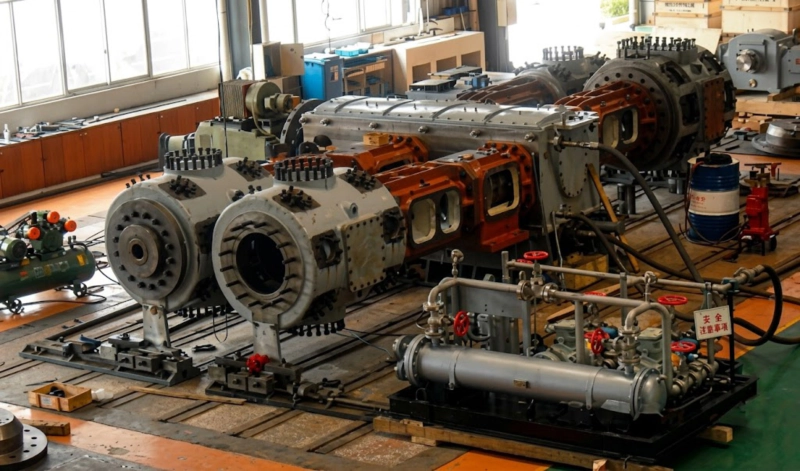
Fish processing facilities using NH₃ refrigeration in Russia are subject to the same Federal Law 116-FZ hazardous production object (HPO) classification as large cold storage facilities when the ammonia inventory exceeds defined thresholds. Fish processing plants are particularly sensitive environments for NH₃ safety because the processing floors have high personnel density — large teams of workers operate continuously in close proximity to the refrigeration equipment — and because the seafood products being processed are highly sensitive to any contamination from NH₃ gas release.
The NH₃ compressor safety requirements for fish processing service follow the same GOST 12.2.052 and Federal Law 116-FZ framework as general cold storage, with additional attention to the processing floor environment:
Remote Location Maintenance Considerations
Many of Russia’s major fish processing facilities are located in geographically remote areas — Petropavlovsk-Kamchatsky, Korsakov on Sakhalin, Nakhodka in Primorsky Krai, or seasonal processing camps on the Kola Peninsula — where logistical access for specialist maintenance personnel and spare parts is substantially more difficult than for a facility in a major industrial city. This remote location factor directly influences the NH₃ compressor specification in two practical ways:
Spare parts inventory on-site: A full set of gas valve elements, PTFE piston rod packing rings (if oil-free option is specified), inter-stage gasket sets, and crankcase oil filter cartridges is stocked at the facility before the processing campaign begins. For 4MW series compressors at remote sites, a complete set of pistons, cylinder liners, and crosshead components is also held on-site as insurance against an unplanned major failure during the campaign period. Our Russian spare parts facility dispatches to all Russian Far East ports, but air freight from Moscow to Petropavlovsk-Kamchatsky takes 2–3 days — a delay that is acceptable for non-urgent consumables but not for a compressor failure during peak campaign season.
Extended valve inspection intervals: The 4MW series NH₃ compressor’s valve inspection interval of 3,000–5,000 hours is particularly valuable at remote fish processing sites because it reduces the frequency of specialist valve service visits during the campaign season. A 4MW unit starting a 1,500-hour salmon campaign at the beginning of the valve interval has a comfortable margin before valve inspection is due, allowing the campaign to complete before the planned maintenance shutdown. DW series valve inspection at 2,000–3,000 hours may require a valve service visit during a 1,500-hour campaign if the unit is near its interval at campaign start — a factor that operators at remote sites routinely incorporate into their pre-campaign maintenance planning.
Fish Packaging PET Bottles and the NH₃ Cold Chain Connection
PET bottles produced on injection stretch blow moulding (ISBM) lines are used throughout the Russian fish and seafood retail supply chain — for fish sauce, preserved seafood, brine-packed products, and marinated fish. These food-contact PET containers are produced in accordance with TR TS 021/2011 (Eurasian food contact safety regulation), which requires that the blow air contacting the bottle interior during the stretch-blow cycle meets ISO 8573-1 Class 1 oil content standards. The fish processing facilities that fill these PET bottles with their products operate NH₃ refrigeration systems at the scale described in this guide. The two industries — PET bottle production and fish processing — are linked through the food safety regulatory framework that governs both the container production and the cold chain that preserves the product packaged inside it.
FAQ — NH₃ Compressor for Fish Processing
Request an NH₃ Compressor Specification for Fish Processing
DW and 4MW series NH₃ compressors for fish processing — two-stage NH₃ system sizing, copper-free NH₃ service, GOST-R certified, seasonal shutdown documentation, Russian Far East spare parts logistics. Response within 48 hours.