Procurement Guide · GOST-R Certification · Industrial Compressor · Russia · EAC · Documents
A Russian plant engineer who receives an industrial gas compressor at the facility gate faces a documentation check before the machine can be installed, registered, and operated. If the supplier has not provided the correct GOST-R or EAC certification documents, the commissioning engineer cannot sign off the installation, Rostechnadzor cannot register the equipment as an OPO asset, and the machine sits on the dock until the paperwork is resolved — which can take months. Specifying the correct certification documents at the time of order placement — not after delivery — is the only way to avoid this outcome. This guide identifies every certification document that a Russian industrial compressor installation requires, explains what each document proves and which authority issues it, and provides a procurement checklist that a Russian plant engineer or international project manager can use to audit a compressor supplier’s documentation before signing a purchase order.
✓ GOST-R vs EAC Difference
✓ Mandatory Document List
✓ Gas Service Additions
✓ Procurement Checklist
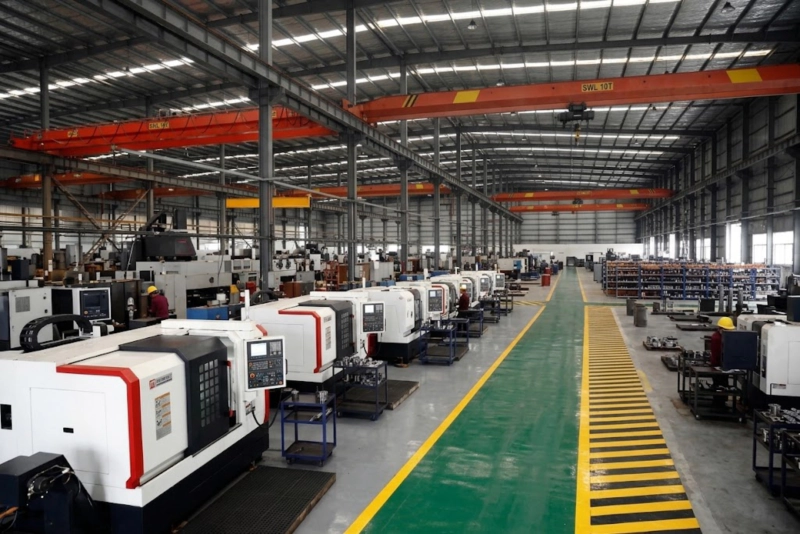
Manufacturing workshop producing ZW, DW, LW, and 4MW series compressors — every machine leaving the factory for Russian service must carry a documentation package that satisfies the GOST-R or EAC conformity assessment requirements. The documentation is not an afterthought: it must be specified at the time of the order and produced during manufacturing, because the factory test data, material certificates, and pressure test records that form the technical basis of the conformity declaration cannot be reconstructed after the machine has left the factory.
GOST-R vs EAC: Understanding the Certification Landscape
Russian industrial equipment certification has passed through a transition that continues to generate confusion in international procurement. Until 2010–2013, Russian-market certification was denominated in GOST-R — a national conformity mark issued by Rosstandart-accredited Russian certification bodies against Russian GOST standards. Since the formation of the Eurasian Economic Community (EEU) and the implementation of the EAC (Eurasian Conformity) technical regulations, the EAC mark has replaced GOST-R as the mandatory conformity designation for equipment placed on the market in Russia, Belarus, Kazakhstan, Armenia, and Kyrgyzstan. The transition was completed for most industrial machinery categories by 2013–2015.
For industrial gas compressors, the key EAC Technical Regulations are:
TR CU
010/2011
Safety of Machinery and Equipment. The primary regulation covering the mechanical safety of all machinery including reciprocating compressors. Requires conformity assessment covering: mechanical strength and stability, electrical safety (for electrically-driven machines), noise and vibration emissions below regulatory limits, and risk assessment documentation. Applicable to all ZW, DW, LW, and 4MW series compressors regardless of gas service. Conformity is demonstrated through either third-party certification (for higher-risk equipment) or manufacturer’s declaration of conformity (for lower-risk equipment), supported by a technical file.
TR CU
032/2013
Safety of Equipment Operating Under Excessive Pressure. Applies to all compressors, pressure vessels, and pipe assemblies operating above 0.05 MPa (0.5 bar) gauge pressure. This regulation covers all industrial gas compressors operating at any meaningful discharge pressure. It requires conformity assessment including a pressure strength calculation, hydrostatic test records, material certificates for all pressure-retaining components, and a pressure equipment technical file. Higher-risk categories (IV, for operating pressures above 16 MPa or large-bore high-pressure equipment) require third-party assessment by a notified body rather than self-declaration.
TR CU
004/2011
Low Voltage Equipment Safety. Applicable to electrically-driven compressors with rated voltage 50–1,000V AC or 75–1,500V DC. Covers the electrical drive motor and switchgear supplied with the compressor. Typically satisfied by the motor manufacturer’s CE or EAC declaration for the motor, provided with the compressor documentation package.
The confusion between GOST-R and EAC arises because many Russian plant engineers and procurement departments still reference «GOST-R certificate» as a general term for Russian market certification, when technically they require an EAC conformity certificate or declaration. Both GOST-R and EAC certificates are accepted at Russian facilities, but a GOST-R certificate issued before 2013 for a specific machine type may now be expired and not renewable under the current regulatory framework. For new compressor orders placed today, the correct requirement is EAC conformity documentation, not the legacy GOST-R certificate.
The Mandatory Document Package for Every Industrial Compressor

Regardless of gas service, every industrial gas compressor supplied for operation in Russia must be accompanied by the following minimum documentation package. This is the baseline that every procurement checklist must include before any gas-service-specific additions:
01
Equipment Passport (Pasport na oborudovaniye)
The factory-issued document that identifies the specific machine by serial number and records its design specifications, pressure ratings, materials, test results, and commissioning degreasing record (for oxygen service). The passport is unique to each unit and must accompany the machine throughout its operating life. All maintenance events — valve replacements, ring replacements, degreasing records — are entered in the passport chronologically. The passport is not transferable to another machine and cannot be reconstructed if lost. Insist on receiving the original signed and stamped passport at machine delivery, not a copy.
02
EAC Conformity Certificate or Declaration (TR CU 010/2011 and TR CU 032/2013)
The EAC conformity document that demonstrates the compressor meets the applicable EAC Technical Regulations. This may be a conformity certificate (issued by a third-party notified body for Category III/IV pressure equipment or higher-risk machinery) or a declaration of conformity (self-issued by the manufacturer, supported by a technical file, for lower-risk categories). The EAC mark must appear on the compressor nameplate. The certificate or declaration must name the specific machine model series (or the individual machine serial number for custom machines), reference the applicable TR CU regulations, and carry a validity period. Check that the validity period extends beyond the expected installation date.
03
Hydrostatic Test Protocol (Protokol gidravlicheskikh ispytaniy)
The factory test record documenting the hydrostatic pressure test performed on the completed assembled machine before delivery. TR CU 032/2013 requires testing at 1.25–1.5 times the maximum allowable working pressure (MAWP) for the applicable duration (typically 5–10 minutes) with no leakage. The protocol must record the test pressure, the test duration, the date, and the names of the factory test engineers. Without this document, the Rostechnadzor inspector at the installation site has no basis to accept the machine’s pressure integrity claims.
04
Factory Acceptance Test Report (Protokol priyomospatochnykh ispytaniy)
The factory run test data recorded during the acceptance test of the specific machine before shipment. The report documents the operating parameters — flow rate at rated speed, suction and discharge pressures at each stage, inter-stage temperatures, discharge temperatures, shaft power draw, vibration readings at the machine mounting feet — measured during the factory test run. These baseline values form the reference against which site commissioning measurements and subsequent maintenance-interval measurements are compared. A machine delivered without an acceptance test report has no documented baseline, making fault diagnosis during service significantly more difficult.
05
Material Certificates for Pressure-Retaining Components
Material test certificates (sertifikaty na materialy) for the principal pressure-retaining components: cylinders, cylinder heads, valve covers, piston rods, and the crankcase where it forms a pressure boundary. The certificates must reference a Russian or equivalent international material standard, provide the chemical composition and mechanical properties of the specific heat or batch, and be signed by the material supplier’s quality department. For OPO-registered installations, Rostechnadzor inspectors commonly request these certificates during the registration inspection.
06
Operation and Maintenance Manual in Russian Language
The operating and maintenance instructions must be provided in Russian for all equipment installed at Russian facilities, as required by TR CU 010/2011. The manual must cover: installation requirements (foundation loads, piping connection loads, clearances), startup and shutdown procedures, normal operating parameter ranges, maintenance intervals and procedures for all wear items (rings, packing, valves, oil), troubleshooting guide, and spare parts list with Russian part number equivalents. A manual provided only in English or Chinese is not compliant with TR CU 010/2011 and will fail the Rostechnadzor documentation check.
Gas-Service-Specific Additional Documents
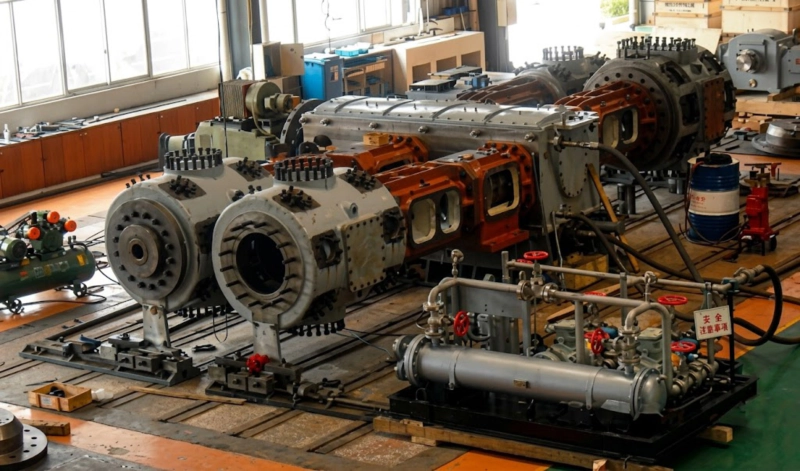
Beyond the mandatory baseline package, each gas service adds specific documentation requirements that reflect the additional safety and purity regulations governing that service. The following additions must be specified at order time:
| Service |
Additional Documents Required |
Issuing Authority / Standard |
| O₂ |
1. GOST 12.2.052 compliance certificate or declaration for oxygen service
2. Factory degreasing act (akt obezzhirivaniya) for the specific machine
3. Material compatibility certificate verifying no copper alloys in wetted parts
4. PTFE ring material certificate (virgin PTFE specification)
5. Distance piece inspection protocol
|
GOST 12.2.052 (Rosstandart); factory quality department; PTFE ring supplier |
| NH₃ |
1. GOST 26790 compatibility certificate for ammonia refrigerant service
2. Material compatibility statement verifying no copper alloys in wetted parts
3. NH₃ detector calibration certificate (if supplied with the compressor)
4. For OPO registration: initial OPO hazard classification assessment
|
GOST 26790 (Rosstandart); factory quality department; Rostechnadzor (OPO) |
| CO₂ |
1. TR CU 032/2013 Category III or IV certificate (for transcritical systems above 73.8 bar)
2. Hydrostatic test at 1.5 × MAWP (195 bar for 130 bar MAWP systems)
3. Material certificate for CO₂-compatible PTFE or HNBR seal materials
4. Crankcase heater and purge system technical description
|
Accredited notified body (for Category III/IV); factory quality department |
| N₂ / Ar |
1. For 30 MPa (300 bar) service: TR CU 032/2013 Category IV certificate
2. For oil-free service: PTFE ring material certificate (virgin grade)
3. For ASU duty: degreasing certificate if argon or oxygen contacts wetted surfaces
|
Accredited notified body (Category IV); factory quality department |
| Propane |
1. Explosion safety certificate under GOST R IEC 60079 for Zone 1 rated electrical components
2. PB 09-563-03 compatibility documentation for the machine’s use at an explosive production facility
3. GOST R IEC 60079-10-1 hazardous area classification document for the compressor room
|
Accredited Ex certification body (Rosstandart); factory quality department |
This table reflects the document requirements as of the current EAC regulatory framework. Individual Rostechnadzor regional offices may request additional documentation beyond the minimum listed here; verify with the local Rostechnadzor office before finalising the document specification in the purchase order.
The Procurement Checklist: What to Verify Before Signing the Purchase Order
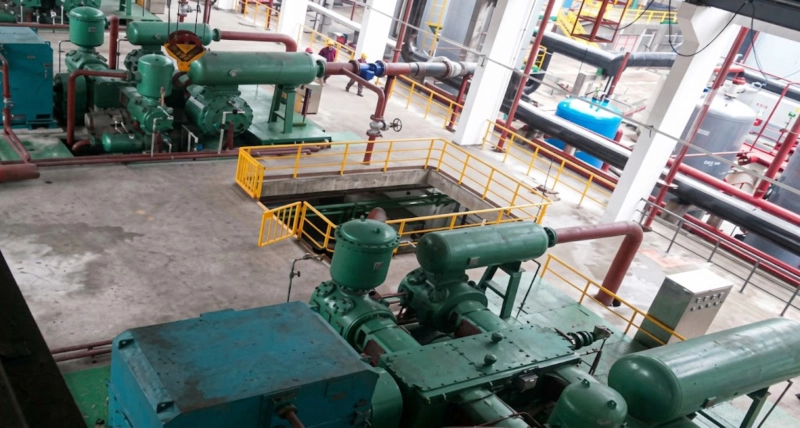
The following checklist items should be verified with the compressor supplier before the purchase order is signed. Each item that cannot be verified before signature should be specified as a contractual delivery condition — the documentation is part of the delivery, not an optional extra:
☑
EAC certificate or declaration is in the supplier’s name (not a trading company’s name). The conformity document must name the manufacturer as the responsible party. A declaration issued in the name of a distributor or trading company is only valid if that company can demonstrate it holds the technical file and is legally responsible for the equipment’s conformity — which is rarely the case. Ask for the manufacturer’s own EAC documentation.
☑
The EAC certificate or declaration covers the specific machine series and model being ordered. A certificate covering «DW series compressors» covers the DW-10/250-O being ordered. A certificate covering «industrial compressors for nitrogen service» does not cover an oxygen service machine ordered as a special configuration.
☑
The certificate validity period covers the expected delivery and commissioning date. An EAC certificate that expires before the machine is commissioned cannot be presented at the Rostechnadzor registration inspection. Verify the expiry date and allow 3–6 months of margin beyond the expected commissioning date to account for project delays.
☑
The equipment passport is in Russian language, unique to the specific machine serial number, and signed by the factory quality director. A generic passport shared across multiple units is not a valid equipment passport for a specific machine. Each machine must have its own passport with its own serial number, factory test data, and signatures.
☑
The operation and maintenance manual is available in Russian. If the supplier’s standard manual is in Chinese or English, request the Russian translation as a contractual deliverable before finalising the order, with the translation quality guaranteed by the supplier. Machine-translated manuals with technical terminology errors are a common deficiency in Chinese compressor supply packages.
☑
The gas-service-specific documents are explicitly listed in the delivery scope. If the order is for an oxygen service compressor (DW-X/250-O), the akt obezzhirivaniya and the GOST 12.2.052 compliance certificate must appear in the delivery scope attached to the purchase order. Verbal assurances that «of course we will provide everything needed» are not sufficient — if it is not in the purchase order scope, it may not arrive with the machine.
⚠
For OPO-classified facilities: verify that the supplier can support the OPO registration process. If the compressor will be installed at an OPO-classified facility (which includes any facility with a hazardous gas compressor system above the threshold quantities in Federal Law No. 116-FZ), the supplier should be able to provide the technical documentation that Rostechnadzor requires for the initial OPO registration: equipment specifications, risk category calculation, and the conformity certificates in a format that the Rostechnadzor inspector can directly reference. Ask the supplier whether they have experience with Russian OPO registrations and whether they can provide documentation support for the registration process.
Related Application · Plastics Manufacturing
EAC Certification for ISBM Machines: The Same Regulatory Framework
The EAC Technical Regulations that govern industrial gas compressors placed on the Russian market apply equally to injection stretch blow moulding (ISBM) machines. TR CU 010/2011 (machinery safety) covers the ISBM machine’s mechanical and electrical systems; TR CU 004/2011 covers the electrical drive and control systems; and where the ISBM machine incorporates a high-pressure blow air compressor operating above 0.05 MPa, TR CU 032/2013 applies to that compressor component as well. A Russian food or pharmaceutical packaging manufacturer who purchases an ISBM machine for installation at an EAC-compliant production facility must require exactly the same EAC conformity document package from the ISBM machine supplier as the procurement checklist above requires from the industrial gas compressor supplier: EAC certificate in the manufacturer’s name, covering the specific machine model, with a validity period extending beyond commissioning; equipment passport in Russian; hydrostatic test protocol for the blow air compressor components; and operation manual in Russian. The regulatory framework is identical. A procurement department that has learned to audit compressor supplier documentation against this checklist already knows how to audit ISBM machine supplier documentation against the same standard.
Related equipment: One-step three-station ISBM machines for PET bottle production — subject to the same EAC certification requirements as the industrial gas compressors described in this guide.
ISBM Machine ›injectionstretchblowmolding.com
FAQ — GOST-R and EAC Certification for Industrial Compressors
Q1: The supplier has provided a GOST-R certificate from 2011 for the compressor model we want to order. Is this acceptable for a new installation in Russia today?
A GOST-R certificate from 2011 is almost certainly expired — GOST-R certificates were typically issued with 3–5 year validity periods, making a 2011 certificate expired by 2014–2016. Additionally, the GOST-R framework has been largely superseded by the EAC Technical Regulations, and a GOST-R certificate cannot be renewed under the current framework — it must be replaced by an EAC conformity certificate or declaration. For a new installation in Russia today, the supplier must provide current EAC conformity documentation, not a legacy GOST-R certificate. The GOST-R certificate may have value as a historical reference document showing the machine’s compliance at the time of issue, but it does not satisfy the current mandatory certification requirement. Ask the supplier to provide the current EAC certificate or declaration; if they cannot, they are either not certified for the Russian market under the current framework or are not willing to disclose the documentation they hold.
Q2: We are purchasing a compressor through a Russian trading company, not directly from the manufacturer. Who is responsible for the certification documents, and can the trading company issue them?
Under the EAC framework, the responsible party for the conformity documentation — the «applicant» in the EAC certification process — can be either the manufacturer or the importer (the trading company that places the equipment on the EAC market). If the trading company has registered as the applicant for an EAC certificate covering the specific compressor model, they may legitimately issue EAC documentation in their own name. However, the technical file that supports the certificate (test reports, calculations, material data) must still originate from the manufacturer. Before accepting documentation issued by the trading company, verify: (1) that the EAC certificate is issued by an accredited notified body or that the declaration of conformity references a specific technical file held by the trading company; (2) that the manufacturer’s factory acceptance test report is included in the delivery package — the trading company cannot generate this document themselves; (3) that the equipment passport is issued by the manufacturer (not the trading company) and carries the factory quality director’s signature. For safety-critical gas service equipment — oxygen, ammonia — we strongly recommend that procurement is from the manufacturer directly, with the manufacturer issuing all certification documents in their own name, rather than through an intermediary.
Q3: The compressor has been installed and is operating, but during a Rostechnadzor inspection the inspector requested the factory hydrostatic test protocol which we cannot locate. The machine has been operating for 8 months. Can we conduct a site hydrostatic test as an alternative?
A site hydrostatic test can be conducted on an installed compressor as an alternative to the factory test protocol, but it must be performed by a Rostechnadzor-licensed inspection organisation and documented in a formal protocol that meets the requirements of TR CU 032/2013. The site test pressure must equal 1.25–1.5 times the maximum allowable working pressure (the same test pressure as required at the factory) and the test must be performed with all gas piping and instruments isolated according to a specific test scheme approved by the licensed inspector. The protocol must be signed by the inspector and the responsible technical manager at the facility and entered in the equipment passport alongside a note explaining the reason for the site test rather than the factory test. This approach is accepted by most Rostechnadzor regional offices as a remediation for missing factory documentation, but it requires advance coordination with the local Rostechnadzor office before the test is conducted to ensure the site test protocol will be accepted at the next inspection. Contact the supplier and request the factory test protocol first — many factories retain copies of test records for at least 5–10 years and the document may still be available from their quality archive. The site test should be the fallback if the factory record is genuinely unrecoverable.
Documentation and Certification
Full EAC and GOST Certification Package — ZW, DW, LW, 4MW Series
All ZW, DW, LW, and 4MW series compressors are supplied with the complete EAC conformity package as standard: EAC certificates under TR CU 010/2011 and TR CU 032/2013, equipment passport in Russian, hydrostatic test protocol, factory acceptance test report, material certificates, and Russian-language operation manual. Gas-service-specific documents (GOST 12.2.052 for oxygen, GOST 26790 for ammonia, explosion safety certificates for propane) are included for the relevant service designations. OPO registration documentation support provided on request. Contact our engineering team to receive a sample documentation package for review before order placement.