
Application Guide · Brewery · Beverage · NH₃ Refrigeration · Fermentation Cooling · Russia
Breweries and beverage production facilities are among the most technically demanding environments for NH₃ refrigeration systems in the Russian food industry. Fermentation temperature control, beer lagering, carbonation chilling, and process water cooling each require refrigeration at different temperature levels, served by a continuous NH₃ system that runs 24 hours per day through production campaigns lasting weeks or months. This guide covers the refrigeration duties, temperature levels, compressor selection, and the specific safety requirements that apply to NH₃ systems in food production environments in Russia and the CIS.
✓ −5°C to −15°C Evaporating
✓ DW Series · 55–350 kW
✓ GOST-R Certified · Russia
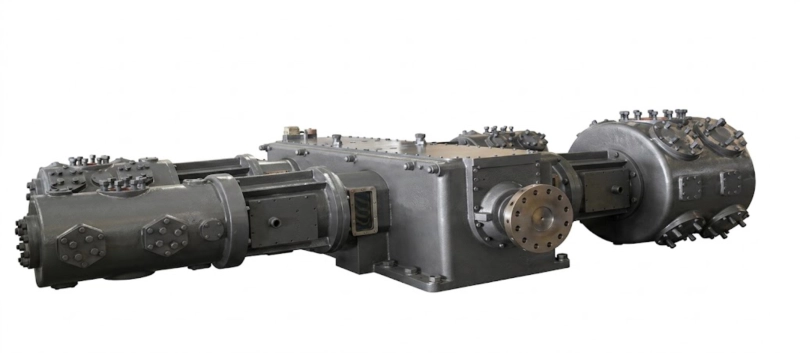
DW series NH₃ refrigeration compressor for brewery and beverage service — opposed-balance frame, 55–350 kW, evaporating temperatures −5°C to −15°C for fermentation temperature control and beer chilling. The DW opposed-balance frame is specified for the permanently piped NH₃ refrigerant circuit of a large brewery, where the machine room is permanently connected to the fermentation cellar, lagering tank farm, and filtration area by rigid welded ammonia pipework.
Brewery Refrigeration: Multiple Duties at Different Temperatures
A large Russian brewery producing 5–20 million hectolitres of beer per year requires continuous refrigeration at four distinct temperature levels serving different stages of the brewing process simultaneously. Unlike fish processing or cold storage — which have a single dominant temperature duty — a full-scale brewery refrigeration system must control temperatures across a 30–40°C range from ambient fermentation down to carbonation chilling, with each level requiring a different refrigerant evaporating temperature and carrying a different heat load throughout the production cycle.
+8°C to +14°C
−1°C to +2°C
+1°C to +4°C
−1°C to 0°C
Indirect vs Direct NH₃ Circuits in Brewery Refrigeration
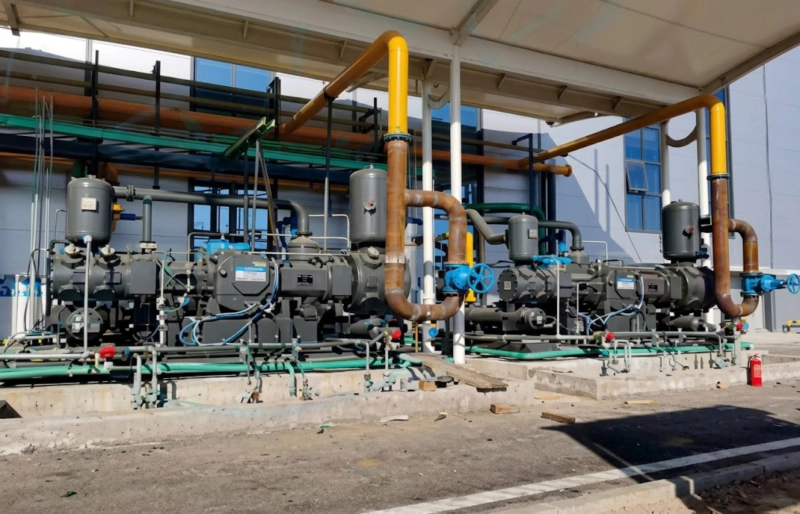
In brewery and beverage production environments, direct NH₃ refrigerant circuits — where ammonia flows in the evaporator coils inside the fermentation or lagering vessels — are used in some older Russian brewery designs but are being replaced in modern and upgraded facilities by indirect systems. In an indirect system, the NH₃ refrigeration compressor chills a secondary coolant — propylene glycol/water mixture, ethylene glycol/water, or calcium chloride brine — in a plate heat exchanger, and the chilled secondary coolant is pumped to the fermentation jackets, lagering tank coils, and beer chilling heat exchangers throughout the brewery.
The indirect system carries a thermodynamic penalty — the secondary coolant must be chilled 3–5°C below the process temperature, requiring a correspondingly lower NH₃ evaporating temperature and slightly reduced system COP — but the safety and operational advantages in a food production environment outweigh this inefficiency in most modern Russian brewery designs:
DW Series Selection for Brewery Refrigeration
| Brewery Scale | Annual Output (hl) | Refrigerating Cap. (kW) | DW Series Units | Motor Power (kW) |
|---|---|---|---|---|
| Regional craft brewery | 5,000–50,000 | 50–200 | 1–2 × DW | 55–110 |
| Medium regional brewery | 50,000–500,000 | 200–800 | 2–4 × DW | 110–220 |
| Large national brewery | 500,000–5,000,000 | 800–3,000 | 3–6 × DW (or 4MW) | 160–350 |
| Soft drink / water facility | Any scale | 100–600 | 1–3 × DW | 75–250 |
Refrigerating capacity shown at −10°C evaporating / +32°C condensing NH₃ conditions. The DW opposed-balance frame is standard for brewery installations due to the permanently piped, rigidly mounted refrigerant circuit. For large national breweries above 3,000 kW total refrigerating capacity, the 4MW series may be considered for the largest individual compressor units, with DW series for the smaller duties.
CO₂ Recovery and the Brewery Gas Infrastructure
Fermentation produces CO₂ as a by-product: approximately 4.5 kg of CO₂ is generated per 100 litres of beer fermented. A large Russian brewery producing 5 million hectolitres per year generates approximately 225,000 tonnes of CO₂ annually from fermentation — a significant quantity that represents both an atmospheric emission if vented and a valuable resource if recovered. Large Russian breweries operate CO₂ recovery systems that collect fermentation CO₂, purify it, compress it to liquid storage pressure (approximately 1.8–2.0 MPa in a CO₂ storage tank at −20°C to −25°C), and then use it for beer carbonation, bottle purging, and packaging atmosphere.
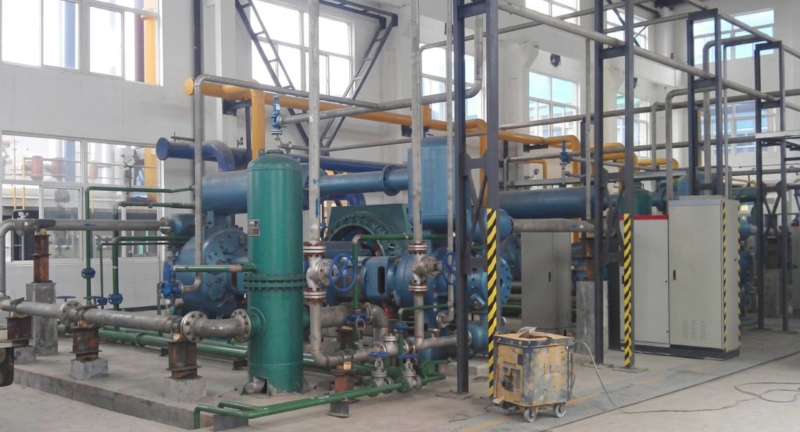
The CO₂ recovery compressor is a separate machine from the NH₃ refrigeration compressor but operates alongside it in the brewery utility room. The CO₂ liquefaction at −20°C to −25°C is served by a dedicated NH₃ or HFC refrigeration circuit — often a smaller DW series unit or a packaged HFC refrigeration machine — separate from the main production refrigeration system. This CO₂ storage refrigeration duty is served at −30°C to −35°C NH₃ evaporating temperature, at the lower end of the DW series operating range.
Brewery Gas Infrastructure — How NH₃ and CO₂ Interact
NH₃ Safety Requirements in Food Production: Brewery Context
Russian breweries and beverage production facilities using NH₃ refrigeration are subject to the food safety regulations of TR TS 021/2011 (Eurasian food safety technical regulation) and the industrial safety requirements of Federal Law 116-FZ simultaneously — an intersection of food safety and process safety regulation that places specific requirements on the NH₃ system design beyond those that apply to, for example, a cold storage facility or a chemical plant.
The key food-safety-specific requirements for NH₃ refrigeration in brewery and beverage service in Russia include: NH₃ pipework must not pass through food product contact areas or above open product vessels; NH₃ evaporator units in direct circuits must use food-grade gasket materials and be sealed against product contamination pathways; the NH₃ machine room must have an NH₃ concentration alarm system with an interlock that closes the supply valves to all production floor heat exchangers if the machine room NH₃ concentration exceeds the action level; and all NH₃ wetted surfaces must be copper-free per GOST material compatibility requirements and per food equipment standards that prohibit copper in food-contact environments.
PET Beer Bottles and the Brewery Refrigeration Connection
The PET beer bottle is the fastest-growing packaging format in the Russian beer market, driven by its lower weight compared with glass, lower distribution cost, and compatibility with modern high-speed filling lines. PET beer bottles are produced on injection stretch blow moulding (ISBM) lines using the same one-step three-station ISBM technology applied to PET bottles for other carbonated beverages. The barrier properties of the PET polymer — oxygen transmission rate and CO₂ retention — are critical to the shelf life of carbonated beer in PET, since both oxygen ingress and CO₂ loss through the bottle wall degrade beer quality over time. Modern PET beer bottles use multilayer coextrusion (with oxygen barrier layers) or oxygen-scavenging active barrier systems to achieve the required shelf life. The ISBM machine producing these bottles is directly downstream in the supply chain from the brewery that will fill them — and the brewery’s NH₃ refrigeration system is what makes the chilled carbonated product possible.
FAQ — NH₃ Refrigeration Compressor for Brewery
Request an NH₃ Refrigeration Compressor for Brewery Service
DW series NH₃ refrigeration compressors for brewery and beverage — opposed-balance frame for permanent rigidly-piped installation, suction valve unloading for variable fermentation load, copper-free wetted components, GOST-R certified. Response within 48 hours.