Engineering Guide · LNG Pre-Cooling · Propane Refrigeration · Compressor Selection · Russia · Liquefaction
The propane pre-cooling stage is the first and often the largest energy consumer in a natural gas liquefaction train. It cools the feed gas from ambient to approximately −40°C before the mixed refrigerant or nitrogen expansion cycle achieves the final −160°C liquefaction temperature. For Russian small-scale and mid-scale LNG plants — serving the distributed gas network expansion, vehicle fuel stations, and island communities — the propane pre-cooling compressor selection directly determines the energy cost per tonne of LNG and the maintenance interval that governs plant availability. This guide covers the thermodynamic basis of the propane pre-cooling circuit, the compressor sizing method, the key differences between propane refrigerant service and ammonia or nitrogen service, and the specific considerations for Russian arctic and subarctic LNG plant locations.
✓ Compressor Sizing Method
✓ Propane vs NH3 Differences
✓ Arctic Site Considerations
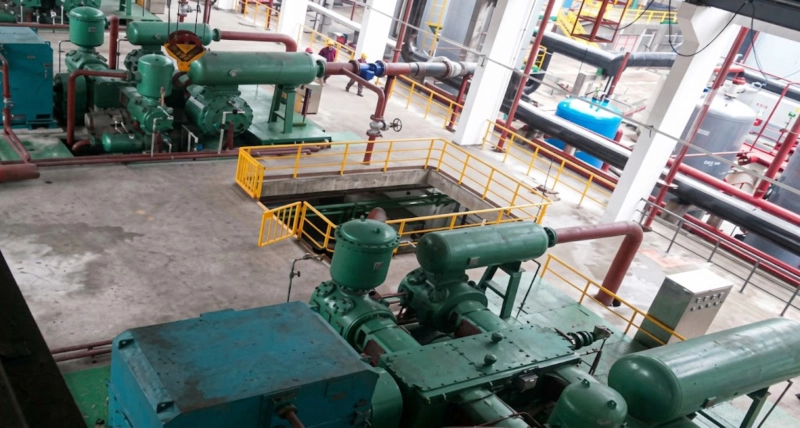
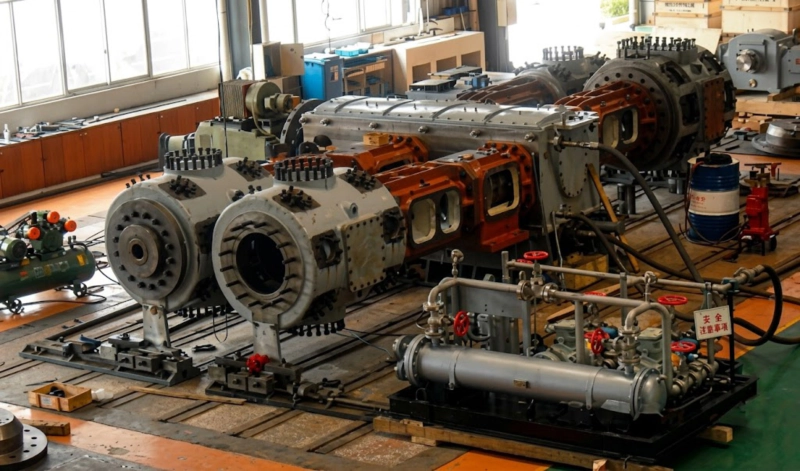
4MW series compressor at a Russian gas processing facility — in LNG pre-cooling service, the propane refrigeration compressor is responsible for cooling the feed gas from ambient temperature to approximately −40°C across a multi-pressure cascade evaporator system. The compressor selection at this duty sets the pre-cooling energy consumption per tonne of LNG, which represents 30–45% of the total liquefaction energy. Correct compressor sizing for the propane service conditions at the specific Russian site — including winter ambient temperatures that can reach −50°C and the resulting near-atmospheric propane suction conditions — is the most important engineering decision in the pre-cooling system design.
Pre-Cool Target
Cascade
Propane Boiling
The Role of Propane Pre-Cooling in the LNG Liquefaction Process
Natural gas liquefaction requires cooling the feed gas from ambient temperature (typically +5°C to +30°C depending on the season and location in Russia) to −160°C at which point methane liquefies at atmospheric pressure. This 165–190°C temperature reduction is achieved in two or three distinct refrigeration stages because no single refrigerant or refrigeration cycle can efficiently span this temperature range in one step. The propane pre-cooling stage handles the first and shallowest portion of this temperature reduction — from ambient down to approximately −35°C to −42°C — because propane is an excellent refrigerant in this temperature range with a normal boiling point of −42.1°C at atmospheric pressure and a practical refrigeration range of −40°C evaporating to +40°C condensing.
The energy consumed by the propane pre-cooling stage represents 30–45% of the total liquefaction energy at a typical Russian small-scale LNG plant (producing 5–50 tonnes per day of LNG). This share is significant enough that the efficiency of the propane refrigeration compressor has a measurable impact on the total energy cost per tonne of LNG — a 5% improvement in propane compressor COP translates to a 1.5–2.25% reduction in total liquefaction energy cost. At a plant producing 20 tonnes of LNG per day and operating 330 days per year, a 5% propane compressor efficiency improvement saves approximately 800,000–1,200,000 kWh per year — a significant operating cost reduction at Russian industrial electricity tariffs.
Propane is chosen as the pre-cooling refrigerant in preference to other alternatives for several reasons that make it particularly well-suited to the Russian LNG plant context. Its saturation curve matches the required pre-cooling temperature range almost exactly, allowing single-stage or two-stage refrigeration to cover the full −40°C to +40°C operating range without the multi-stage complexity that deeper refrigerants require. It is widely available in Russia from the existing LPG infrastructure and can be sourced from the same gas processing facility that produces the LNG feed gas. Its thermodynamic properties produce a volumetric refrigerating capacity similar to ammonia in the −20°C to −40°C range, allowing standard DW and 4MW series reciprocating compressors to be specified without the exotic high-pressure equipment that CO₂ or mixed refrigerant cycles require. And its flammable nature, while requiring appropriate electrical classification and ventilation, is well-understood and codified in Russian GOST standards for hydrocarbon refrigerant systems.
The Three-Pressure Propane Pre-Cooling Cascade
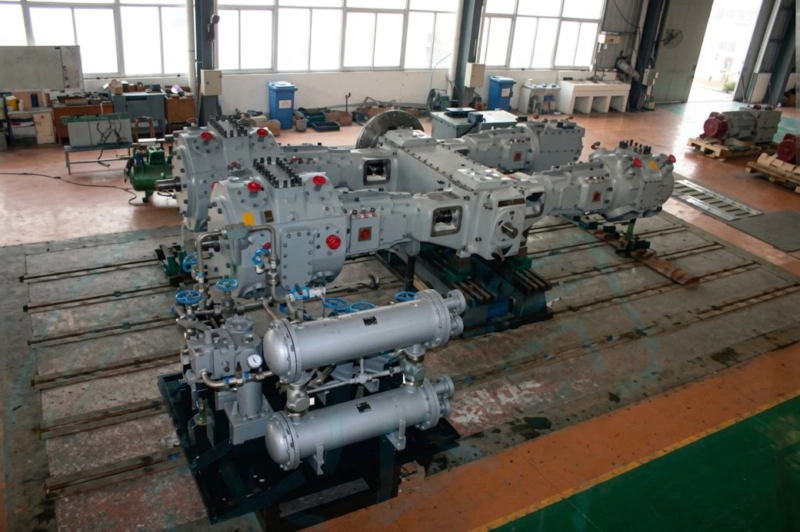
The standard propane pre-cooling circuit for a Russian small-scale or mid-scale LNG plant uses three evaporating pressure levels to cool the feed gas in three steps, each producing approximately equal temperature increments. This three-pressure cascade improves the overall COP of the pre-cooling stage by approximately 15–20% compared with a single-pressure evaporating system at the lowest temperature, because it reduces the average temperature difference between the refrigerant and the cooling load at each point in the process.
Propane Compressor Specification: Key Differences from NH3 Service
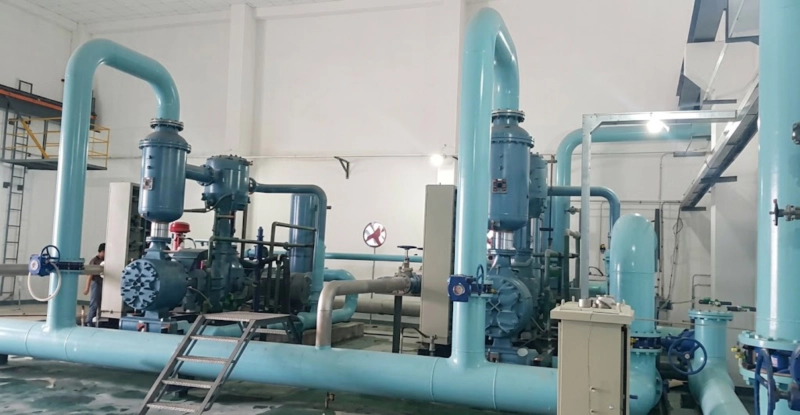
The DW and 4MW series compressors used in propane pre-cooling service share their mechanical architecture with the NH3 and nitrogen variants but require a different specification in five areas that reflect propane’s unique service requirements compared with ammonia:
Propane is a flammable hydrocarbon with an explosive limit of 2.1–9.5% by volume in air and a flash point of −104°C. All electrical equipment in the compressor room, including the drive motor, the control panel, the instrumentation, and the lighting, must be rated for Zone 1 hazardous area classification (continuous presence of flammable atmosphere possible) under GOST R IEC 60079-10-1. NH3 compressor rooms in Russia typically use Zone 2 or even standard electrical equipment in practice, but propane — being both flammable and heavier than air — requires the stricter Zone 1 classification. This requirement significantly increases the compressor package cost compared with an equivalent NH3 unit.
The LP stage compressor operating at −40°C evaporating has a suction pressure of 0.53 bar — well below atmospheric. Any leakage through the crankshaft seal at this condition draws air into the crankcase rather than allowing propane to escape. Air contamination of the propane refrigerant system is a serious hazard: the air-propane mixture can reach flammable concentrations in the crankcase at concentrations that are difficult to monitor, and non-condensable gases in the refrigerant circuit degrade system COP by raising condensing pressure. The LP stage compressor must use a double mechanical seal or a nitrogen-purged labyrinth seal system that prevents air ingress at sub-atmospheric suction conditions. This seal specification differs from both NH3 and nitrogen compressor practice and must be explicitly specified in the compressor order.
Propane is miscible with most mineral lubricating oils at elevated pressure and dissolves into the crankcase oil at operating conditions, reducing oil viscosity. The lubricating oil specification for propane service must be a high-viscosity mineral oil or synthetic oil with low propane solubility — typically ISO VG 100–150 grade rather than the ISO VG 68 used in NH3 service. The oil system must include a crankcase heater to drive off dissolved propane before startup, and a propane-compatible oil separator on the discharge line to prevent oil carry-over into the propane system. The oil separator efficiency requirement is more stringent than for NH3 service because propane entrains oil more readily than ammonia and oil contamination in the LNG pre-cooling evaporators is difficult to remediate without a full system shutdown.
Propane service does not prohibit copper alloys in the way that NH3 service does — propane does not attack copper. However, at LNG plants the propane refrigerant circuit is often connected to or adjacent to the natural gas feed stream, and trace contamination of the propane with H2S from sour gas processing facilities is a risk. H2S attacks copper alloys and produces copper sulfide deposits that can block valve ports and contaminate downstream processes. For Russian LNG plants at gas processing sites where H2S is present in the feed gas, the copper-free construction standard applied in NH3 service is also applied to the propane compressor as a precaution, using steel valve plates and seats throughout.
Small-scale Russian LNG plants frequently operate at variable throughput — vehicle fuel station supply peaks during the day and drops at night, and island community supply varies with seasonal demand. The propane pre-cooling compressor must track the variable LNG production rate with corresponding capacity reduction. Suction valve unloading in 25–50% steps is standard; a VFD on the drive motor provides continuous adjustment from 60–100% of rated capacity for closer tracking of the LNG throughput. The LP stage compressor is the most sensitive to capacity reduction because reducing its throughput while maintaining the same condensing conditions raises the LP evaporating pressure, warming the feed gas exit temperature above the design −40°C and potentially limiting the downstream liquefaction stage efficiency. The capacity control strategy must be co-designed with the overall liquefaction plant control philosophy.
At northern Russian LNG plant sites where winter ambient temperatures fall below −40°C, the LP propane suction conditions shift dramatically: at −50°C ambient the condensing pressure in winter may fall to near-atmospheric levels even without evaporator duty, and the LP stage suction pressure may be sub-atmospheric even with the evaporator fully loaded. The compressor must be capable of starting and operating in this condition without mechanical damage. Crankcase heating to maintain oil temperature above −30°C before startup, heated compressor building to maintain motor and instrumentation operability, and a minimum condensing pressure control strategy on the propane condenser are all required for arctic-site LNG pre-cooling compressor operation.
LNG Distribution and PET Packaging: The Cold Chain That Begins at the Liquefaction Plant
Russian LNG produced at small-scale and mid-scale liquefaction plants is distributed to remote communities, island populations, and vehicle fuel stations that are not connected to the gas pipeline network. These communities use LNG not only for heating and power generation but also for operating the food cold chain that delivers fresh and frozen products to remote locations. The cold chain infrastructure at these remote Russian sites — the refrigerated storage, the blast freeze capacity, the cold transport vehicles — depends on the reliable operation of the LNG supply, which depends in turn on the continuous availability of the propane pre-cooling compressor. The PET packaging used for food products delivered to these remote communities is produced on ISBM machines at packaging facilities closer to the population centres, but the food product inside that packaging depends for its quality on the cold chain that the LNG distribution enables. A propane pre-cooling compressor failure at a Sakhalin or Chukotka LNG plant that interrupts LNG supply affects not only heating and power at the remote site but also the food cold chain that keeps fresh and frozen products safe for consumption. The engineering reliability requirements for the LNG pre-cooling compressor — redundancy, remote monitoring, arctic-rated materials, and a local spare parts stock — are therefore not merely engineering preferences but requirements driven by the food safety and community health consequences of supply interruption.
FAQ — Propane Pre-Cooling Compressor for LNG Liquefaction
DW and 4MW Series Propane Refrigerant Compressors for LNG Pre-Cooling
DW series (55–350 kW) and 4MW series (350–1,600 kW) propane refrigerant compressors for LNG pre-cooling cascade duty — Ex-rated motor, double mechanical shaft seal, propane-compatible oil system, crankcase heater, EAC and OPO documentation package. Provide your LNG production rate, site location, and summer and winter ambient temperatures for a three-stage cascade specification within 48 hours.