Compliance Guide · Medical Oxygen · GOST 6331 · Cylinder Filling · Russia · Hospital Supply
GOST 6331 — the Russian standard for medical oxygen — sets requirements that reach beyond the gas purity specification into the equipment used to fill it, the documentation carried with each cylinder, and the maintenance records required for each compressor that contacts medical-grade oxygen. A hospital or regional medical gas supplier that fills its own cylinders must demonstrate that every component in the filling chain — from the oxygen source through the compressor to the cylinder valve — meets the degreasing, material compatibility, and certification requirements of GOST 6331 and the associated GOST 12.2.052 equipment safety standard. This guide explains what those requirements mean in practice for the medical oxygen compressor selection, the filling station layout, and the ongoing maintenance documentation that a Roszdravnadzor or Rostechnadzor inspection will require.
✓ GOST 6331 Requirements
✓ Compressor Selection
✓ Degreasing Protocol
✓ Inspection Documentation

ZW series oil-free oxygen compressors for medical cylinder filling to GOST 6331 — the compressor is the most safety-critical component in the medical oxygen filling chain. It must be certified for oxygen service to GOST 12.2.052, use virgin PTFE piston rings and packing, carry a valid degreasing record (akt obezzhirivaniya), and operate within the 140°C discharge temperature limit at all conditions. For a hospital or regional medical gas centre filling cylinders for ward use, these requirements translate into a specific compressor specification, a documented maintenance protocol, and an inspection-ready record system.
GOST 6331: What the Medical Oxygen Standard Actually Requires
GOST 6331 specifies the technical requirements for medical oxygen (kislorod meditsinskiy) for inhalation use in Russia. The standard covers purity, odour, moisture content, and the cylinder and valve specifications for medical oxygen storage. Understanding what GOST 6331 actually requires — and what it does not specify directly but implies for the filling equipment — is the starting point for specifying the correct compressor.
GOST 6331 defines two grades of medical oxygen. Grade 1 requires a minimum O₂ content of 99.5% by volume, a moisture content not exceeding 0.007 g/m³ (equivalent to a dew point of approximately −46°C at atmospheric pressure), and freedom from odour detectable by the sensory test. Grade 2 requires a minimum O₂ content of 99.2%. For hospital inhalation therapy and anaesthesia use in Russia, Grade 1 is the required specification. Grade 2 is specified for some industrial medical applications. All references in this guide are to Grade 1 unless stated otherwise.
What GOST 6331 directly specifies for the filling station
- The filled cylinder must contain oxygen meeting the purity and moisture specifications after filling — the standard does not specify the compressor type, but any compressor that introduces oil contamination into the oxygen stream automatically disqualifies the filled cylinder from Grade 1 classification.
- Cylinder labelling, valve type, and cylinder colour (light blue, GOST 949) are specified — the filling station must use cylinders that meet the physical specification before filling begins.
- Each cylinder must carry a batch certificate (sertifikat kachestva) documenting the gas composition analysis of the filled batch, signed by the production quality controller.
- The filling station must hold a production licence (licenziya) from Roszdravnadzor for the manufacture of medicinal products — medical oxygen is classified as a medicinal product in Russia and its production is regulated by the Ministry of Health, not merely by industrial safety authorities.
What GOST 12.2.052 adds for the compressor specifically
- The compressor must be certified for oxygen service to GOST 12.2.052 — this certification appears on the compressor nameplate and in the equipment passport and is a prerequisite for operating on any oxygen system above 0.5 MPa in Russia.
- All wetted surfaces must be degreased to the standard’s contamination limit (residual hydrocarbon contamination below 50 mg/m² of wetted surface area) before first commissioning and after any maintenance that opens the gas path.
- The maximum permitted discharge temperature at any stage is 140°C — this limit applies continuously, not as a trip setpoint. Operating at 135°C is technically compliant but leaves only a 5°C margin against the limit; good practice targets below 120°C.
- No copper alloys in any wetted component — copper catalyses hydrocarbon oxidation in oxygen environments and is prohibited in all oxygen piping and compressor wetted parts above trace concentrations.
Compressor Selection for Medical Oxygen Cylinder Filling
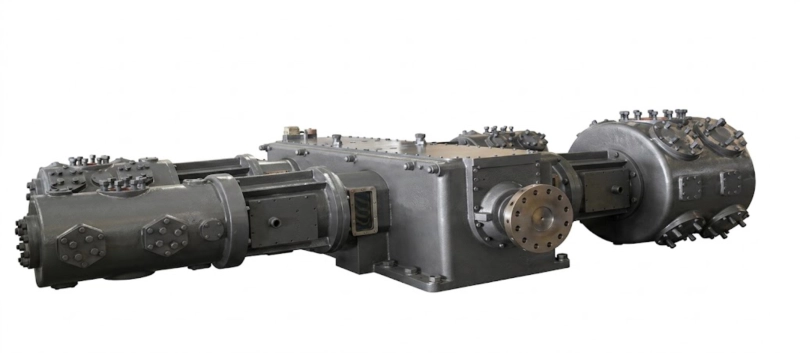
The medical oxygen compressor for cylinder filling to GOST 6331 is selected on six criteria that together define the correct model from the ZW or DW series. Meeting any five of the six and failing the sixth produces a compressor that cannot legally fill medical oxygen cylinders in Russia:
1. Oil-free cylinder design
Mandatory. Virgin PTFE piston rings and rod packing only. No cylinder lubrication feed. The model designation must carry the -O suffix verifying oxygen service specification at manufacture. A machine without the -O designation cannot be used in medical oxygen service regardless of its other characteristics.
2. Discharge pressure at or above 14.7 MPa
Standard Russian medical oxygen cylinders (GOST 949, 40-litre blue) are filled to 14.7 MPa (150 kgf/cm²). The compressor model designation must show a discharge pressure at or above this figure — a ZW-1/150 or DW-5/150 designation (150 bar = 15 MPa) is the minimum. High-pressure medical cylinders at 20 MPa require a /200 or equivalent model.
3. GOST-R certification for oxygen service
The compressor must hold a valid GOST-R certificate of conformity for oxygen service, issued by an accredited Russian certification body. This certificate is a separate document from the equipment passport and must be current (not expired) at the time of any Roszdravnadzor or Rostechnadzor inspection. Machines imported without GOST-R certification cannot be legally operated in medical oxygen service in Russia.
4. Discharge temperature monitoring
A calibrated discharge temperature sensor and high-temperature trip at each stage is required for medical oxygen service. The trip setpoint is set at 145°C (5°C above the GOST 12.2.052 limit) to provide an automatic safety margin against running at the limit under cooling water failure or high ambient conditions. The calibration certificate for each temperature sensor must be current at inspection.
5. Flow rate matched to filling target
The required flow rate is calculated from the number of cylinders per shift and the cylinder volume, as described in the cylinder filling sizing guide. For a small hospital filling 5–10 cylinders per day from an on-site oxygen concentrator or cryogenic storage, a ZW series oxygen compressor at 0.3–0.6 m³/min is typically sufficient. A regional medical gas centre with cylinder filling duty of 50–200 cylinders per shift requires a DW series machine at 2–10 m³/min.
6. Valid degreasing documentation
An akt obezzhirivaniya (degreasing act) must be on file for the compressor’s most recent maintenance event that opened the gas path. This document records the degreasing agent used, the surfaces treated, the person responsible, and the date. Without a current akt, the compressor is not compliant for medical oxygen service regardless of its technical condition.
The Degreasing Protocol: What the Akt Obezzhirivaniya Must Cover
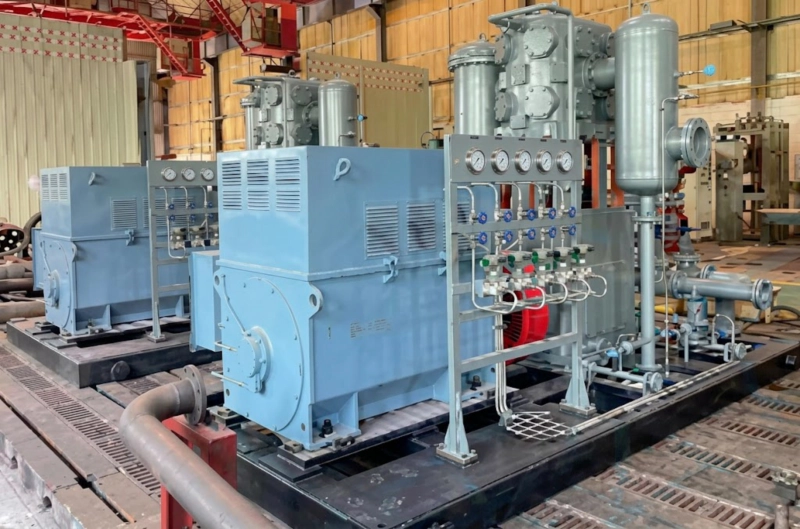
The degreasing requirement for oxygen compressors is frequently misunderstood at Russian medical gas filling sites — either treated as a paperwork exercise without actual degreasing, or performed correctly but not documented in the form required for inspection. GOST 12.2.052 requires degreasing of all surfaces that contact oxygen above 0.5 MPa before commissioning and after any maintenance that opens the gas path. The akt obezzhirivaniya is the documentary proof that this was done correctly.
The akt must record the following minimum information to be accepted by a Roszdravnadzor or Rostechnadzor inspector: the compressor model designation and serial number; the date of the degreasing procedure; the names and positions of the personnel who performed the degreasing; the degreasing agent used (typical Russian practice uses perchlorethylene or acetone — both acceptable under GOST 12.2.052); the surfaces treated, listed by component name and stage number; the method used to verify degreasing completeness (typically a visual inspection plus a hydrocarbon lamp or UV inspection of swab samples); and the name and signature of the responsible engineer who approved the procedure.
Degreasing Trigger Events — When a New Akt Is Required
■
First commissioning of a new compressor — even if the factory has issued a commissioning degreasing certificate, a site-level akt is required before the first medical oxygen fill
■
Any piston ring replacement — the cylinder bore is exposed during ring replacement and must be redegreased before the cylinder head is reinstalled
■
Any valve replacement or valve seat inspection that opens the cylinder head — tools, hands, and valve parts must all be degreased before cylinder contact
■
Any packing replacement in the rod seal housing — the rod packing bore contacts pressurised oxygen and must be redegreased after packing access
■
Any inter-stage cooler cleaning that involves opening the gas-side of the cooler — the cooler tube bundle is in the gas path and must be degreased after cleaning access
■
Any suction or discharge piping connection that is opened for any reason — including pressure gauge replacement, filter maintenance, or inter-stage pressure test
■
Long storage (above 12 months of non-operation) — the internal surfaces may have accumulated condensation and surface contamination; full degreasing is required before return to medical service
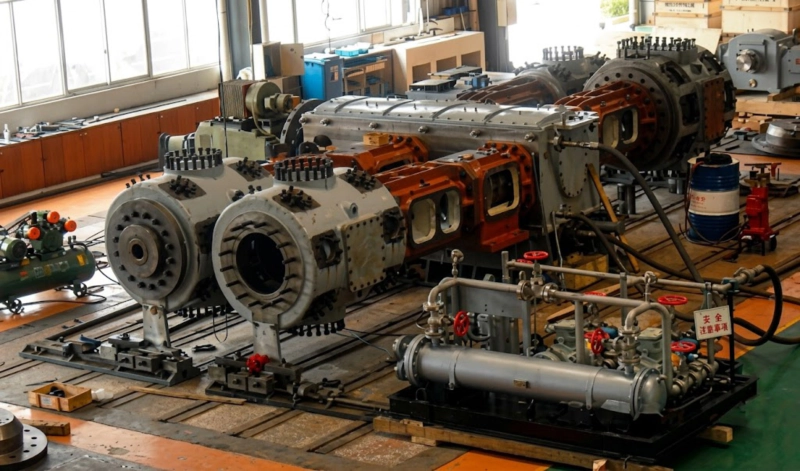
The Medical Oxygen Filling Station: Minimum Layout Requirements
Beyond the compressor itself, GOST 6331 and the associated Russian medical gas production regulations specify minimum requirements for the filling station layout that affect the civil engineering and equipment arrangement of the station. A filling station that meets the compressor requirements but fails the layout requirements will not receive or retain a Roszdravnadzor production licence:
A
Separated compressor room: The oxygen compressor must be in a room separated from the cylinder storage and filling area by a fire-rated wall with self-closing doors. The compressor room must have forced mechanical ventilation maintaining at least 6 air changes per hour. Emergency oxygen concentration monitoring (alarm at 23% O₂ by volume and shutdown at 25%) is required in both the compressor room and the filling area.
B
Oxygen source separation: The oxygen source — whether cryogenic liquid storage tank, on-site PSA/VPSA oxygen generator, or manifolded source cylinders — must be physically separated from the filling area and the compressor room. Source and product cylinders must be stored in different areas marked with clear colour coding (light blue for medical oxygen, GOST 949). Mixing filled and empty medical cylinders in the same storage area is not permitted.
C
Gas analysis equipment: A calibrated oxygen purity analyser must be installed in the filling line to measure the purity of gas being delivered to the cylinders during filling. For a licensed medical oxygen production facility, this analyser must carry a current calibration certificate traceable to the Russian national measurement standard. The purity reading at the time of each filling batch is part of the batch production record.
D
Moisture removal between compressor and cylinder: A molecular sieve or silica gel drying system must be installed between the final compressor stage outlet and the filling manifold to ensure the filled gas meets the GOST 6331 moisture specification of 0.007 g/m³ (approximately −46°C dew point). The drying system must be regenerated or replaced at the interval specified for the gas throughput — a saturated drier passes moisture directly to the filled cylinders and invalidates the batch.
E
Production batch records: Every batch of medical oxygen cylinders must be accompanied by a batch production record that documents the source gas analysis, the filling station instrument readings during filling (purity, moisture, pressure, compressor discharge temperature), the cylinder numbers filled in the batch, and the name and signature of the batch release quality controller. These records are retained for a minimum of 5 years and must be produced on request during any Roszdravnadzor inspection.
Related Application · Plastics Manufacturing
Medical PET Bottles and the Oxygen Purity Chain
Russian healthcare facilities that receive medical oxygen in GOST 6331 compliant cylinders are also significant users of PET packaging for pharmaceutical and medical products — infusion solutions, oral medications, diagnostic reagents, and medical-grade water. The PET bottles for these products are produced on injection stretch blow moulding (ISBM) machines using the same principles of oil-free compressed air and hygiene-compliant production environments that apply to the medical oxygen compressor described in this guide. Just as the medical oxygen compressor must be oil-free, GOST-certified, and operate within documented parameters to produce a product fit for patient use, the ISBM machine producing PET bottles for medical infusion solutions must meet TR CU 021/2011 and the applicable pharmacopoeial requirements for primary pharmaceutical packaging. The regulatory discipline of traceability — batch records, calibration certificates, equipment qualification protocols — is identical in both contexts. A hospital pharmacist who understands why the medical oxygen compressor must carry a current akt obezzhirivaniya already understands why the ISBM machine producing infusion solution bottles must carry an IQ/OQ qualification record.
Related equipment: One-step three-station ISBM machines for pharmaceutical and medical-grade PET bottle production — with oil-free compressed air and hygiene-compliant production environments analogous to the medical oxygen filling station described in this guide.
ISBM Machine ›injectionstretchblowmolding.com
FAQ — Medical Oxygen Compressor and GOST 6331 Compliance
Q1: Our hospital currently buys medical oxygen from a regional supplier in GOST 6331 cylinders. What is required to set up our own filling station to reduce cost?
Setting up a hospital-owned medical oxygen filling station requires a sequence of regulatory approvals before the first cylinder can be filled. The hospital must first obtain a production licence (licenziya na proizvodstvo) for medicinal products from Roszdravnadzor, which requires a site inspection demonstrating that the production facility — compressor, drying system, filling manifold, storage, and quality control laboratory — meets the GMP (Good Manufacturing Practice) requirements applicable to medicinal gas production. This licence process typically takes 6–18 months. In parallel, the equipment must be registered and accepted under the technical supervision of Rostechnadzor as a pressure equipment installation. The minimum capital investment for a compliant medical oxygen cylinder filling station serving a mid-size hospital (filling 5–15 cylinders per day) is approximately 3–6 million roubles including compressor, drying system, filling manifold, gas analysis instrumentation, oxygen monitoring, and the fire-rated compressor room construction. The ongoing cost includes the quality control laboratory testing for each batch and the annual Roszdravnadzor licence renewal inspection. Our engineering team can provide a full oxygen compressor station specification and cost estimate from your required daily cylinder throughput and your existing oxygen source.
Q2: What oxygen source is best for a hospital medical oxygen filling station — on-site VPSA oxygen generator or cryogenic liquid oxygen?
The choice between on-site VPSA (vacuum pressure swing adsorption) oxygen generation and delivered liquid oxygen depends on the daily consumption volume and the reliability of liquid oxygen delivery to the hospital location. VPSA oxygen generators can produce 90–93% purity oxygen continuously — below the GOST 6331 Grade 1 requirement of 99.5%. To produce medical-grade oxygen from a VPSA source, an additional purification step (typically a cryogenic or adsorption purification unit) is required between the VPSA generator and the filling compressor. This adds capital cost and complexity but eliminates the logistics dependency on liquid oxygen deliveries. Cryogenic liquid oxygen from an industrial gas supplier is inherently 99.5–99.9% purity and meets GOST 6331 Grade 1 without additional purification — it vaporises from the liquid storage tank and feeds directly to the compressor suction at near-atmospheric pressure. For hospitals above 100 km from a cryogenic liquid oxygen supply point, the VPSA plus purification route may be more reliable despite its higher complexity. For urban hospitals within reliable liquid oxygen delivery range, delivered liquid oxygen is the simpler and typically lower total-cost option for filling station supply below 50 cylinders per day.
Q3: The Roszdravnadzor inspector found that our akt obezzhirivaniya was completed by a maintenance technician without an engineering countersignature. Is this grounds for licence suspension?
An akt obezzhirivaniya signed only by the maintenance technician who performed the work, without countersignature from the responsible engineer or quality controller, is a documentation non-conformance that gives the inspector grounds to issue a corrective action requirement. Whether it leads to immediate licence suspension depends on the inspector’s assessment of the overall compliance status of the facility — an isolated documentation deficiency at an otherwise well-maintained and documented station is typically addressed with a corrective action notice and a short deadline for remediation rather than immediate suspension. However, if the deficiency is found alongside other non-conformances — expired calibration certificates, missing batch records, or temperature sensor calibration gaps — the cumulative picture may support a suspension recommendation. The correct response to a documentation non-conformance finding is to immediately issue a corrected akt for the most recent maintenance event (countersigned by the responsible engineer), implement a procedure requiring dual-signature on all future akts, and present the corrected documentation to the inspector at the earliest opportunity. Future akts must always carry two signatures: the technician who performed the degreasing and the engineer who approved and witnessed the completion verification.
Medical Oxygen Compressors
ZW and DW Series for GOST 6331 Medical Oxygen Cylinder Filling
Oil-free ZW series (2–75 kW, up to 20 MPa) and DW series (55–350 kW, up to 30 MPa) oxygen compressors for medical cylinder filling to GOST 6331 — GOST-R certified for oxygen service, virgin PTFE rings and packing, factory degreasing certificate, full Russian equipment passport with GOST 12.2.052 compliance documentation. Provide your daily cylinder throughput and oxygen source for a station specification and compressor sizing within 48 hours.