Technical Knowledge · GOST-R Certification · Rostechnadzor · Compliance · Russia
Industrial compressors sold and operated in Russia must comply with a layered set of certification and registration requirements that is more demanding than the CE marking process in Western Europe. GOST-R certification, Rostechnadzor registration, and the associated documentation set are mandatory for industrial gas compressors above certain pressure and power thresholds. Understanding this certification framework is essential for procurement engineers, plant operators, and maintenance teams working with ZW, DW, LW, and 4MW series compressors in Russia and the CIS.
✓ GOST-R Requirements
✓ Rostechnadzor Registration
✓ Documentation Set
✓ EAC / EAEU Market
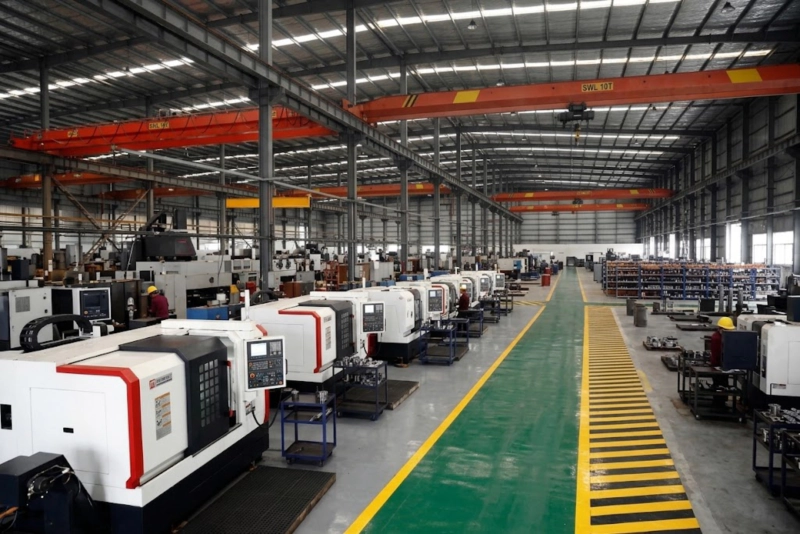
ZW, DW, LW, and 4MW series compressors undergoing final inspection and quality control before dispatch — every compressor destined for Russia requires a GOST-R certificate of conformity, an equipment passport in Russian language, and — for hazardous industrial equipment above the Rostechnadzor pressure and power thresholds — registration with the Federal Industrial Safety Regulator before being put into service. The documentation set that accompanies the physical machine is as important as the machine itself for legal operation in Russia.
The Russian Industrial Safety Certification Framework
Russia’s industrial safety certification framework for pressure equipment operates at three levels, each with different scope and issuing authority. Understanding the difference between these levels is the first step to ensuring that an imported or locally produced industrial compressor can be legally operated at a Russian industrial site.
Level 1 — GOST-R Certificate of Conformity
Issued by an accredited Russian certification body (organ po sertifikatsii) on the basis of product testing and factory audit. The GOST-R certificate verifies that the compressor type meets the applicable GOST standards for construction, safety, and performance. It is a type certificate — one certificate covers all units of the certified model, not individual machines. Required for all industrial compressors sold in Russia.
Level 2 — EAC Declaration / Certificate
The EAC (Eurasian Conformity) mark applies to the full Eurasian Economic Area (EAEU) — Russia, Belarus, Kazakhstan, Armenia, Kyrgyzstan. For pressure equipment above defined thresholds, the Technical Regulation TR EAEU 032/2013 requires either a declaration of conformity or a certificate of conformity bearing the EAC mark. The EAC mark allows free movement of the certified product across all EAEU member states. For compressors supplied to Russia, Kazakhstan, or Belarus, EAC certification is required in addition to the Russian GOST-R certificate.
Level 3 — Rostechnadzor Registration
Rostechnadzor (Federal Service for Environmental, Technological and Nuclear Supervision) requires registration of individual pressure vessels and compressors that meet the hazardous industrial equipment thresholds: operating pressure above 0.07 MPa (0.7 bar gauge) AND volume above 25 litres for vessels, or compressors above defined power and pressure thresholds. For industrial gas compressors in the DW, LW, and 4MW power range, Rostechnadzor registration of each individual unit at the operating site is mandatory before the compressor is placed in service.
What GOST Standards Apply to Industrial Compressors in Russia
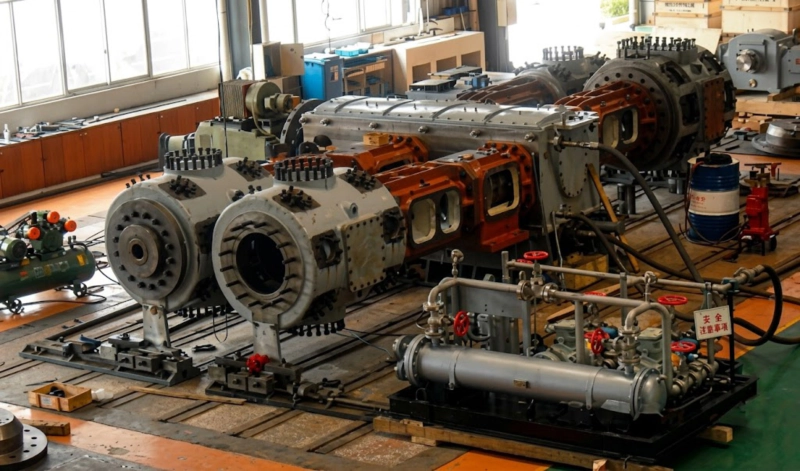
Multiple GOST standards apply to industrial reciprocating compressors, depending on the compressor type and gas service. The GOST-R certification process requires demonstrating conformity with all applicable standards simultaneously. The key standards for ZW, DW, LW, and 4MW series compressors are:
| Standard |
Scope |
Applies to |
| GOST 23941 |
Compressors: general technical requirements, safety, testing methods |
All series |
| GOST 12.2.052 |
Equipment working with gaseous oxygen: safety requirements |
Oxygen service |
| GOST 6331 |
Medical oxygen: purity requirements for cylinder filling applications |
Medical O₂ filling |
| GOST 26790 |
Ammonia refrigeration equipment: safety requirements |
NH₃ service |
| TR EAEU 032/2013 |
EAEU Technical Regulation on pressure equipment safety |
All EAEU markets |
| Federal Law No. 116-FZ |
Industrial safety of hazardous production facilities — basis for Rostechnadzor authority |
All hazardous equipment |
GOST standards are periodically revised. Certification is issued against the standard versions current at the time of certification; the certificate specifies the standard version numbers. When purchasing a compressor, always verify that the GOST-R certificate references the currently valid standard versions and that the certificate validity period has not expired.
The Required Documentation Set for Each Compressor Unit
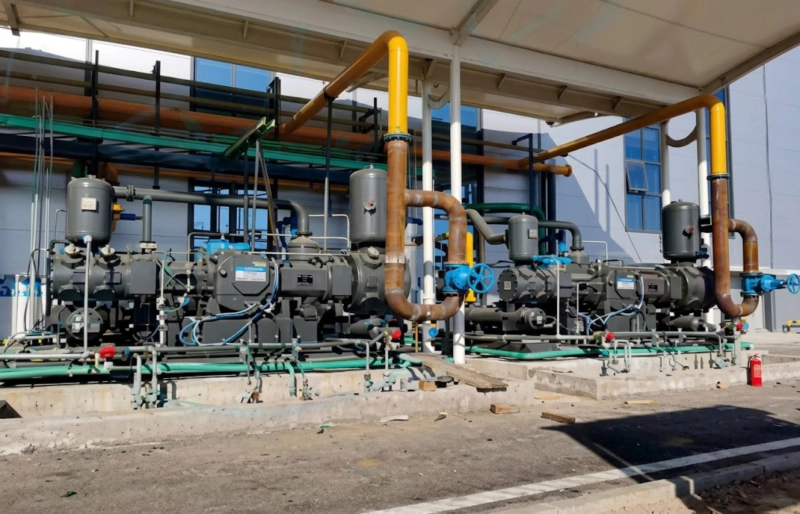
The GOST-R certificate is a type-level document that covers the entire model range. Each individual compressor unit also requires its own set of unit-specific documents that must be supplied with the machine and retained throughout its operating life. The complete documentation set for a GOST-R certified industrial compressor unit in Russia consists of:
1
Equipment Passport (Pasport): The unit-specific document issued by the manufacturer for each individual compressor. Contains the serial number, date of manufacture, all technical specifications (bore, stroke, stage count, design pressure, design temperature, materials of construction for all wetted parts), the factory quality control inspection results, and the factory acceptance pressure test record. The passport is the primary identification document for the unit throughout its operating life and must accompany every application for Rostechnadzor registration, insurance, and major maintenance. All content must be in Russian language.
2
Operating and Maintenance Manual (Rukovodstvo po ekspluatatsii): Full installation, commissioning, operation, maintenance, and troubleshooting documentation in Russian. Must include maintenance intervals, consumable part specifications, lubrication specifications, and emergency shutdown procedures. For oxygen service, must include the specific safety procedures required by GOST 12.2.052.
3
Spare Parts Catalogue (Katalog zapasnych chastey): Complete illustrated parts list with Russian-language part names and part numbers for all consumable and replaceable components. Required for Rostechnadzor registration and for maintenance department procurement. The catalogue must be specific to the unit as-built, not a generic series catalogue.
4
Material Certificates for Pressure-Retaining Parts: Individual material certificates (sertifikaty materialov) for all pressure-retaining components — cylinder bodies, cylinder heads, inter-stage vessels, safety valves — specifying the alloy, heat number, mechanical properties, and chemical composition of the material used. Required for Rostechnadzor registration of the unit as a pressure vessel.
5
Degreasing Record for Oxygen Service (Akt obezzhirivaniya): For compressors in oxygen service only — a signed record from the factory quality engineer verifying that all oxygen-wetted surfaces have been degreased to below 50 mg/m² residual hydrocarbon per GOST 12.2.052. As discussed in blog-22, this document is mandatory for oxygen service and cannot be produced retrospectively after the compressor has been put in service without a full disassembly and re-degreasing.
6
Factory Acceptance Test Record (Protokol priemochnyh ispytaniy): The record of the hydraulic pressure test and the gas tightness test performed at the factory before dispatch. The test pressures (typically 1.5 times the design pressure for hydraulic test, 1.1 times for gas tightness test) and the test results (pass/fail, observed leakage) are documented and signed by the factory quality inspector. This record is presented to Rostechnadzor at registration and is retained in the unit’s passport throughout its life.
Rostechnadzor Registration: The Site-Level Requirement
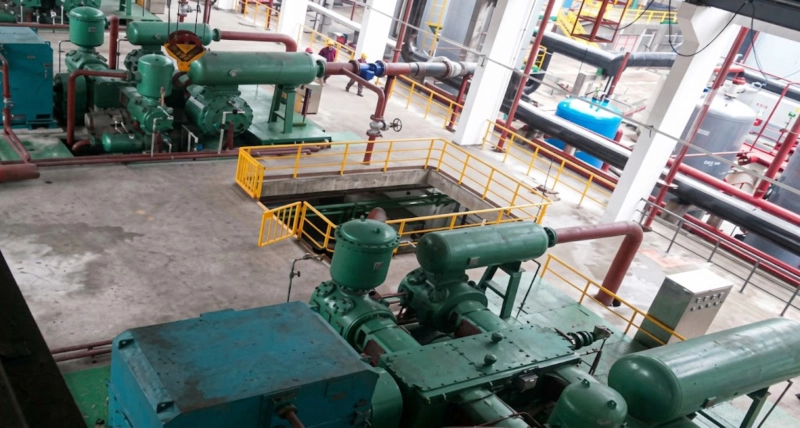
GOST-R certification and EAC marking allow the compressor to be sold in Russia; they do not authorise operation at a specific site. Before a DW, LW, or 4MW series industrial compressor can be legally placed in service at a Russian industrial facility, the operating organisation must register the unit with the local Rostechnadzor territorial body. Registration establishes the legal permission to operate the specific unit at the specific site and triggers the periodic technical inspection (tekhnicheskoe osvidetelstvovanie) requirement.
Registration Application
The operating organisation submits a registration application to the Rostechnadzor territorial office covering the facility location, including the unit passport, the GOST-R certificate copy, the factory acceptance test record, and the installation commissioning protocol (signed by a licensed commissioning engineer).
Hazardous Production Facility
Sites that operate industrial gas compressors above the Rostechnadzor pressure thresholds are classified as hazardous production facilities (opasnye proizvodstvennye obekty, OPO) under Federal Law No. 116-FZ. The OPO registration creates additional obligations: annual industrial safety declarations, licensed industrial safety expert assessments, and mandatory industrial accident insurance.
Periodic Inspection
Registered pressure equipment must undergo periodic technical inspection by a licensed expert organisation (ekspertnaya organizatsiya). For industrial compressors, the initial inspection is typically within 3 years of commissioning; subsequent inspections every 3–8 years depending on the equipment category and operating conditions. Inspection findings are recorded in the equipment passport.
Operator Qualification
Personnel operating Rostechnadzor-registered compressors must hold a valid operator qualification certificate (udostoverenie operatora) issued by a licensed training organisation under the Rostechnadzor approval programme for the specific equipment category. The qualification must be renewed periodically (typically every 3–5 years).
Related Application · Plastics Manufacturing
CE Marking vs GOST-R: Two Certification Systems for One Machine
Injection stretch blow moulding (ISBM) machines exported from China or Europe to Russia face the same dual certification challenge as industrial gas compressors: CE marking (required for sale in the EU) and GOST-R or EAC certification (required for sale in Russia and the EAEU) are separate, parallel processes with different standards, testing bodies, and documentation requirements. A machine with a CE mark cannot be sold in Russia on that basis alone — it requires EAC certification under TR EAEU 010/2011 (machinery safety technical regulation) before it can be legally placed in service in Russia. The documentation requirements for EAC machinery certification — Russian-language technical documentation, risk assessment, and an EAC certificate from an accredited EAEU body — parallel the GOST-R certification requirements for compressors described in this article. Both involve a type-level certificate covering the model range, unit-specific passports for each machine, and site-level commissioning documentation before the equipment can be operated legally.
Related equipment: One-step three-station ISBM machines for PET bottle production — requiring EAC certification for legal operation in Russia, the same EAEU certification framework as GOST-R certified industrial gas compressors.
ISBM Machine ›injectionstretchblowmolding.com
FAQ — GOST-R Certification for Industrial Compressors
Q1: Can a compressor with CE marking be used in Russia without GOST-R or EAC certification?
No. CE marking is an EU conformity declaration; it has no legal standing in Russia or in the EAEU. A compressor with CE marking and without a valid GOST-R certificate or EAC certificate cannot be legally sold, imported for permanent installation, or placed in service at a Russian industrial facility. Russian customs will not clear pressure equipment for permanent import without the required EAEU certification documents. A Rostechnadzor inspector finding CE-only equipment at a Russian facility would require immediate shutdown pending production of valid Russian or EAEU certification documents. Some older installations — particularly equipment imported under special customs regimes before the current EAEU technical regulations took full effect — may be operating under transitional provisions that are no longer available to new installations. All new compressor purchases for Russian sites must include GOST-R and EAC certification as a contractual requirement.
Q2: How long does GOST-R certification remain valid, and what triggers re-certification?
A GOST-R certificate of conformity is typically valid for 3 years from the date of issue, with annual factory surveillance audits by the certification body as a condition of maintaining the certificate. EAC certificates are also typically valid for 3–5 years. Re-certification is required when the certificate period expires, when significant design changes are made to the certified model (changes that affect the safety-relevant parameters specified in the applicable GOST standards), or when the applicable GOST standard is revised and the certification body determines that the product must be re-tested against the new standard version. For the operating company, the relevant document is the unit passport — the unit remains legally operable as long as it is registered with Rostechnadzor and passes its periodic technical inspections, even if the manufacturer’s type certificate has expired. However, purchasing spare parts or replacement units of the same model is not possible if the manufacturer’s certification has lapsed without renewal.
Q3: What documentation should be requested from a supplier before placing a compressor order for a Russian site?
Before placing an order for an industrial compressor for a Russian site, the procurement engineer should request and verify the following from the supplier: (1) a copy of the current valid GOST-R certificate of conformity for the specific compressor model and series, with the certificate number, issuing certification body name, validity period, and the list of applicable GOST standards it covers; (2) a copy of the current valid EAC certificate or declaration of conformity for the EAEU market; (3) a sample equipment passport (pasport) for the model — to verify that it is in Russian language, contains all required sections, and includes material certificates and factory acceptance test record sections; (4) a sample operating and maintenance manual in Russian to verify completeness; (5) for oxygen service: a copy of the degreasing procedure (tekhnologicheskiy reglament obezzhirivaniya) used at the factory, demonstrating that the factory has a documented and practised degreasing process compliant with GOST 12.2.052. A supplier who cannot produce these documents promptly either does not have them or has never had them — either situation is a disqualifying condition for a Russian industrial compressor order.
Full Compliance Package
GOST-R and EAC Certified Compressors for Russia
All ZW, DW, LW, and 4MW series compressors are supplied with the complete GOST-R and EAC certification and documentation set — GOST-R certificate, EAC certificate, Russian-language equipment passport, operating and maintenance manual, spare parts catalogue, material certificates, factory acceptance test record, and degreasing record for oxygen service. Full Rostechnadzor registration support available. Response within 48 hours.