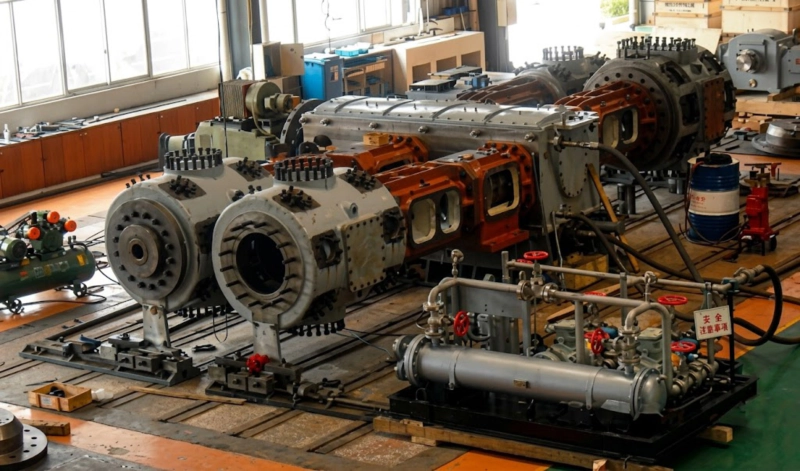
2Z Series Acetylene Compressor

2Z series acetylene compressor: 120–200 Nm³/h, 2.5 MPa, ATEX Group IIC, oil-free, water-cooled. GOST-R certified. Russia manufacturer. Direct or belt drive. Get a quote.

Dissolved Acetylene Compression · Explosion-Proof Design · Russia Manufacturer

2Z Series Acetylene Compressor

Two-column vertical reciprocating compressor engineered specifically for dissolved acetylene cylinder filling operations. Available in direct-drive and belt-drive configurations from 120 to 200 Nm³/h at 2.5 MPa discharge pressure, the 2Z series is the standard machine type used in dissolved acetylene production plants worldwide — manufactured to the safety requirements of GOST-R 4.1.02 and international explosion-proof standards at our production facility in Russia.

✓ ATEX Explosion-Proof
✓ Oil-Free Cylinders
✓ GOST-R Certified
✓ Water-Cooled
✓ Direct or Belt Drive
⚠️
Safety Notice: Acetylene is classified as an extremely flammable and potentially explosive gas at pressures above 0.147 MPa in the absence of a stabilising solvent. All 2Z series compressors are designed specifically for dissolved acetylene service with mandatory explosion-proof construction, oil-free cylinders, water cooling, and automatic safety shutdown systems. Operation must comply with local acetylene safety regulations including GOST 5457, EN 13480, and applicable national codes.

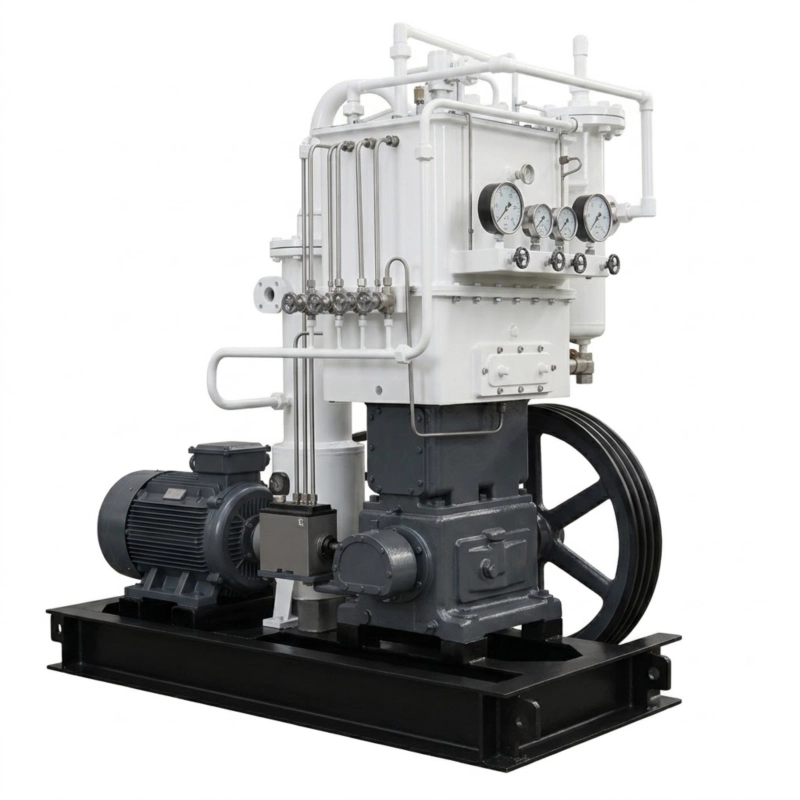
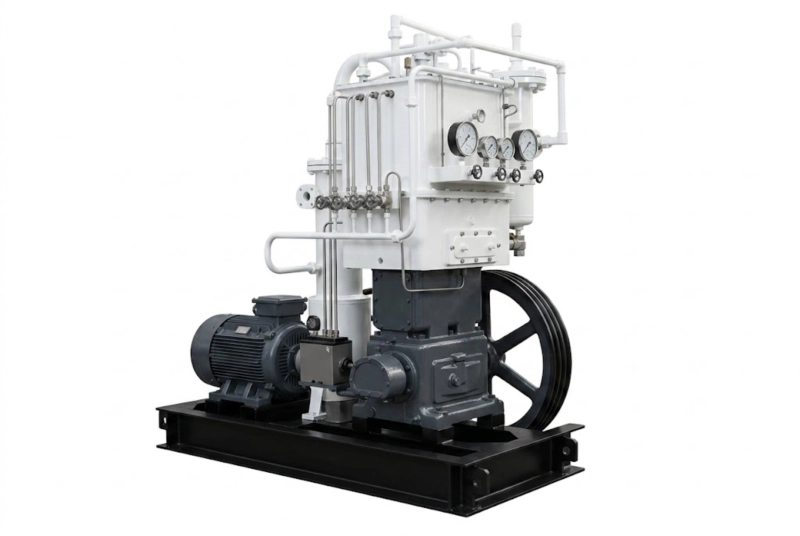
2Z series two-column vertical acetylene compressor for dissolved acetylene cylinder filling plant explosion-proof design Russia manufacturer

2Z Series — Two-column vertical reciprocating acetylene compressor in direct-drive configuration. The 2Z-2/25 and 2Z-2.67/25 are the most widely deployed models in dissolved acetylene production plants in Russia and the CIS.

120–200 Nm³/h
Flow Range
2.50 MPa
Discharge Pressure
2-stage
Compression Stages
Direct / Belt
Drive Options
380 V
Drive Voltage

Product Overview: 2Z Series Acetylene Compressor

The 2Z series acetylene compressor is a two-column vertical (Z-type) reciprocating piston compressor designed exclusively for the compression of pure acetylene gas in dissolved acetylene cylinder filling operations. The 2Z designation identifies the two-cylinder vertical configuration — typically one low-pressure stage and one high-pressure stage arranged vertically on a common crankshaft — which provides a compact footprint suitable for the limited floor area characteristic of most acetylene filling plants.

Acetylene compression presents unique safety challenges not encountered in any other process gas service. Pure acetylene at pressures above 0.147 MPa (1.5 bar gauge) in the absence of a stabilising solvent can undergo explosive decomposition — a chain reaction that releases energy without any external oxidant present. The 2Z series addresses these challenges through a combination of mandatory design features: oil-free cylinders that eliminate any risk of oil-acetylene contact, water-cooled cylinders and heads to keep gas temperature well below the decomposition threshold at all operating conditions, explosion-proof electrical equipment rated for acetylene atmospheres (Zone 1, Group IIC), and automatic safety shutdown systems that respond instantly to any deviation from safe operating parameters.

Manufactured at our production facility in Russia to GOST-R certification requirements, the 2Z series is designed as a direct alternative to established dissolved acetylene compressor types used in plants operating across Russia, Kazakhstan, Ukraine, and other CIS markets. The two available drive configurations — direct-drive (motor directly coupled to the crankshaft) and belt-drive (motor connected via a V-belt and pulley system) — allow the compressor to be matched to the speed requirements of different plant layouts without modifications to the electrical drive.

Applications: Dissolved acetylene cylinder filling plants (primary application), acetylene gas recovery and recirculation, acetylene purification plant feed compression, chemical synthesis feed gas compression where acetylene is a feedstock (vinyl acetylene, acetaldehyde, acetic acid, BDO), and oxy-acetylene welding gas supply operations.

Technical Specifications — 2Z Series Acetylene Compressor

Both direct-drive and belt-drive variants share the same two-column two-stage vertical frame. The choice of drive configuration affects the installation footprint and the ease of speed adjustment rather than the compression performance.

Model Drive Type Flow (Nm³/h) Discharge (MPa) Stages Voltage Typical Application
2Z-2/25 (Direct) Motor direct-coupled 120 2.50 2-stage 380 V Dissolved acetylene plant
2Z-2/25 (Belt) V-belt and pulley 120 2.50 2-stage 380 V Dissolved acetylene plant
2Z-2.67/25 (Direct) Motor direct-coupled 160 2.50 2-stage 380 V Dissolved acetylene plant
2Z-3.34/25 (Belt) V-belt and pulley 200 2.50 2-stage 380 V Dissolved acetylene plant

Note: Flow rates are stated at standard conditions (0°C, 0.101325 MPa). Discharge pressure 2.50 MPa is the standard for dissolved acetylene cylinder filling per GOST 5457. Custom configurations for chemical synthesis and other acetylene process duties at different pressures are available on request.

General Series Parameters

Parameter 2Z Series Specification
Compression Medium Pure acetylene (C₂H₂); acetylene-nitrogen mixtures for purging
Discharge Pressure 2.50 MPa (standard for cylinder filling per GOST 5457); up to 4.0 MPa for chemical synthesis duties
Flow Range 120–200 Nm³/h (2–3.34 Nm³/min)
Frame / Stage 2-column vertical (Z-type); 2-stage compression
Cylinder Lubrication Oil-free mandatory — PTFE piston rings and packing throughout
Cooling Method Water-cooled mandatory — cylinder water jackets, interstage cooler, aftercooler
Electrical Classification ATEX Zone 1, Group IIC, Temperature Class T3 (200°C surface limit)
Drive Voltage 380 V, 50 Hz explosion-proof motor
Max Discharge Temperature ≤ 100°C after interstage cooling; ≤ 80°C after aftercooler
Safety Standard GOST 5457, GOST-R, Acetylene Cylinder Safety Regulations
Quality Certification ISO 9001:2015, GOST-R, Pressure Vessel License

Why Acetylene Compression Requires Specialist Equipment

Acetylene (C₂H₂) is the most reactive of all commercially compressed industrial gases, and its compression demands engineering approaches that differ fundamentally from the compression of other process gases including CO₂, nitrogen, hydrogen, and hydrocarbons. Engineers and procurement teams specifying acetylene compressors must understand these differences before evaluating any equipment.

The Decomposition Risk

Pure acetylene at pressures above 0.147 MPa absolute (approximately 0.047 MPa gauge, or 0.5 bar gauge) can undergo spontaneous endothermic decomposition into carbon and hydrogen. This decomposition is highly exothermic once initiated — releasing approximately 226 kJ/mol — and can propagate as a detonation wave through the gas even in the absence of oxygen. The risk increases sharply with pressure, temperature, and the presence of catalytic contaminants such as copper, silver, and mercury compounds. This is why acetylene cylinders contain a porous filler material saturated with acetone: the solvent absorbs the acetylene and prevents the free gas phase from reaching the dangerous pressure threshold. The 2Z series compressor handles acetylene in the gas phase between the acetylene generator and the filling manifold, where the gas is not yet dissolved in solvent. Every aspect of the compressor design is therefore directed at preventing any condition that could initiate decomposition.

Materials Restrictions

Acetylene reacts with copper, silver, and mercury to form highly sensitive explosive acetylide compounds. All wetted parts of the 2Z series — cylinders, pistons, valve bodies, piping, and fittings — are manufactured from copper-free materials: cast iron, stainless steel, or aluminium alloys with copper content below 70% by weight. Brass fittings, which are commonly used throughout industry, are prohibited in acetylene service. This restriction applies to every component downstream of the acetylene generator, including the suction piping, the compressor body itself, the discharge piping, the filling manifold, and all instrumentation connections.

Temperature Control

The decomposition initiation temperature of acetylene decreases as pressure increases. At 2.5 MPa — the operating pressure of the 2Z series — the initiation temperature is significantly lower than at atmospheric pressure. Water cooling of the cylinders, cylinder heads, and interstage equipment is therefore not optional: it is a fundamental safety requirement. The 2Z series maintains discharge gas temperatures below 100°C at all stages and below 80°C at the aftercooler outlet, providing a substantial safety margin below the initiation temperature at the operating pressure. Cooling water flow and temperature are continuously monitored, with automatic shutdown on cooling water failure.

Working Principle and Structural Composition
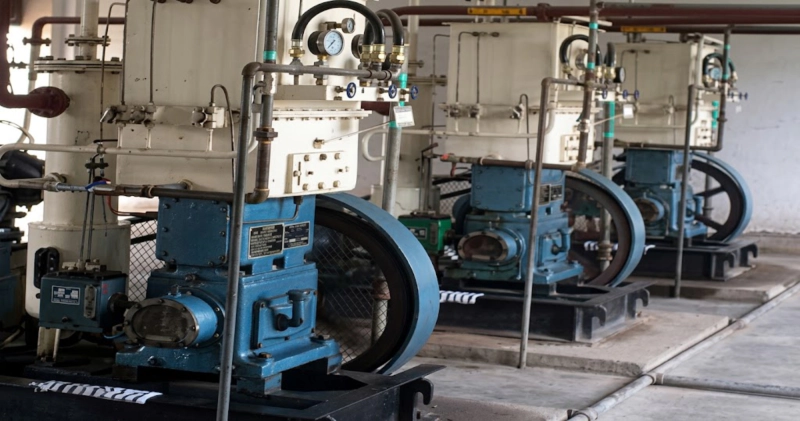
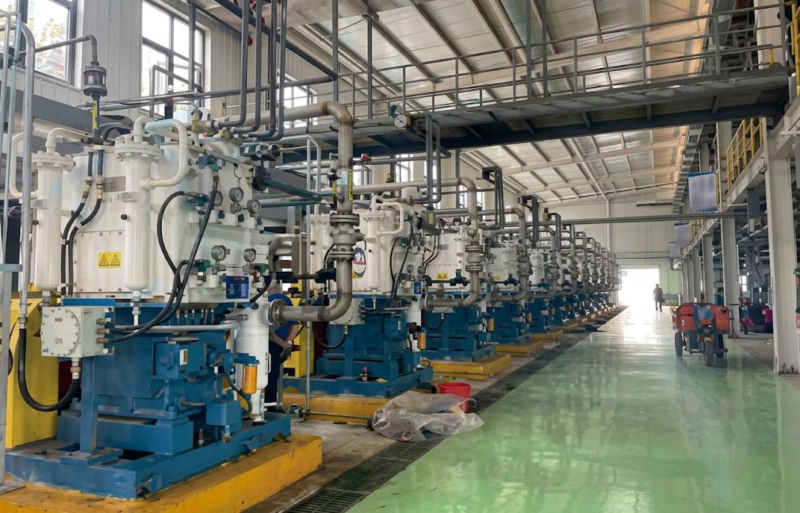
2Z series acetylene compressor installed at dissolved acetylene cylinder filling plant showing compressor unit and associated pipework

The 2Z series operates on the standard reciprocating piston principle with a two-column vertical frame. The crankshaft, driven by an explosion-proof motor at 380 V, converts rotational motion into the upward and downward reciprocating motion of two vertical pistons — one low-pressure stage piston and one high-pressure stage piston. Acetylene from the generator enters the first-stage suction at near-atmospheric pressure, is compressed to an interstage pressure of approximately 0.6–0.8 MPa, passes through the interstage cooler to remove heat of compression and reduce temperature, then enters the second-stage suction and is compressed to the final discharge pressure of 2.5 MPa. After the second stage, the hot compressed gas passes through the aftercooler and is delivered to the filling manifold at a temperature below 80°C.

Key Structural Components and Safety Features

🔥 Oil-Free Cylinders
PTFE piston rings and packing throughout — no oil enters the gas circuit at any point. Double-compartment distance piece isolates crankcase lubricant from the acetylene compression space.
💧 Water-Cooled Design
Cylinder water jackets on both stages. Water-cooled interstage cooler and aftercooler. Cooling water flow monitoring with automatic shutdown on low flow or high temperature.
⚡ ATEX Explosion-Proof Motor
380 V explosion-proof motor rated ATEX Zone 1, Group IIC, T3. All electrical junction boxes, sensors, and switches carry equivalent explosion-proof certification for acetylene atmospheres.
🚫 Copper-Free Wetted Parts
All components in contact with acetylene gas are manufactured from cast iron, stainless steel, or aluminium alloys with copper content below 70% by mass. No brass fittings, copper gaskets, or silver-containing valve parts throughout the gas circuit.
📈 Gas Valves
Specialised low-pressure-drop acetylene service valves with stainless steel seats and PEEK or PTFE valve elements. Designed for low gas velocity to minimise static charge accumulation and valve seat erosion.
🔐 Safety Shutdown System
Automatic emergency shutdown on: high discharge temperature (both stages), high discharge pressure, low cooling water flow, low suction pressure, and acetylene detector alarm. All trip setpoints adjustable at commissioning.

How the 2Z Series Fits Into a Dissolved Acetylene Production Plant
dissolved acetylene production plant overview showing acetylene generator purifier compressor and cylinder filling station

Understanding the role of the compressor within the complete dissolved acetylene production process helps in specifying the correct model and auxiliary requirements.

1
Acetylene Generation

Calcium carbide (CaC₂) reacts with water in the acetylene generator to produce raw acetylene gas at near-atmospheric pressure. The raw gas contains water vapour, phosphine (PH₂), hydrogen sulphide (H₂S), and ammonia (NH₂) impurities that must be removed before compression.

2
Purification

The raw acetylene passes through a series of scrubbers and purifiers — typically a water scrubber, an alkaline scrubber to remove H₂S and CO₂, and a drying stage — to remove impurities to acceptable levels before the gas enters the compressor. Purified acetylene enters the compressor suction at approximately 0.05–0.10 MPa gauge.

3
Compression — The 2Z Series Role

The 2Z series compressor raises the purified acetylene from suction pressure (~0.1 MPa) to the filling pressure of 2.5 MPa in two stages. The interstage cooler keeps temperature below 100°C between stages and the aftercooler brings the discharge gas below 80°C before it enters the high-pressure filling manifold. This temperature limit is a non-negotiable safety requirement, not a performance target.

4
Cylinder Filling

The compressed acetylene at 2.5 MPa flows through the filling manifold into acetylene cylinders pre-filled with porous filler and acetone solvent. The acetone dissolves the acetylene at high pressure, allowing a much larger quantity to be stored safely than would be possible in free gas form. Cylinders are filled to a standard pressure of 1.9 MPa at 20°C for distribution.

5
Capacity: How Many Cylinders per Day?

A standard 40-litre acetylene cylinder holds approximately 5–6 Nm³ of acetylene when filled to 1.9 MPa. The 2Z-2/25 at 120 Nm³/h therefore fills approximately 20–24 cylinders per hour, or 160–192 cylinders per 8-hour shift. The 2Z-3.34/25 at 200 Nm³/h fills approximately 33–40 cylinders per hour, or 264–320 cylinders per shift. Actual output depends on starting cylinder pressure and gas generator capacity.

Core Advantages of the 2Z Series

Designed from the Ground Up for Acetylene Service
The 2Z series is not a standard process gas compressor with acetylene safety features added. It is engineered from the outset for acetylene service — materials, valve design, sealing, cooling, and electrical equipment all specified and tested for the specific requirements of dissolved acetylene production.
🚫
Copper-Free Construction Throughout
All gas-wetted metallic components meet the less-than-70%-copper requirement for acetylene service. Cast iron body and cylinders, stainless steel valve bodies, PTFE seals. No brass, copper alloy, or silver components anywhere in the gas path.
💧
Mandatory Water Cooling on All Hot Surfaces
Both cylinder stages, the interstage cooler, and the aftercooler are water-cooled. Discharge temperature after each stage is maintained below 100°C and after the aftercooler below 80°C — providing a documented safety margin below the decomposition initiation temperature at 2.5 MPa.
ATEX Group IIC Explosion-Proof Rating
Group IIC is the highest explosion-proof classification, covering acetylene specifically. Motor, junction boxes, pressure sensors, temperature sensors, and all other electrical equipment on the compressor package carry Group IIC, Zone 1 rating — not the less stringent IIA or IIB ratings used for methane or propane environments.
🛠
Direct and Belt Drive Options
The direct-drive configuration (2Z-2/25, 2Z-2.67/25) provides the most compact installation and lowest maintenance, as there are no belts to tension or replace. The belt-drive configuration (2Z-2/25, 2Z-3.34/25) allows the compressor speed to be adjusted by changing the pulley ratio — useful for plants where variable output is required without a VFD.
📄
GOST-R Certification for Russia and CIS
GOST-R certification and GOST 5457 compliance documentation are provided as standard for all 2Z series units delivered to Russia and EEU member states, enabling straightforward customs clearance and Rostechnadzor registration without additional certification lead time.

Material Specifications for Acetylene Service

Critical Requirement: Acetylene forms explosive acetylide compounds (Cu₂C₂, Ag₂C₂) on contact with copper, silver, and mercury. All materials in the acetylene gas path must contain less than 70% copper by mass. This prohibits standard brass fittings, copper gaskets, bronze valve seats, and silver-tipped electrical contacts throughout the compressor and all connected piping.
Component Material Acetylene Compliance
Frame / Crankcase HT250 grey cast iron ✓ Copper-free; compliant
Cylinders and Heads HT250 cast iron with water jackets; water cooling mandatory ✓ Copper-free; compliant
Pistons Cast iron or aluminium alloy (Cu content below 70%) ✓ Compliant
Piston Rings / Packing PTFE — oil-free mandatory ✓ No metallic copper; compliant
Piston Rods 42CrMo alloy steel, hard chrome plated ✓ Copper-free; compliant
Gas Valve Bodies 316L stainless steel ✓ Copper-free; compliant
Valve Elements PTFE or PEEK polymer elements ✓ Non-metallic; compliant
Gas-Side Piping and Fittings Carbon steel or 316L SS — no brass fittings ✓ Copper-free; compliant
Gaskets and Seals PTFE or graphite flat gaskets; no copper gaskets ✓ Copper-free; compliant

Selection Guide: Choosing the Right 2Z Model

1

Size by required daily cylinder output

Calculate the required Nm³/h based on your target cylinder output per shift. A 40-litre cylinder holds approximately 5–6 Nm³ at 1.9 MPa / 20°C. Account for generator capacity, purification losses (typically 5–10%), and purging gas consumption to arrive at the compressor flow requirement. Add a 10–15% design margin above the calculated peak requirement.

2

Choose direct-drive or belt-drive based on operating requirements

Direct-drive models (2Z-2/25, 2Z-2.67/25) provide fixed speed operation at the motor synchronous speed — simpler construction, no belt maintenance, slightly more compact installation. Belt-drive models (2Z-2/25, 2Z-3.34/25) allow the compressor speed to be adjusted by changing the driven pulley without modifying the motor — useful for plants that need to vary output in step with the generator capacity. If you require continuous smooth capacity control, a VFD on a direct-drive motor is the most flexible solution.

3

Confirm cooling water availability and quality

Water cooling is mandatory for all 2Z series models. Confirm the available cooling water flow rate (typically 1–3 m³/h per compressor unit depending on model), inlet temperature (maximum 30°C for adequate cooling), and water quality. Hard water causes scale in cylinder water jackets and coolers; a water softener or inhibitor dosing system is recommended for cooling water hardness above 200 mg/l CaCO₂.

4

Confirm hazardous area zone classification

Acetylene compressor installations are classified as Zone 1 (flammable atmosphere likely during normal operation) with gas Group IIC. All electrical equipment on the compressor and within the installation zone must carry Zone 1, Group IIC explosion-proof certification. Confirm this classification with your safety engineer before specifying the compressor package.

5

State GOST-R and Rostechnadzor registration requirements at enquiry

For plants operating in the Russian Federation, the acetylene compressor must be registered with Rostechnadzor (Federal Environmental, Industrial and Nuclear Supervision Service) as hazardous production equipment. GOST-R certification and the technical documentation package required for registration are provided as standard with all 2Z series units delivered to Russia and CIS. State this requirement at enquiry stage so that the correct documentation is prepared in the engineering scope.

2Z Series vs. International Alternatives: Objective Comparison

Transparency Notice: References to other dissolved acetylene compressor types in this section are for general performance class comparison only. We do not manufacture or claim affiliation with any other brand and do not sell counterfeit products. All 2Z compressors are original designs manufactured by our own engineering team.
Factor 2Z Series (Our Make) European Equivalents Locally Rebuilt Units
ATEX Group IIC Certification ✓ Standard ✓ Standard Variable / often missing
GOST-R / GOST 5457 ✓ Standard Case by case Rarely available
Copper-Free Gas Path ✓ Verified ✓ Verified Not always verified
Capital Cost Competitive — 30–45% below European High (EUR) Low upfront; high lifecycle
Lead Time 3–5 months 8–14 months Variable
Spare Parts Availability In-house production; rapid dispatch OEM only; import delays Often unavailable
Rostechnadzor Registration Support Full documentation standard Additional certification cost Typically not supported


2Z series acetylene compressor undergoing factory acceptance test including pressure test and safety system verification before delivery

Factory acceptance test — every 2Z series unit undergoes a full mechanical test and safety system verification before shipment. For acetylene service, the FAT includes simulation of all automatic safety shutdown functions.

Frequently Asked Questions — 2Z Series Acetylene Compressor

Q1: Why is copper prohibited in acetylene compressor construction?
Acetylene reacts with copper, silver, and mercury to form metal acetylide compounds — copper acetylide (Cu₂C₂) and silver acetylide (Ag₂C₂) in particular — which are extremely sensitive primary explosives. These compounds can detonate from friction, impact, or heat at energies far below what would be dangerous in other contexts. The prohibition covers any component in the acetylene gas path with copper content above 70% by mass — this prohibits common brass fittings (typically 60–65% copper), but permits bronze alloys and copper-bearing steels that remain below the threshold. The 2Z series uses cast iron, stainless steel, and PTFE/PEEK polymer components throughout the gas path, with no copper-bearing alloys anywhere in contact with acetylene gas.
Q2: Why is water cooling mandatory — can air cooling be used to reduce costs?
Water cooling is a non-negotiable safety requirement for acetylene compression, not a performance preference. The decomposition initiation temperature of acetylene decreases as pressure increases: at 2.5 MPa, the initiation temperature is significantly lower than at atmospheric pressure. Air cooling cannot reliably maintain cylinder head and discharge gas temperatures below the required limits of 100°C interstage and 80°C aftercooler outlet across all ambient conditions, particularly in summer. Any temperature exceedance at 2.5 MPa creates a potential decomposition risk. Water cooling provides the controlled, reliable heat removal needed to maintain the required safety margins. The cost of a cooling water system is modest relative to the total plant capital cost and is not negotiable on safety grounds.
Q3: What is the difference between ATEX Group IIA, IIB, and IIC — and why does acetylene require IIC?
ATEX equipment groups classify gases by their ignition risk characteristics. Group IIA (e.g. propane) has the lowest ignition risk and requires the least stringent protection. Group IIB (e.g. ethylene) is more sensitive. Group IIC (acetylene, hydrogen) has the highest ignition sensitivity and requires the most stringent explosion-proof construction — narrower flameproof joint gaps, higher ingress protection, and lower surface temperature limits. Equipment certified for Group IIC can be used in Group IIA and IIB atmospheres, but IIA or IIB equipment cannot be used in IIC (acetylene) atmospheres. It is critical that the ATEX certificates of all electrical equipment on a dissolved acetylene compressor show Group IIC — not IIA or IIB — specifically.
Q4: Why is the maximum pressure 2.5 MPa for dissolved acetylene cylinder filling?
The 2.5 MPa filling pressure is determined by the target cylinder pressure of 1.9 MPa at 20°C, combined with the pressure required to drive the acetylene into the cylinder against the back-pressure of the partially filled cylinder plus a small filling margin. The 2.5 MPa figure is specified in GOST 5457 and equivalent international standards for dissolved acetylene filling. The acetylene dissolved in the cylinder acetone solvent is safe because the solvent prevents the formation of a free gas phase above the decomposition pressure threshold. The 2.5 MPa limit also reflects the balance between maximising the quantity of acetylene dissolved in each cylinder (higher pressure stores more) and maintaining an adequate safety margin below conditions where decomposition risk increases significantly.
Q5: Which model should I choose for a new 200-cylinder-per-shift dissolved acetylene plant?
For a target of 200 cylinders per 8-hour shift (standard 40-litre cylinders filled to 1.9 MPa / 20°C, each holding approximately 5–6 Nm³), the total acetylene throughput required is approximately 125–150 Nm³/h from the compressor. Accounting for purification losses, generator startup and shutdown periods, and a 10% design margin, we recommend the 2Z-2.67/25 (direct-drive, 160 Nm³/h) or 2Z-3.34/25 (belt-drive, 200 Nm³/h) for this duty. The 2Z-3.34/25 provides additional headroom for future capacity expansion without changing the compressor. Contact our engineering team with your specific generator capacity and shift schedule for a more precise recommendation.
Q6: What maintenance does the 2Z series require and how often?
Under normal operating conditions with purified, dry acetylene and adequate cooling water: piston rings and packing should be inspected at 2,000 hours and replaced at 4,000–6,000 hours (acetylene service is harder on PTFE rings than inert gas service due to the chemical reactivity of the gas); gas valves should be inspected at 4,000 hours and replaced at 6,000–8,000 hours; cooling water system descaling should be performed annually or when pressure drop across coolers increases by more than 20%; and crankshaft bearings should be inspected at 20,000 hours. Daily checks should include cooling water flow and temperature, discharge temperatures at both stages and aftercooler, oil level in crankcase, and function of the acetylene detector. All consumable parts are available from our in-house production with rapid dispatch.
Q7: Does the compressor package include automatic shutdown and what parameters trigger it?
Yes. The 2Z series control panel includes an automatic emergency shutdown (ESD) system that stops the compressor and closes the suction isolation valve on the following alarms: high stage-1 discharge temperature (trip at 100°C), high stage-2 discharge temperature (trip at 100°C), high aftercooler outlet temperature (trip at 80°C), low cooling water flow (trip at minimum flow setpoint), high discharge pressure (trip at maximum allowable working pressure plus 10%), and acetylene gas detector alarm at the compressor location. All trip setpoints are adjustable at commissioning within the allowable ranges. The ESD system is tested during the factory acceptance test and at site commissioning before plant startup.
Q8: Can the 2Z series be used for acetylene-based chemical synthesis rather than cylinder filling?
Yes, with appropriate modifications. Chemical synthesis applications using acetylene as a feedstock — including vinyl acetylene, acetaldehyde, acetic acid, and BDO production — may require different discharge pressures (typically 0.5–3.0 MPa depending on the synthesis reactor pressure) and may handle acetylene-nitrogen or acetylene-hydrogen mixtures rather than pure acetylene. For chemical synthesis duties, the same copper-free materials, oil-free cylinder, water cooling, and ATEX Group IIC electrical requirements apply without exception. The stage pressures and cylinder sizing can be adjusted for different overall compression ratios. Contact our engineering team with your required flow, suction and discharge pressures, and gas composition for a custom configuration data sheet.
Q9: What Rostechnadzor documentation is required for operating an acetylene compressor in Russia?
In the Russian Federation, dissolved acetylene production is classified as a hazardous production facility (opasnyy proizvodstvennyy ob’yekt) subject to Federal Law No. 116-FZ and Rostechnadzor supervision. The acetylene compressor must be registered as pressure equipment with Rostechnadzor before commissioning. The documentation required for registration includes: the GOST-R certificate of conformity, the technical passport (tekhnicheskiy pasport) of the compressor, the pressure vessel certification for interstage vessels and coolers, the certificate of factory acceptance test, the piping and instrumentation diagram (P&ID), and the safety analysis of the installation. All of these documents are provided as standard with 2Z series units delivered to Russia. Our engineering team can advise on the registration process and provide additional documentation as required by the regional Rostechnadzor office.
Q10: Are spare parts available and what is the recommended first-fill stock?
All spare parts for the 2Z series — PTFE piston rings, PTFE packing rings, gas valve elements, valve seats, piston rods, bearings, seals, and gaskets — are manufactured in-house and stocked for rapid dispatch to Russia and CIS from our production facility. At the time of order we provide a recommended first-fill spare parts list that includes: one complete set of piston rings and packing for each stage, one complete set of gas valve elements for each stage, and one set of critical gaskets and seals. This first-fill stock is sized to support the compressor through its first two maintenance intervals (approximately 8,000–12,000 hours) without requiring additional parts procurement. Holding this stock on-site is strongly recommended given the critical safety function of the compressor in a dissolved acetylene plant where an unplanned shutdown affects the entire filling operation.

Request a Technical Proposal for Your Acetylene Plant

Our engineering team has manufactured acetylene compressors for dissolved acetylene plants operating in Russia and the CIS for over 70 years. We understand the unique safety engineering requirements, the GOST standards, and the Rostechnadzor registration process that govern acetylene production facilities in the Russian Federation. The 2Z series acetylene compressor provides new-plant performance with complete GOST-R and GOST 5457 compliance documentation, at a price significantly below equivalent European equipment.

2Z Series Acetylene Compressor — Engineering Enquiry

Discuss Your Dissolved Acetylene Plant Compression Requirements

All enquiries answered by process engineers familiar with acetylene safety requirements and GOST standards. GOST-R and Rostechnadzor documentation provided as standard. Response within 48 hours.

Request a Technical Quote

Include in Your Enquiry
✓ Target daily cylinder output
✓ Acetylene generator capacity (Nm³/h)
✓ Required flow at compressor suction
✓ Direct-drive or belt-drive preference
✓ Cooling water availability
✓ Hazardous area zone classification
✓ GOST-R / Rostechnadzor requirement
✓ Required delivery date